When the long-distance Fiber transceiver SFP is used in short distance transmission, please match it with the appropriate attenuator according to the table.
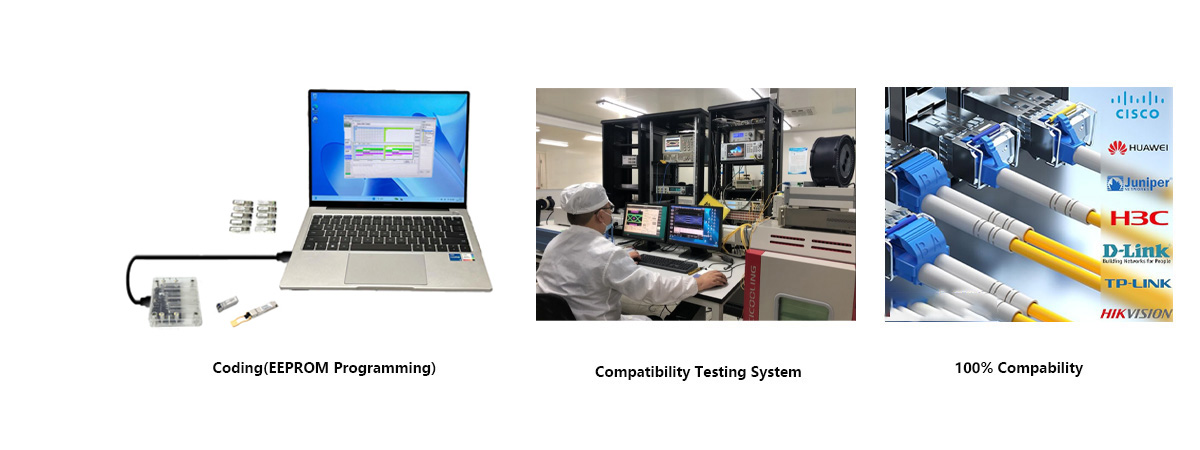
This MSA-standardized Fiber Transceiver SFP supports universal cross-brand adaptation covering open-brand and locked-brand network hardware. Open-brand equipment runs plug-and-play under factory default settings; locked-brand hardware requires customized EEPROM firmware to bypass vendor authentication and realize alarm-free full-function operation.
We provide free EEPROM re-flash and firmware customization for bulk orders of this Fiber Transceiver SFP. Our technical team revises vendor ID, private model names and DOM display data to eliminate vendor lock limitations, customized exclusively for global importers and distributors. We support bulk wholesale, private label printing and OEM/ODM parameter configuration for system integrators worldwide.
Primary Application Scenarios
This H3C SFP-GE-LH160-SM1550 compatible Fiber Transceiver SFP targets extended ultra-long-distance single-mode fiber transmission, widely deployed in core trunk networking scenarios:
A1: For long-term stable operation of H3C compatible Fiber Transceiver SFP on ultra-long haul fiber links, we advise reserving a 3dB–5dB optical power safety margin. This buffer offsets signal loss triggered by fiber aging, later maintenance splicing repairs and variable outdoor environmental conditions.
Q2: What laser chip is built inside HYTOPTODEVICE 160km Fiber Transceiver SFP and why it determines 160km transmission stability?
A2: Our H3C LH160 Fiber Transceiver SFP adopts DFB or DFB-EA laser chips tailored for ultra-long-distance transmission. Conventional FP lasers feature broad spectral width and severe chromatic dispersion over 160km fiber, which cannot satisfy long-haul signal transmission requirements, so they are not applied to this series of gigabit fiber transceivers.
Q3: Why do packet loss and intermittent link outages occur at noon high temperature with this 160km Fiber Transceiver SFP?
A3: Sharp temperature swings at midday will trigger physical expansion of single-mode fiber and tiny wavelength drift of the built-in DFB laser inside the Fiber Transceiver SFP. These subtle changes raise fiber attenuation and dispersion, leading to unstable signal transmission and random link errors on long-distance spans.
Q4: Can this H3C compatible 1.25G Fiber Transceiver SFP downgrade to 100Mbps Fast Ethernet operation?
A4: This standard 1000BASE-LH160 Fiber Transceiver SFP cannot auto adapt to 100Mbps speed in most scenarios. Only dual-rate customized optical modules support 100/1000Mbps switching, and the matched H3C switch port must also provide speed downshift configuration functions.
Q5: Why does the NMS platform send false Rx power warning logs for my 160km long haul Fiber Transceiver SFP?
A5: False receiving power alarms mainly stem from overly strict threshold parameters pre-written into the EEPROM chip of this gigabit Fiber Transceiver SFP. When the actual receiving optical power hovers near the critical -30dBm sensitivity threshold, the network management system will trigger early warning alerts without real link faults.
Q6: Do I need to select industrial temperature range Fiber Transceiver SFP for outdoor roadside cabinet deployment?
A6: Industrial grade (-40℃ ~ 85℃) Fiber Transceiver SFP is a must if you install the module in uninsulated outdoor communication cabinets, roadside aggregation boxes or exposed field nodes. Commercial temperature modules cannot withstand extreme seasonal temperature changes in outdoor environments.
Q7: What performance failures will appear if commercial-grade 160km Fiber Transceiver SFP continuously runs above 75℃ ambient temperature?
A7: Once the ambient temperature exceeds 75℃, this commercial H3C compatible Fiber Transceiver SFP will suffer DFB laser wavelength drift, decreased transmit optical power and sharply elevated bit error rate. Long-term overheating will cause continuous packet loss and complete disconnection of long-distance fiber links.
Q8: Why is there a reading gap between the external optical power meter and the DDM data displayed on this Fiber Transceiver SFP?
A8: Reading deviation between test instruments and module DDM data usually comes from two factors: the optical power meter lacks precise calibration at 1550nm wavelength, or dust contamination on the meter adapter tips creates extra insertion loss during testing.
Q9: How does the RMA warranty replacement process work if this long haul Fiber Transceiver SFP fails during running 160km trunk links?
A9: HYTOPTODEVICE provides advanced hardware replacement RMA service for bulk enterprise orders of this Fiber Transceiver SFP. Fast replacement delivery effectively cuts down long-haul trunk link downtime caused by faulty modules, supporting stable operation of customer cross-regional private line networks.
Q10: Can I hot plug this 160km Fiber Transceiver SFP without shutting down the running H3C switch?
A10: This MSA-compliant Fiber Transceiver SFP supports full hot-swap function, allowing online disassembly and installation while the host H3C switch keeps running. Never stare into the exposed optical port during operation, as the high-power internal laser will cause permanent eye damage.
Q11: Does this H3C SFP-GE-LH160-SM1550 Fiber Transceiver SFP support internal loopback testing for remote fault diagnosis?
A11: This enterprise-grade long haul Fiber Transceiver SFP supports built-in digital loopback testing via switch CLI commands. The loopback function helps engineers quickly distinguish whether network faults originate from the H3C switch equipment or the remote single-mode fiber trunk line.
Q12: Is it safe to observe the invisible 1550nm infrared laser light emitted from this ultra-long haul Fiber Transceiver SFP optical port?
A12: Direct eye exposure to the powered optical port of this 160km Fiber Transceiver SFP is extremely dangerous. Although 1550nm infrared light cannot be seen by human eyes, the high transmit power of long-reach optical modules will generate irreversible retinal damage without immediate pain perception.
Why Network Engineers Choose HYTOPTODEVICE
HYTOPTODEVICE has supplied over 5000,000 optical transceiver modules to data centers, ISPs, and enterprise networks across 100+ countries since 2011. Every module undergoes a 72-hour burn-in test and full DDM/DOM validation before shipment.
- Up to 70% cost savings vs OEM, transparent pricing & flexible bulk rates, supported quality returns
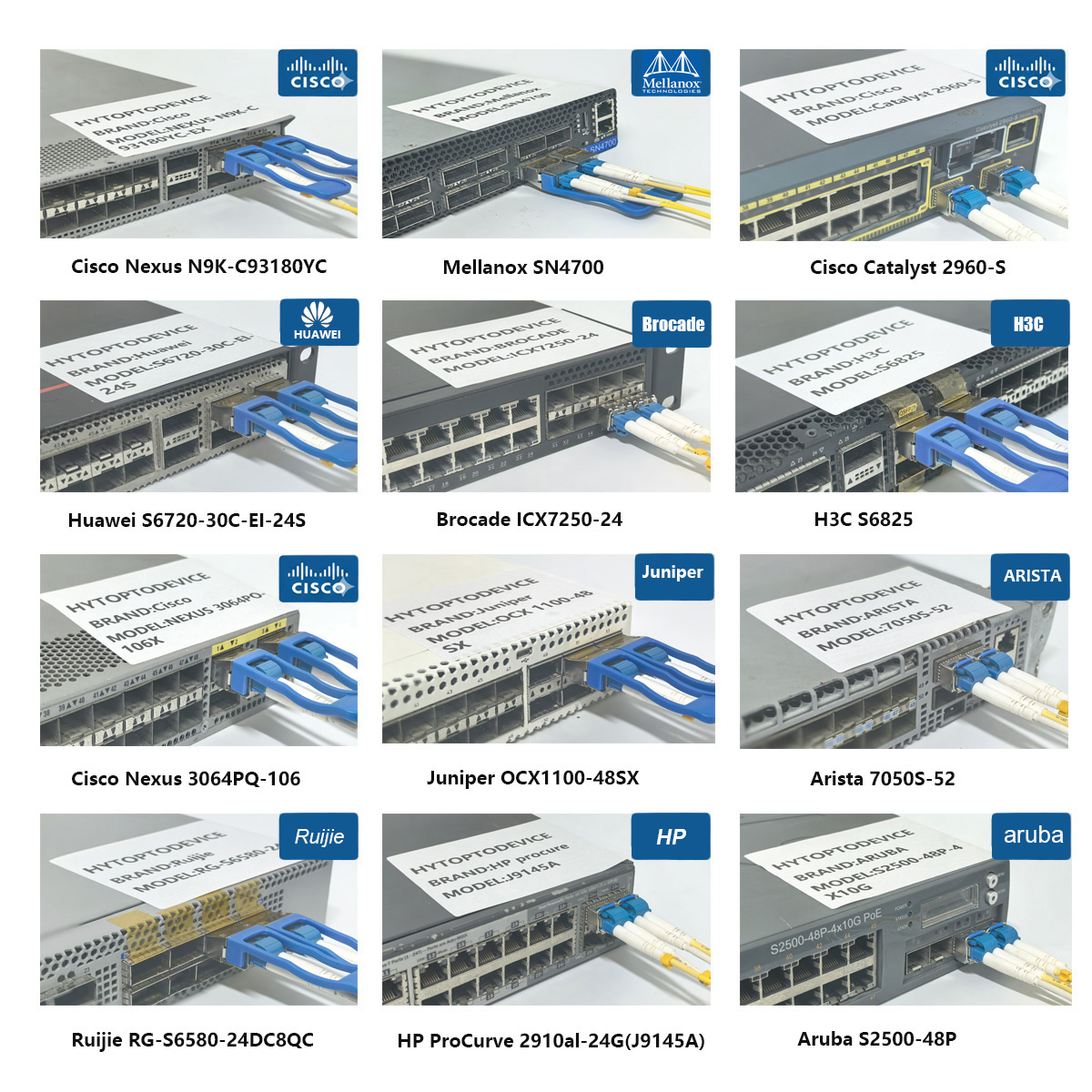
- 100% real-device compatible with Cisco, Huawei,Dell,Juniper, and Arista
- ISO 9001:2015 Shenzhen factory, full lineup: 1.25G/10G/25G/40G/100G/200G/400G/800G/1.6T transceivers
- Ample stock, fast global DHL/FedEx shipping in 3–5 working days
- Free pre-sales engineering support for custom EEPROM & private label firmware
- Real switch test videos available for pre-purchase review; inspection & shipping videos provided per order
“Phenomenal performance. We deployed 200 HYTOPTODEVICE SFP modules to replace Cisco OEMs in our backbone network. Result? Zero compatibility issues and a 60% reduction in costs. Highly recommended for mission-critical networks."— Senior Network Engineer, Regional Telecom, Australia
Quality Certification & Compliance
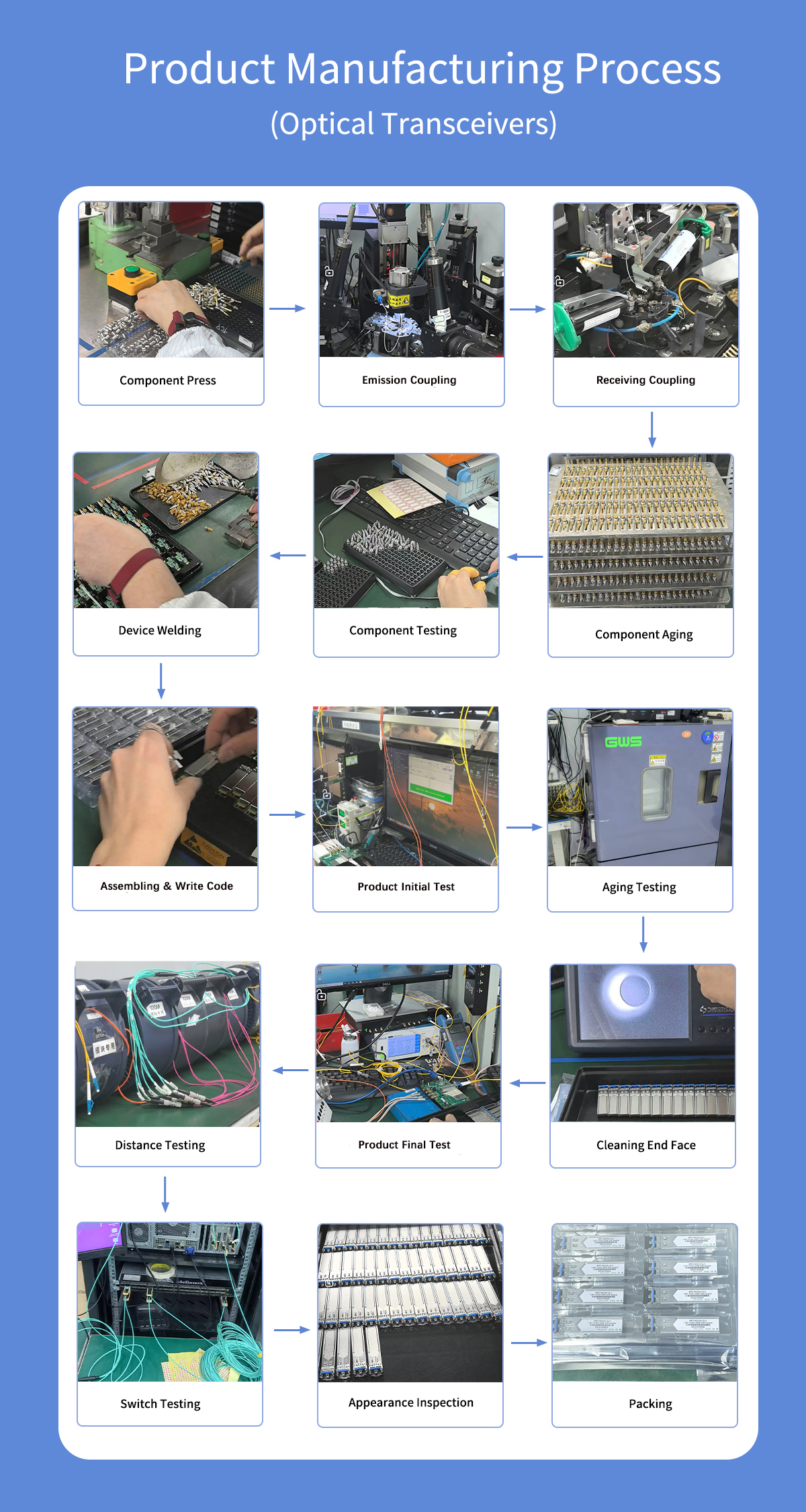
At HYTOPTODEVICE, our quality commitment is backed by industry-standard validations. From fiber optical transceiver manufacturing to final visual inspection, from IQC、IPQC、FQC to OQC, our processes ensure global compliance and reliability.
We adhere to rigorous standards for our SFP modules and network solutions:
-
ISO 9001: Certified quality management and production consistency.
-
CE & FCC: Fully compliant for seamless Global Market Access.
-
RoHS: Committed to environmental responsibility and hazardous material control.
-
Proven Reliability: Rigorous testing to reduce compliance risk and ensure safety.
Certified Quality. Global Standards. Guaranteed Performance.

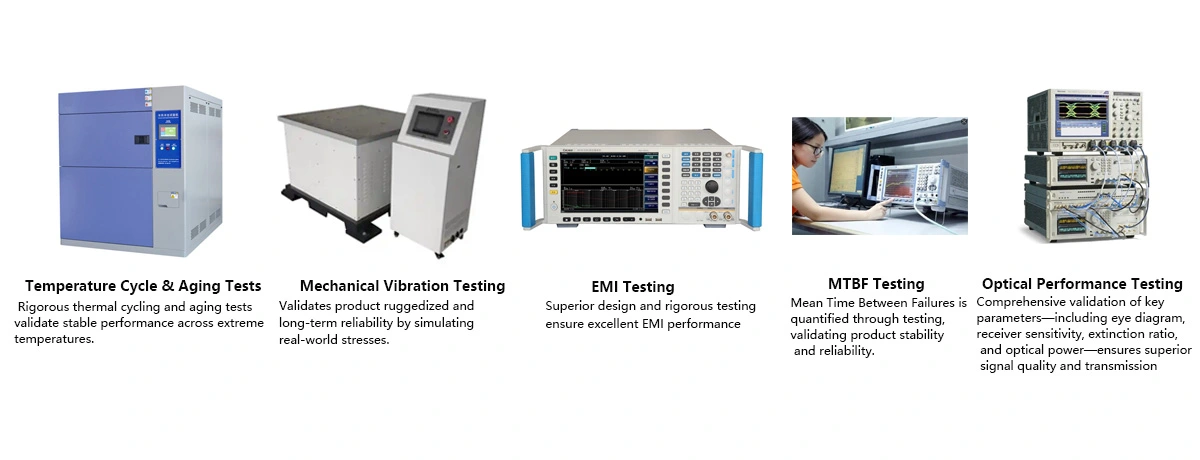
Rigorous Industrial Product Testing
100% 3rd Party Compatible
Partial Test Demonstration
Others
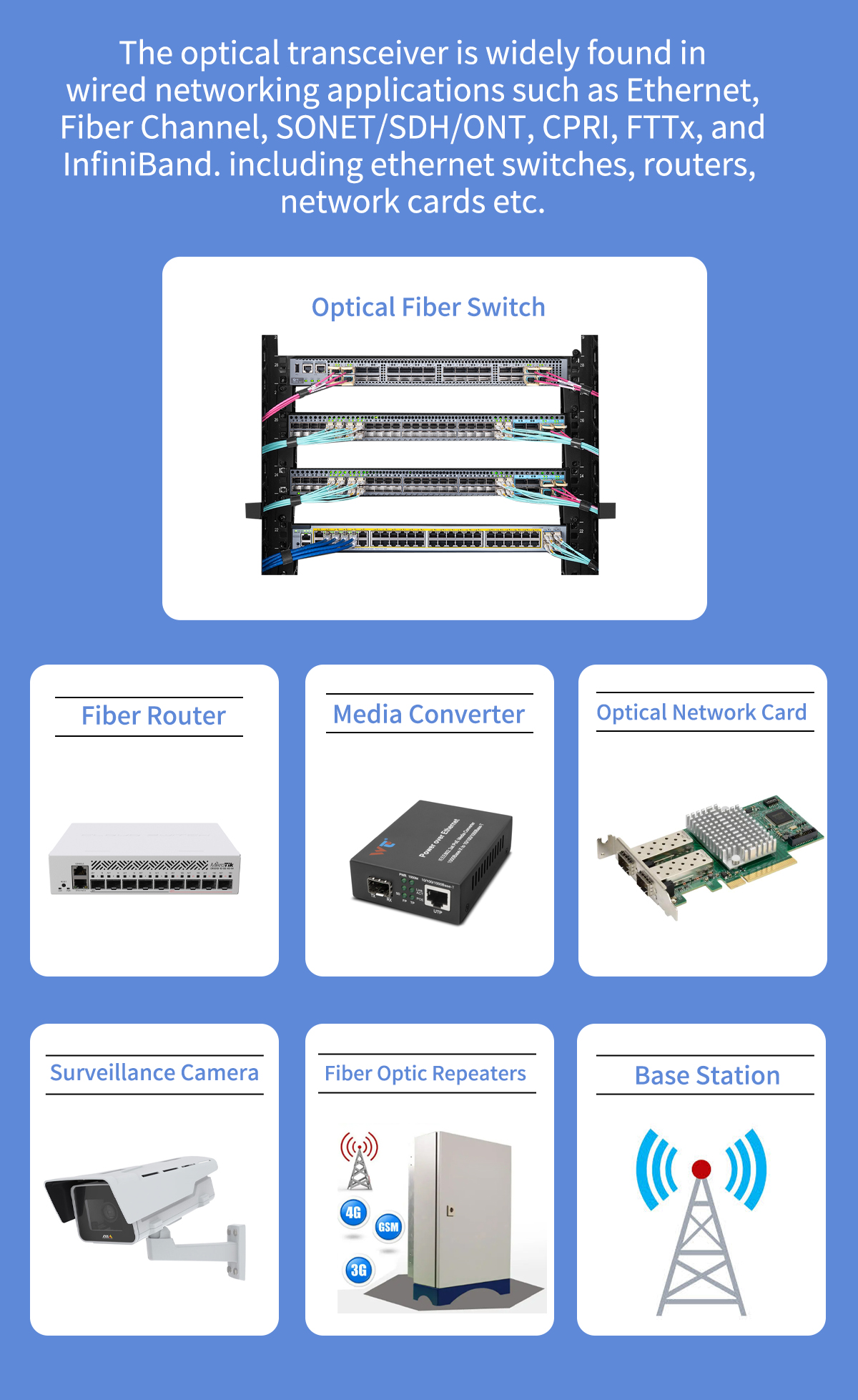



 3.1G Full-Spectrum Structured Cabling System
 FAQ
FAQ


