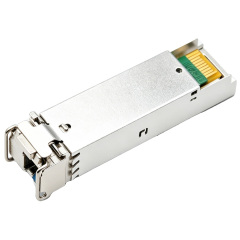
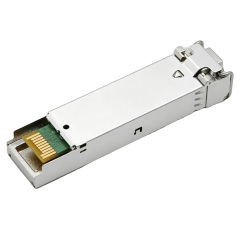
Q1: How can field technicians easily tell the TX1310nm and TX1550nm modules apart?
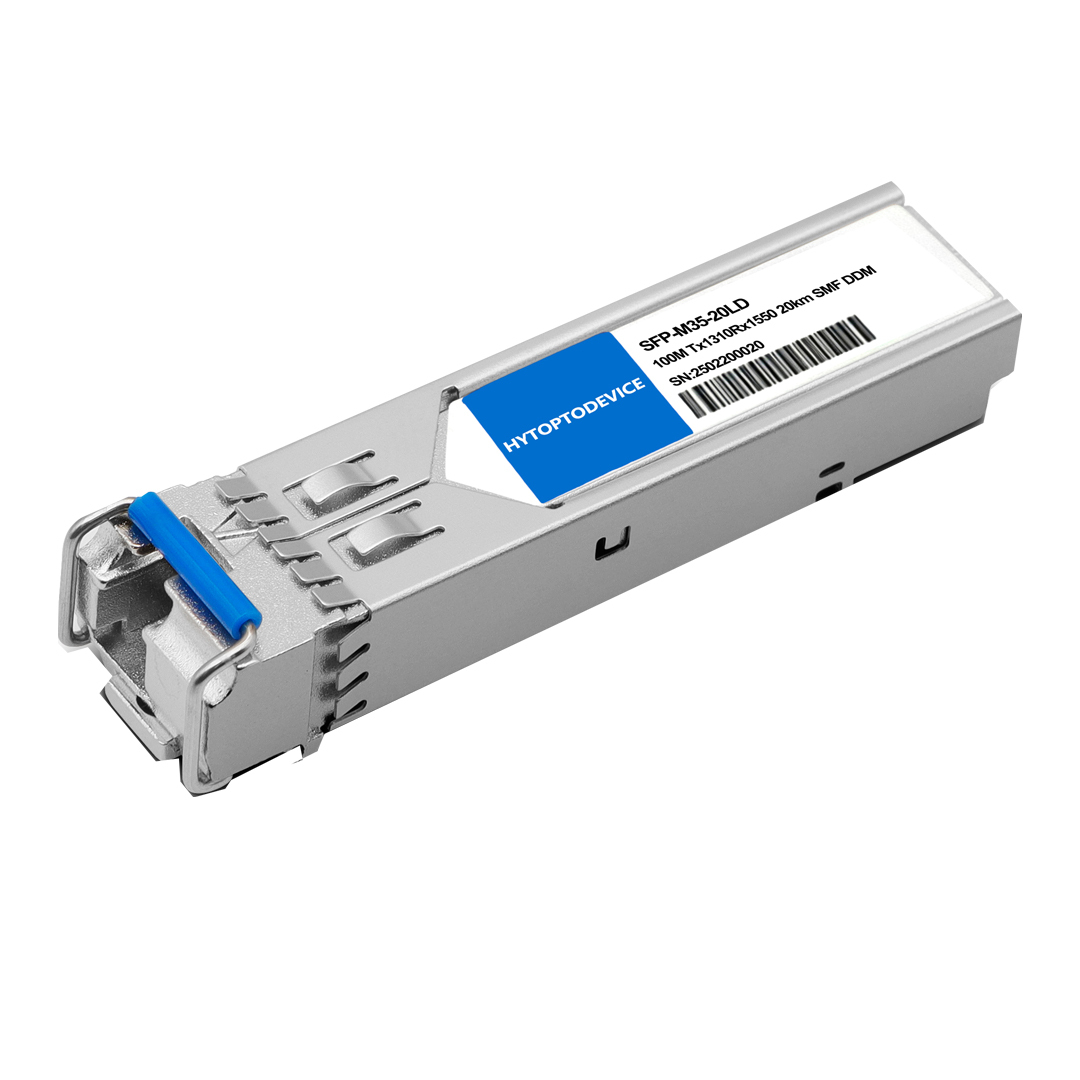
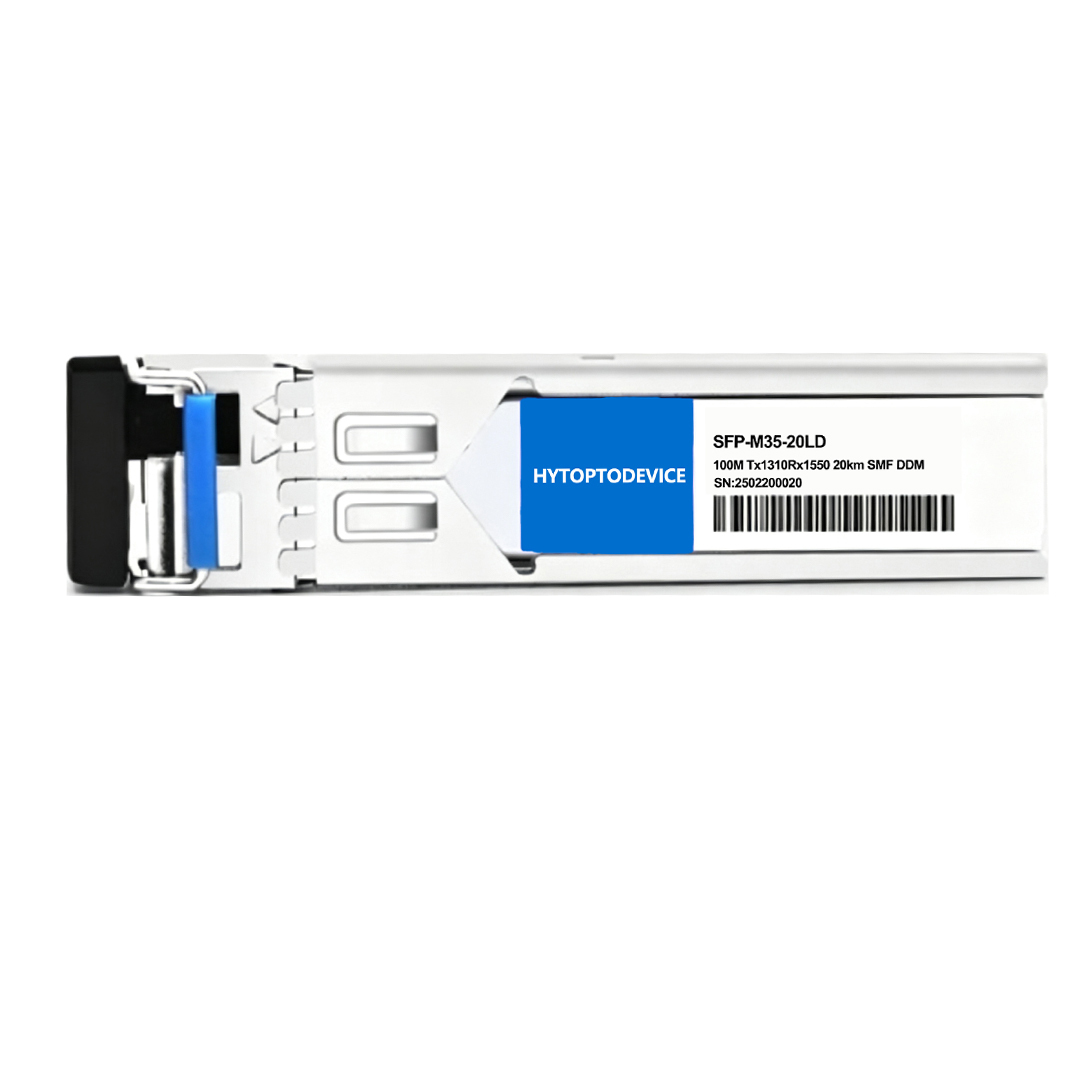
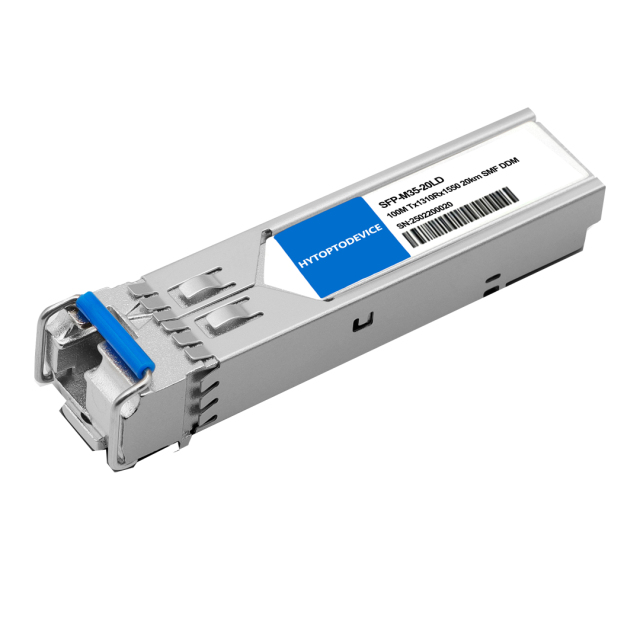
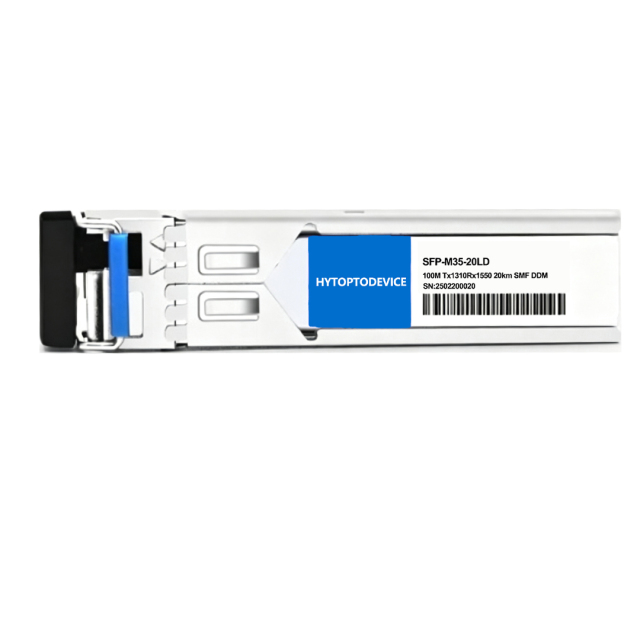
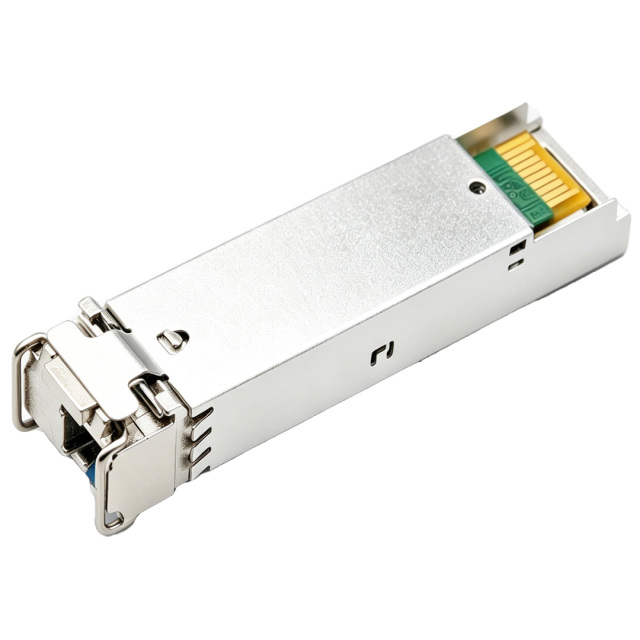
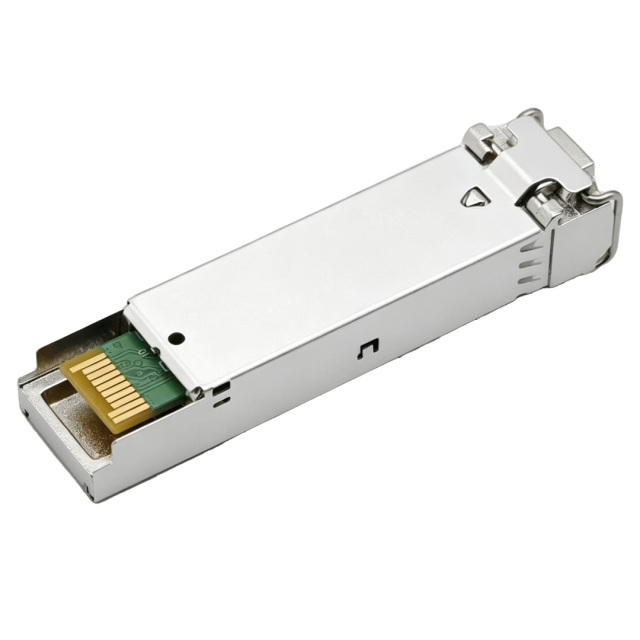
A: Our HYTOPTODEVICE 100BASE-BX-U bidi sfp module adopts standardized color-coded bail latches for on-site identification. Blue corresponds to TX1310nm modules and Green for TX1550nm models, paired with clear surface labeling to help engineers quickly distinguish matched BiDi modules for 15km H3C fiber networking.
Q2: How does a Simplex (Single-Strand) BiDi transceiver transmit and receive on one fiber?
A: Our H3C-compatible bidi sfp module uses high-precision built-in WDM filtering technology. It isolates 1310nm transmit and 1550nm receive wavelengths on a single fiber strand, realizing interference-free full-duplex 100Mbps transmission, which is the core advantage of simplex single-strand BiDi optical transceivers.
Q3: Why does my switch console throw an "Unsupported Transceiver" warning?
A: Unsupported transceiver warnings are caused by mismatched device firmware signatures. Our custom-programmed H3C dedicated bidi sfp module comes with pre-verified EEPROM data, perfectly matching H3C device protocols to eliminate recognition errors and system alarms for stable plug-and-play use.
Q4: Is this transceiver fully compliant with IEEE 802.3ah 100BASE-BX10 standards?
A: Fully compliant with IEEE 802.3ah 100BASE-BX10 industry standards, our 15km long-range bidi sfp module retains complete protocol compatibility. The optimized 15km transmission design does not damage standard performance, ensuring universal interoperability with all compliant enterprise network equipment.
Q5: Do I need an optical attenuator for short-distance deployment?
A: No optical attenuator is required for mainstream short-distance deployment above 500m. Our calibrated low-power 100BASE-BX-U bidi sfp module has built-in signal overload protection, supporting safe and stable short-range and medium-range 15km adaptive transmission.
Q6: What is the typical optical power budget for a 100BASE-BX 15km link?
A: This H3C-matched bidi sfp module features a standard 16dB optical power budget, professionally customized for 15km single-mode fiber links. It effectively offsets fiber attenuation, splicing and connector loss, ensuring error-free and stable long-distance data transmission for enterprise networking.
Q7: Can near-end optical crosstalk (NEXT) occur inside the WDM filter of a BiDi optic?
A: Near-end optical crosstalk (NEXT) will not occur on our high-quality bidi sfp module. Adopting high-isolation WDM filter components, it achieves precise wavelength separation between transmit and receive paths, completely avoiding signal interference and BER fluctuation in 15km BiDi links.
Q8: Why am I getting high Bit Error Rate (BER) or packet loss on my 15km link?
A: High BER and packet loss on 15km BiDi links mainly result from unbalanced 1310/1550nm wavelength attenuation, dirty ports or inferior jumpers. Our factory-calibrated bidi sfp module balances bidirectional signal loss, effectively solving link instability issues for medium-distance enterprise networking.
Q9: Why does DDM show normal Tx power but zero Rx power on one end?
A: Normal Tx power with zero Rx power means one-way link failure, mostly caused by wrong wavelength pairing, faulty fiber lines or contaminated ports. Our matched BX-U/BX-D paired bidi sfp module sets standard wavelength matching schemes to avoid such connection failures.
Q10: Can I run a local physical loopback test on a BiDi SFP?
A: Traditional physical loopback tests are invalid for simplex bidi sfp module due to independent Tx/Rx wavelength channels. Our professional BiDi optic solution supports dedicated end-to-end link testing, ensuring accurate performance verification for H3C single-fiber network deployment.
Q11: How does extreme heat affect 1310nm and 1550nm FP/DFB lasers?
A: Extreme heat causes laser wavelength drift and power attenuation, affecting link stability. Our industrial-grade optional bidi sfp module undergoes strict high and low temperature aging calibration, stabilizing 1310nm/1550nm laser performance for harsh outdoor and industrial network environments.
Q12: Why choose Simplex BiDi over standard Duplex fiber optics?
A: Compared with traditional duplex dual-fiber optics, our simplex bidi sfp module only uses one fiber strand for bidirectional communication. It saves 50% fiber cabling costs and improves resource utilization, serving as the cost-effective upgrade solution for fiber-scarce medium-distance enterprise networks.