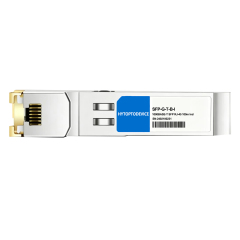
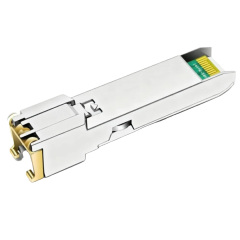
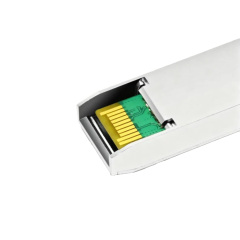
| NO. | Brand | Compatible P/N | Transceiver Type |
| 1 | Cisco | GLC-TE-I | |
| 2 | Juniper Networks | SFP-GE-T-I | |
| 3 | Arista | SFP-GE-T-I | |
| 4 | Alcatel-Lucent | SFP-GIG-T-I | |
| 5 | Brocade | SFP-GE-T-I | |
| 6 | Huawei | SFP-GE-T-I | |
| 7 | H3C | SFP-GE-T-I | |
| 8 | Dell | SFP-GE-T-I | |
| 9 | HPE Aruba | SFP-GE-T-I | |
| 10 | HPE Procurve | SFP-GE-T-I |
Product Overview
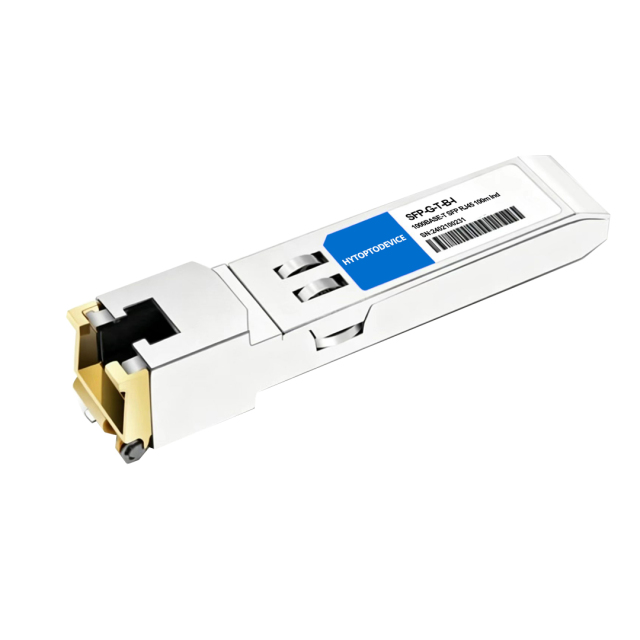
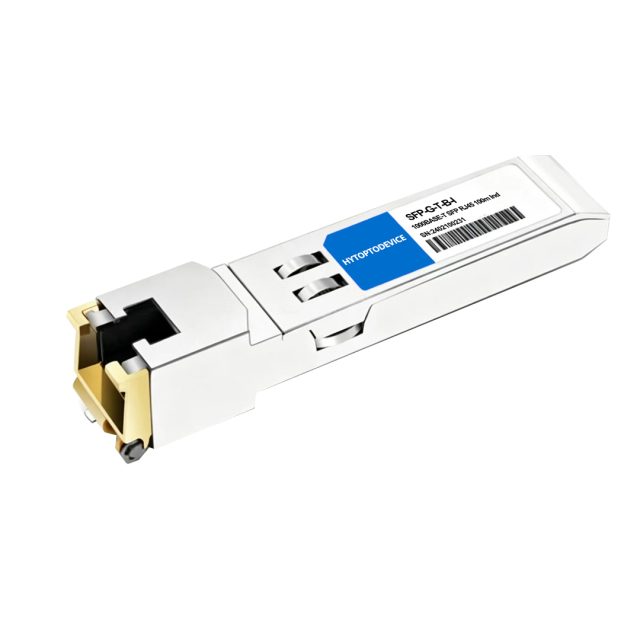
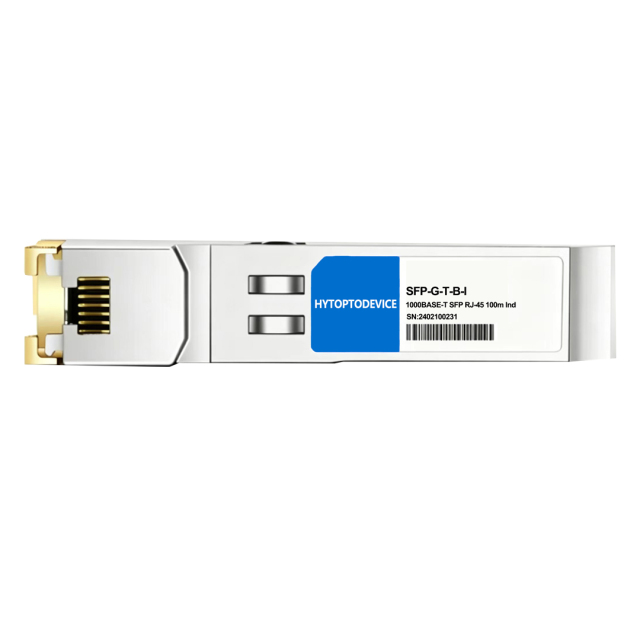
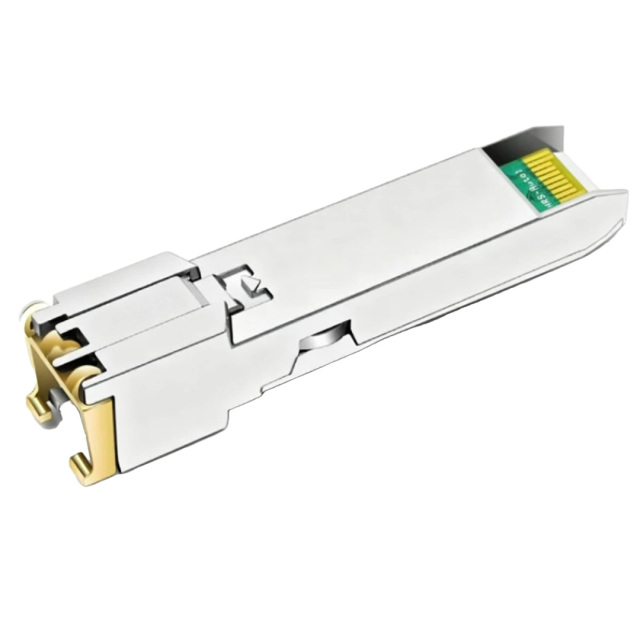
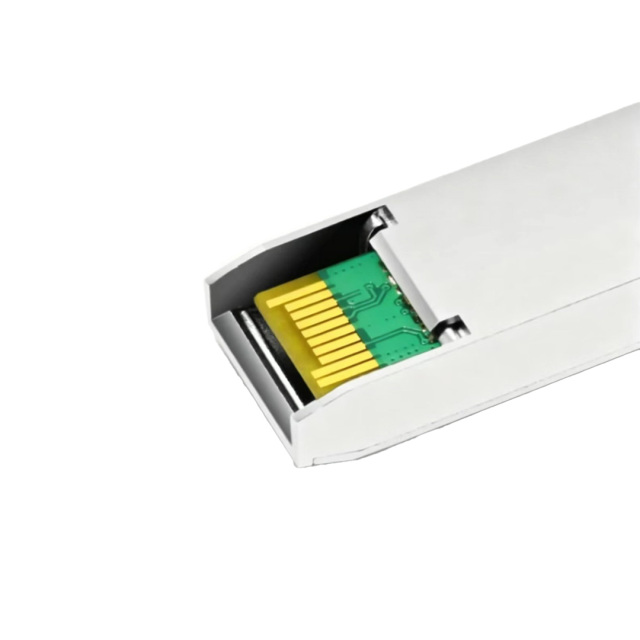
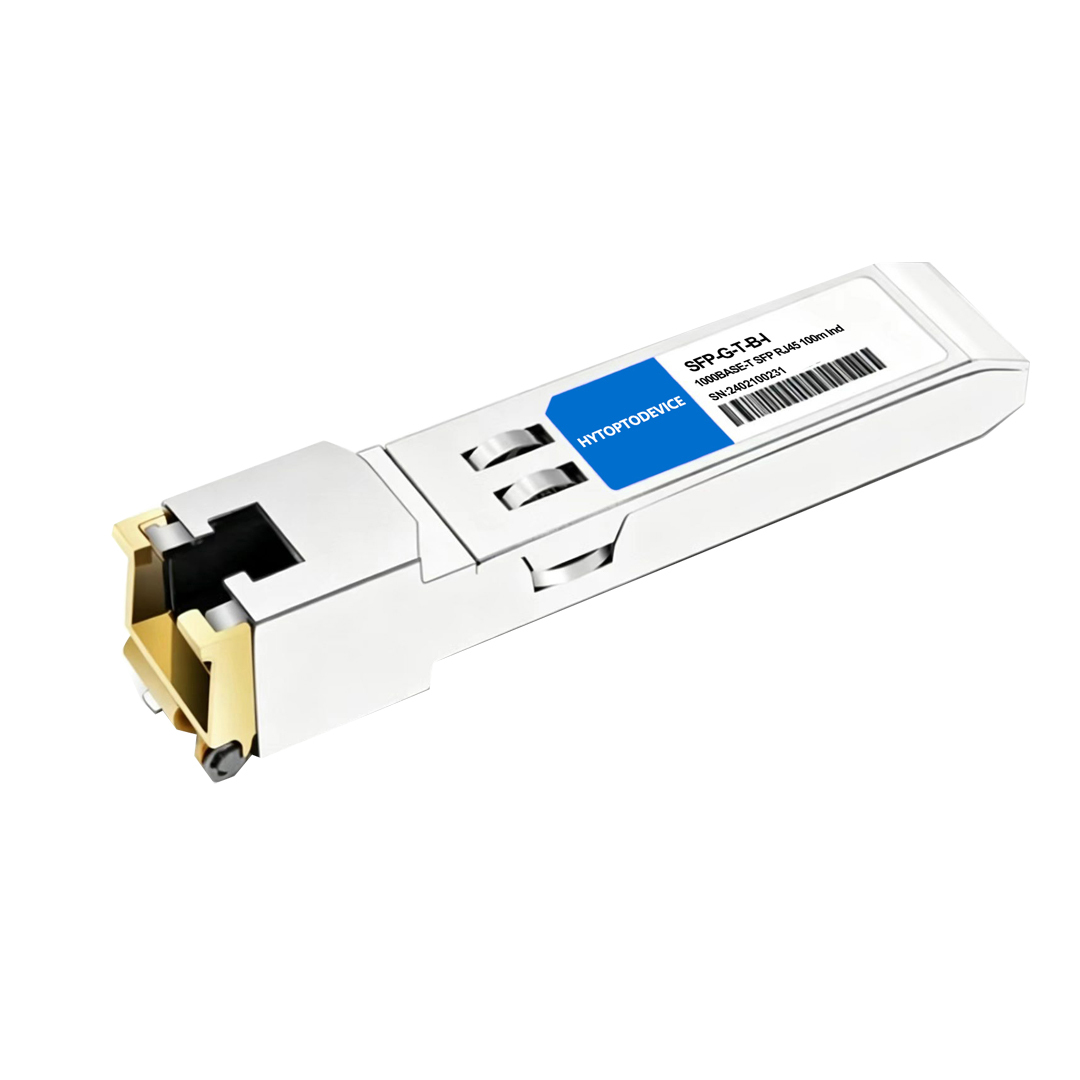
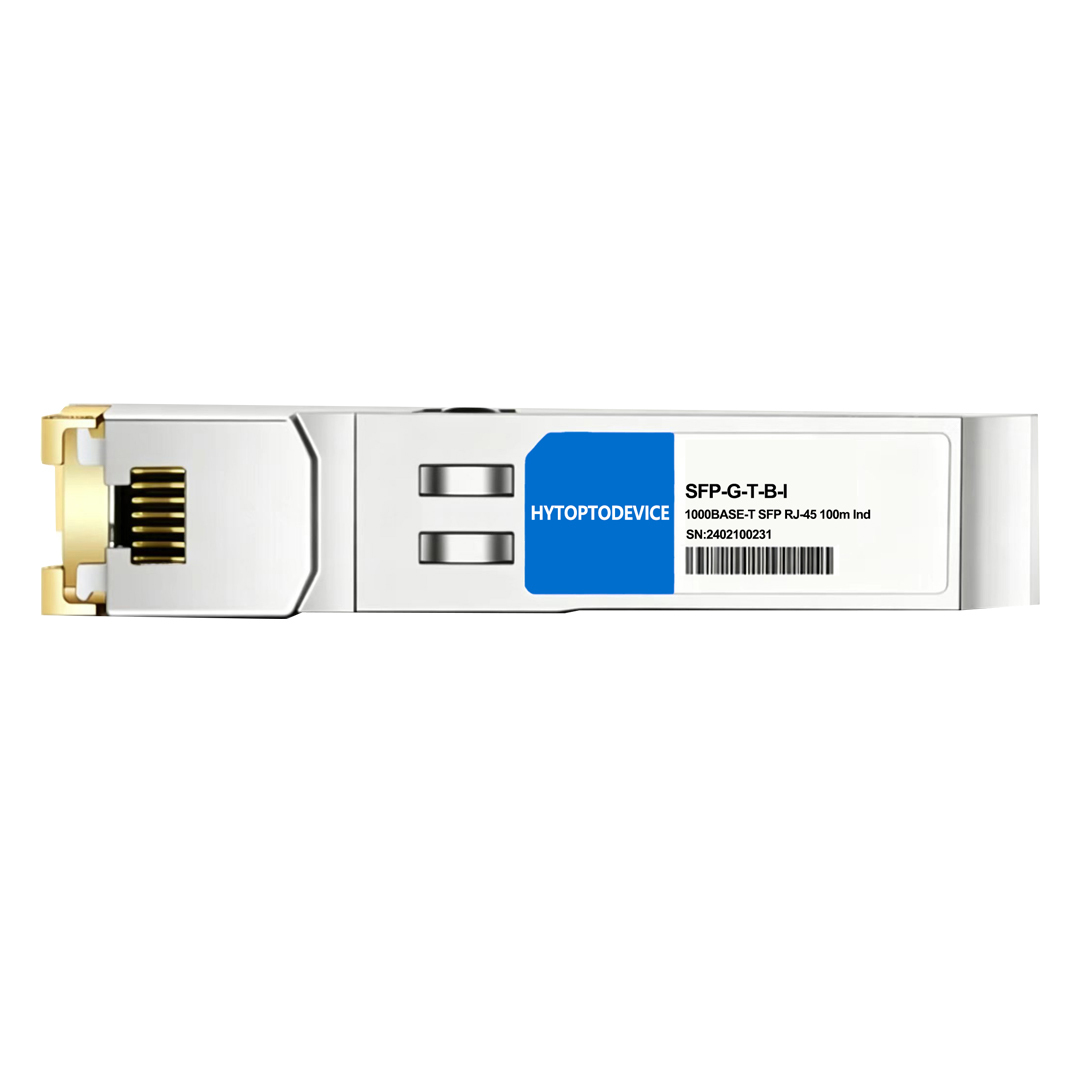
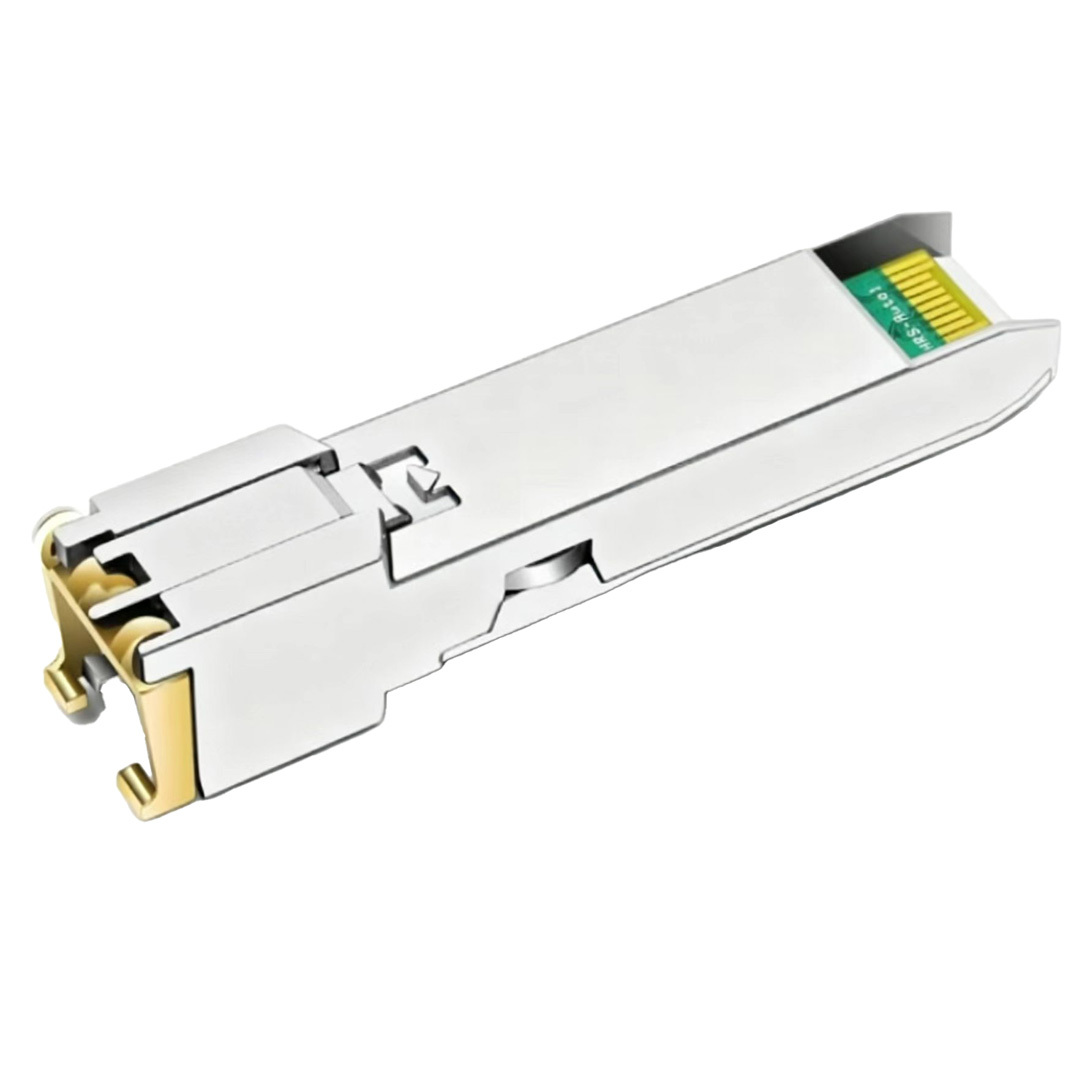
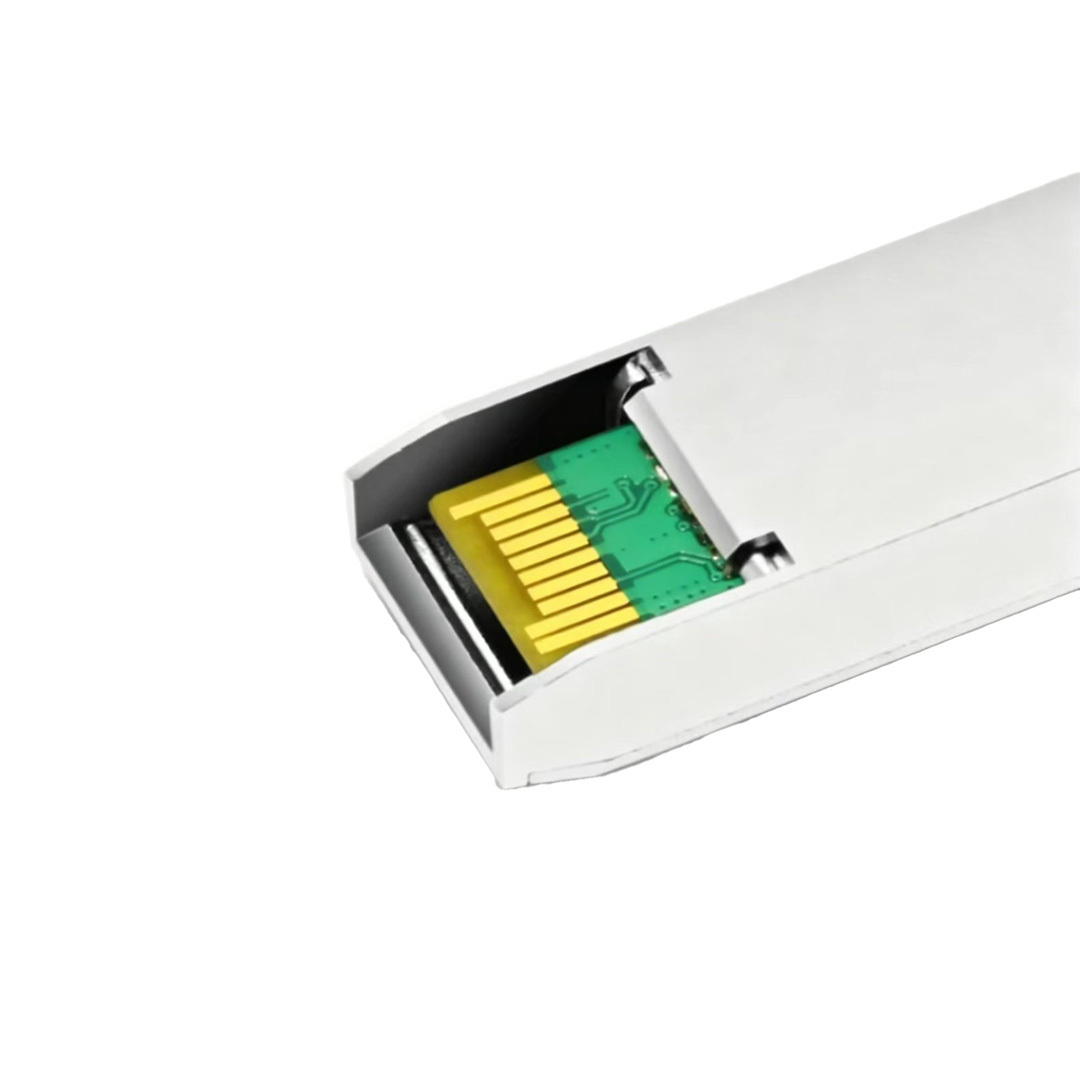
HYTOPTODEVICE’s H3C SFP-GE-T-I compatible industrial copper SFP transceiver delivers stable 1000BASE-T gigabit Ethernet over UTP copper cabling. This rugged RJ45 module maintains reliable connectivity under extreme temperature swings, vibration and heavy electromagnetic interference. It fits factory production lines, traffic control and outdoor cabinet networking, where regular commercial transceivers cannot survive tough field conditions. Hot-pluggable SFP form factor supports up to 100m transmission over Cat5e/Cat6 cable. Compliant with IEEE 802.3ab and SFP MSA standards. Pre-flashed EEPROM enables seamless plug-and-play deployment on H3C Comware OS without unapproved transceiver warning logs. Fixed 1000Mbps only; 10/100Mbps speeds are unsupported.
Key Technical Specifications
| H3C Compatible | SFP-GE-T-I | Vendor Name | HYTOPTODEVICE |
| Form Factor | SFP | Data Rate | 1000Mbps |
| Connector | RJ-45 | Cable Distance | 100m |
| Media | Copper | Cable Type | Cat 5e/6/6a (UTP) |
| Max. Power Consumption | ≤1.2W | DDM Support | YES |
| Protocols | MSA Compliant, IEEE STD 802.3 and 802.3ab | Operation Temperature | -40 to 85°C (-40 to 185°F) |
Standard: Cat5e or Cat6 twisted-pair cable is required to achieve full 100-meter Gigabit performance.
Note: Standard Cat5 cable may limit link stability at full 1G speed and is not recommended.
Live Insertion: The SFP RJ45 transceiver supports live insertion and removal.
Precaution: Avoid repeated hot swapping under continuous heavy traffic loads to ensure optimal hardware longevity.
Heat Dissipation: This 1Gbps copper module generates mild heat during operation.
Deployment Advice: Verify the switch thermal budget and ensure adequate ventilation before fully populating all SFP ports.
Fixed Rate: This RJ45 transceiver operates at a fixed 1000Mbps speed only.
Compatibility Warning: It cannot auto-negotiate down to 100Mbps or 10Mbps. The connected peer device must support 1G speed to successfully establish a link.
Storage Environment: Keep unused transceivers stored in dry, ESD-safe packaging.
Dust Protection: Always fit dust caps onto the RJ45 port when the module is not in service.
Built on SFP MSA and IEEE standards, it works with Cisco, Juniper, Extreme, Brocade, MikroTik, Huawei, HPE and more for mixed-brand industrial automation, smart grid and railway deployments.
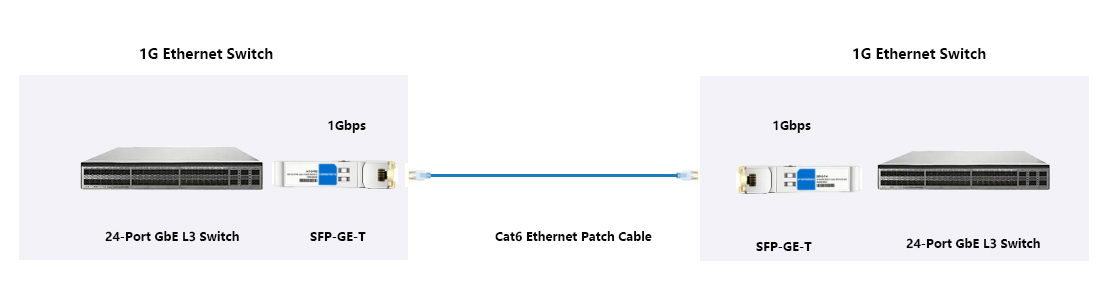
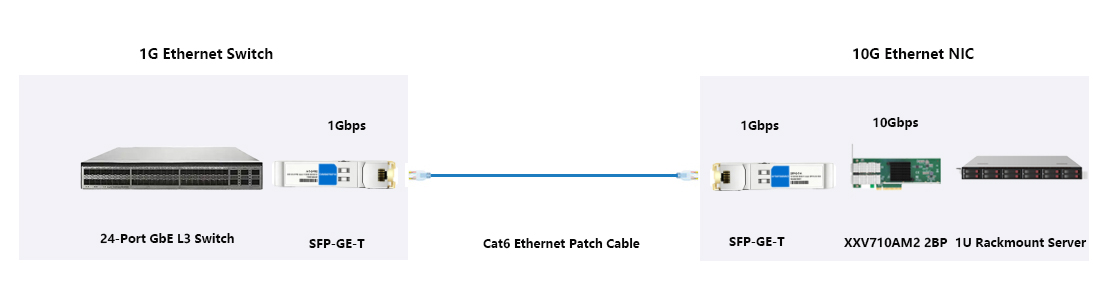
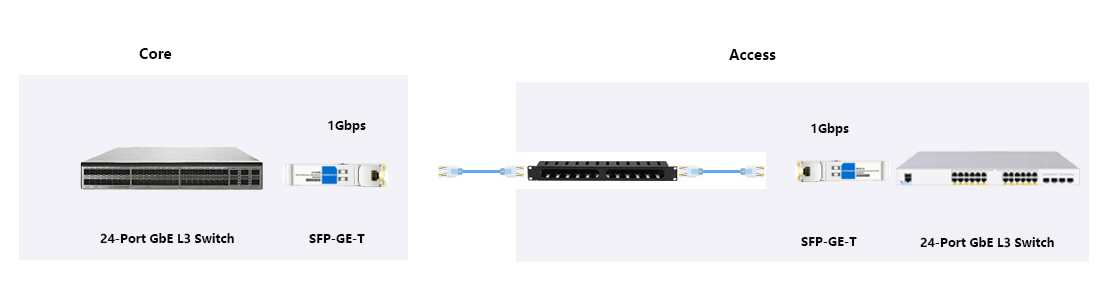
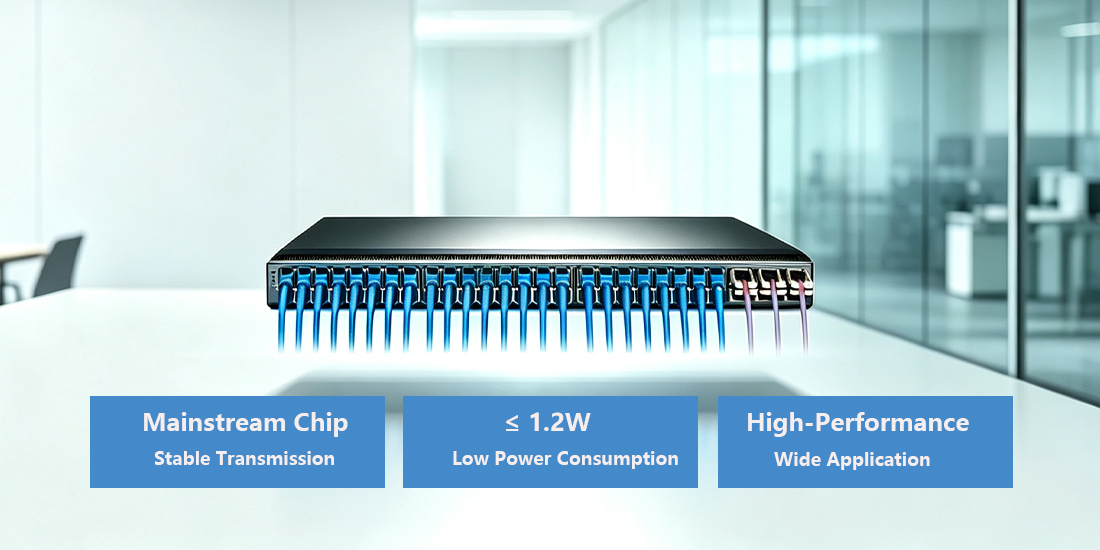
The Core Features


FAQ
Q1: How will 1000BASE-T copper links perform under heavy concurrent user traffic? A: 1000BASE-T handles multi-user traffic within its 1Gbps bandwidth limit. Practical usable throughput reaches ~940Mbps after protocol overhead. HYTOPTODEVICE industrial H3C SFP-GE-T-I module maintains stable packet forwarding in congested factory LAN environments, but heavy simultaneous streams will create queuing latency; proper QoS on the host switch reduces packet drops.
Q2: Can 1000BASE-T copper links satisfy 4K and 8K media file transfer tasks? A: 1000BASE-T is suitable for 4K media transfer but insufficient for uncompressed 8K editing workflows. Sustained throughput caps near 940Mbps. Our HYTOPTODEVICE industrial 1000BASE-T copper SFP works reliably for compressed 4K video transmission in industrial media recording cabinets, while raw 8K requires higher-speed 10G links.
Q3: What happens to 1000BASE-T connections when facing packet loss and electrical noise? A: 1000BASE-T automatically retransmits lost packets but latency rises under heavy interference. HYTOPTODEVICE industrial grade H3C SFP-GE-T-I transceiver includes robust signal equalization to combat noise in factory environments, though severe EMI from motors will trigger retransmissions and slow down application-level performance.
Q4: Can 1000BASE-T still meet future demands for smart factory and building automation? A: Yes, 1000BASE-T remains future-proof for most smart office and industrial automation use cases. Modern IoT sensors, access control and building automation only require modest bandwidth. HYTOPTODEVICE 1000BASE-T industrial copper SFP delivers stable gigabit links for smart factory cabinet networking for years of lifecycle.
Q5: What maximum cable run can 1000BASE-T support before signal quality degrades? A: The standard maximum reach for 1000BASE-T is 100 meters using Cat5e or Cat6 cable. HYTOPTODEVICE H3C SFP-GE-T-I industrial SFP transceiver fully complies with IEEE 802.3ab, maintaining error-free transmission up to 100m; exceeding this length causes signal attenuation and intermittent link drops in industrial cabling runs.
Q6: Why select 1000BASE-T copper instead of newer 2.5G or 10G Ethernet standards? A: 1000BASE-T delivers better total cost of ownership for industrial edge deployments. Existing Cat5e/Cat6 cabling can be reused without rewiring. HYTOPTODEVICE industrial 1000BASE-T copper SFP offers mature, stable performance for factory production lines and traffic control systems where 2.5G/10G bandwidth is unnecessary and increases hardware expense.
Q7: What failure rates should buyers expect for 1000BASE-T NIC and switch port hardware? A: Enterprise-grade NIC and SFP ports have very low failure rates under proper operating conditions. Consumer hardware fails more frequently in hot, vibrating industrial cabinets. HYTOPTODEVICE industrial H3C SFP-GE-T-I copper module passes 3-temperature burn-in testing, delivering much longer MTBF than commercial copper transceivers in harsh field environments.
Q8: What unexpected costs should network planners budget for large-scale 1000BASE-T rollout? A: The main hidden costs are cable testing, surge protection and preventive maintenance for industrial sites. While HYTOPTODEVICE bulk wholesale industrial 1000BASE-T SFP modules have competitive unit pricing, outdoor cabinet deployments require ESD/surge protection and regular cable inspection to avoid unexpected downtime.
Q9: Is purchasing multiple standalone 1G switches cheaper than one high-density modular chassis? A: Modular switches are cheaper for large-scale expanding industrial networks. Separate standalone switches add extra power supplies and management overhead. HYTOPTODEVICE’s H3C compatible industrial 1000BASE-T SFP modules turn free SFP slots into RJ45 ports, maximizing port density and reducing total hardware cost for factory networking.
Q10: Which management protocols are supported on enterprise 1000BASE-T switch platforms? A: Enterprise 1000BASE-T switches commonly support SNMP, LLDP, SSH and RMON. HYTOPTODEVICE industrial H3C SFP-GE-T-I copper SFP works transparently with these standard management protocols on H3C Comware OS, allowing full port monitoring and diagnostics for industrial LAN deployments.
Q11: How vulnerable is unshielded 1000BASE-T copper wiring to physical tapping and data interception? A: Unshielded 1000BASE-T copper cable is vulnerable to physical tapping if the cable is accessible. Unlike fiber, UTP copper leaks electromagnetic signals. For high-security industrial traffic control networks using HYTOPTODEVICE 1000BASE-T industrial SFP modules, use shielded Cat6 cabling and physical cable containment to reduce eavesdropping risk.
Q12: Are consumer-grade 1000BASE-T switches dependable enough for small business LAN deployments? A: Consumer-grade switches work for mild office environments but are unreliable for industrial locations. They lack wide-temperature support and vibration resistance. HYTOPTODEVICE industrial H3C SFP-GE-T-I copper transceiver is designed for -40~+85℃ operation, making it far more suitable for factory production lines and outdoor cabinet networking than consumer transceivers.
Q13: What damage can lightning surges bring to field-installed 1000BASE-T copper networks? A: Lightning-induced surges can damage 1000BASE-T copper ports without surge protection. The copper cable acts as an antenna to carry transient voltage into switch ports. When using HYTOPTODEVICE industrial 1000BASE-T SFP modules for outdoor cabinet networks, install Ethernet surge protectors at both cable ends to absorb voltage spikes.
Q14: Can electric motors or fluorescent lighting create EMI issues for 1000BASE-T copper links? A: Yes, 1000BASE-T UTP links are susceptible to EMI near motors and fluorescent ballasts. Heavy electrical noise raises bit error rates and causes packet loss. HYTOPTODEVICE industrial H3C SFP-GE-T-I copper SFP has enhanced signal processing to tolerate moderate EMI, but factory installations should separate copper cables from high-power motor wiring.
Q15: How does port mirroring function on 1000BASE-T switches for continuous network diagnostics? A: Port mirroring copies traffic from selected 1000BASE-T ports to a designated monitoring port for analysis. HYTOPTODEVICE H3C compatible industrial 1000BASE-T SFP-GE-T-I module supports this feature transparently on H3C Comware OS, enabling continuous traffic inspection for troubleshooting factory automation networks.
Packaging & Custom OEM Solutions
ESD Protection & Fast Shipping: Every module is sealed in an ESD-safe bag and ready for same-day dispatch from stock.
Custom OEM & Branding: We provide logo printing, private labeling, and custom packaging to help distributors and integrators build their brand—no factory investment required.

Why Network Engineers Choose HYTOPTODEVICE
HYTOPTODEVICE has supplied over 5000,000 optical transceiver modules to data centers, ISPs, and enterprise networks across 100+ countries since 2011. Every module undergoes a 72-hour burn-in test and full DDM/DOM validation before shipment.
“Phenomenal performance. We deployed 200 HYTOPTODEVICE SFP modules to replace Cisco OEMs in our backbone network. Result? Zero compatibility issues and a 60% reduction in costs. Highly recommended for mission-critical networks."— Senior Network Engineer, Regional Telecom, Australia
Quality Certification & Compliance
At HYTOPTODEVICE, our quality commitment is backed by industry-standard validations. From fiber optical transceiver manufacturing to final visual inspection, from IQC、IPQC、FQC to OQC, our processes ensure global compliance and reliability.
We adhere to rigorous standards for our SFP modules and network solutions:
ISO 9001: Certified quality management and production consistency.
CE & FCC: Fully compliant for seamless Global Market Access.
RoHS: Committed to environmental responsibility and hazardous material control.
Proven Reliability: Rigorous testing to reduce compliance risk and ensure safety.
Certified Quality. Global Standards. Guaranteed Performance.