Q1: Why cannot 10G BiDi SFP+ Transceiver 60km be directly integrated into standard CWDM and DWDM multiplexing networks?
A1: Unlike grid-tunable WDM optical modules that support flexible channel switching, Juniper-compatible10G BiDi SFP+ Transceiver 60km adopts fixed 1270nm/1330nm internal wavelength design without adjustable frequency bands or standard WDM channel specifications. Its locked wavelength structure cannot match the precise channel spacing requirements of CWDM/DWDM multiplexer systems, making it unable to implement multi-waveband signal multiplexing and hybrid transmission in carrier WDM networking architectures.
Q2: Why do single-fiber BiDi deployments trigger frequent ODF port configuration errors on Juniper long-haul networks?
A2: Conventional network operation and maintenance workflows are built around dual-fiber TX/RX paired cabling logic, which is the habitual judgment standard for most field engineers. The 10G BiDi SFP+ Transceiver 60km only occupies a single fiber core to complete full-duplex transmission, eliminating the traditional dual-fiber pairing structure. When sorting ODF ports, staff often mistakenly pull out active neighboring live circuits while searching for the missing receive fiber, causing widespread labeling disorder and accidental service outages on Juniper campus and metro networks.
Q3: Why is on-site loopback verification extremely difficult for Juniper 10G BiDi SFP+ 60km single-fiber links?
A3: Traditional dual-fiber 10G modules support simple on-site loopback testing by physically connecting the transmit and receive ports with jumpers. However, the 10G BiDi SFP+ Transceiver 60km integrates both sending and receiving functions into one single fiber interface, with internal automatic signal transceiving switching. This structural design completely rules out basic physical loopback operation, leaving field technicians without a quick and effective means to verify port and link integrity during Juniper network deployment and troubleshooting.
Q4: What irreversible hardware damage risk do APD receivers face on 60km BiDi transceiver for Juniper links?
A4: The high-sensitivity APD receiving chip inside 10G BiDi SFP+ Transceiver 60km has extremely strict tolerance limits for input optical power and operating voltage. Sudden optical power surges from misoperation or instantaneous voltage fluctuations in Juniper equipment rooms can trigger avalanche breakdown of the APD component. This destructive failure is irreversible, directly burning out the receiving module and causing permanent scrapping of the long-haul BiDi transceiver.
Q5: How do extreme ambient temperature changes affect the stability of 60km long-span Juniper BiDi fiber links?
A5: Unattended outdoor telecom cabinets and field equipment rooms lack constant temperature control, bringing drastic seasonal temperature fluctuations. High-temperature environments in summer will reduce the laser luminous efficiency of 10G BiDi SFP+ Transceiver 60km and increase internal receiver noise. This creates a bizarre intermittent fault state where Juniper links operate stably at low night temperatures but suffer continuous frame loss and packet jitter during high-temperature daytime periods, which is difficult for routine monitoring to detect in advance.
Q6: How does legacy fiber PMD interference trigger hard-to-locate intermittent faults on Juniper 10G BiDi 60km links?
A6: Aged legacy G.652 fiber pipelines widely deployed in traditional network reconstruction projects have obvious Polarization Mode Dispersion characteristics. When optical signals of 10G BiDi SFP+ Transceiver 60km transmit over 60km ultra-long distances, PMD will stretch and deform optical pulses, resulting in completely irregular and non-reproducible random packet loss. This type of hidden intermittent fault has no fixed occurrence rules, becoming one of the most difficult troubleshooting problems for Juniper metro backbone network operation teams.
Q7: Why excessive patch panel cross-connections easily cause 60km BiDi link outage on Juniper networks?
A7: The optical power budget of 10G BiDi SFP+ Transceiver 60km is precisely calibrated for 60km long-distance transmission, with almost no redundant attenuation margin. Each additional patch panel adapter, fiber jumper and docking node will bring unavoidable insertion loss and optical reflection loss. In actual Juniper network deployment, adding merely two extra cross-connection points will fully exhaust the reserved optical power tolerance, directly leading to link instability or complete disconnection.
Q8: Why do third-party 60km BiDi modules trigger uncertified module alarms on Juniper switches?
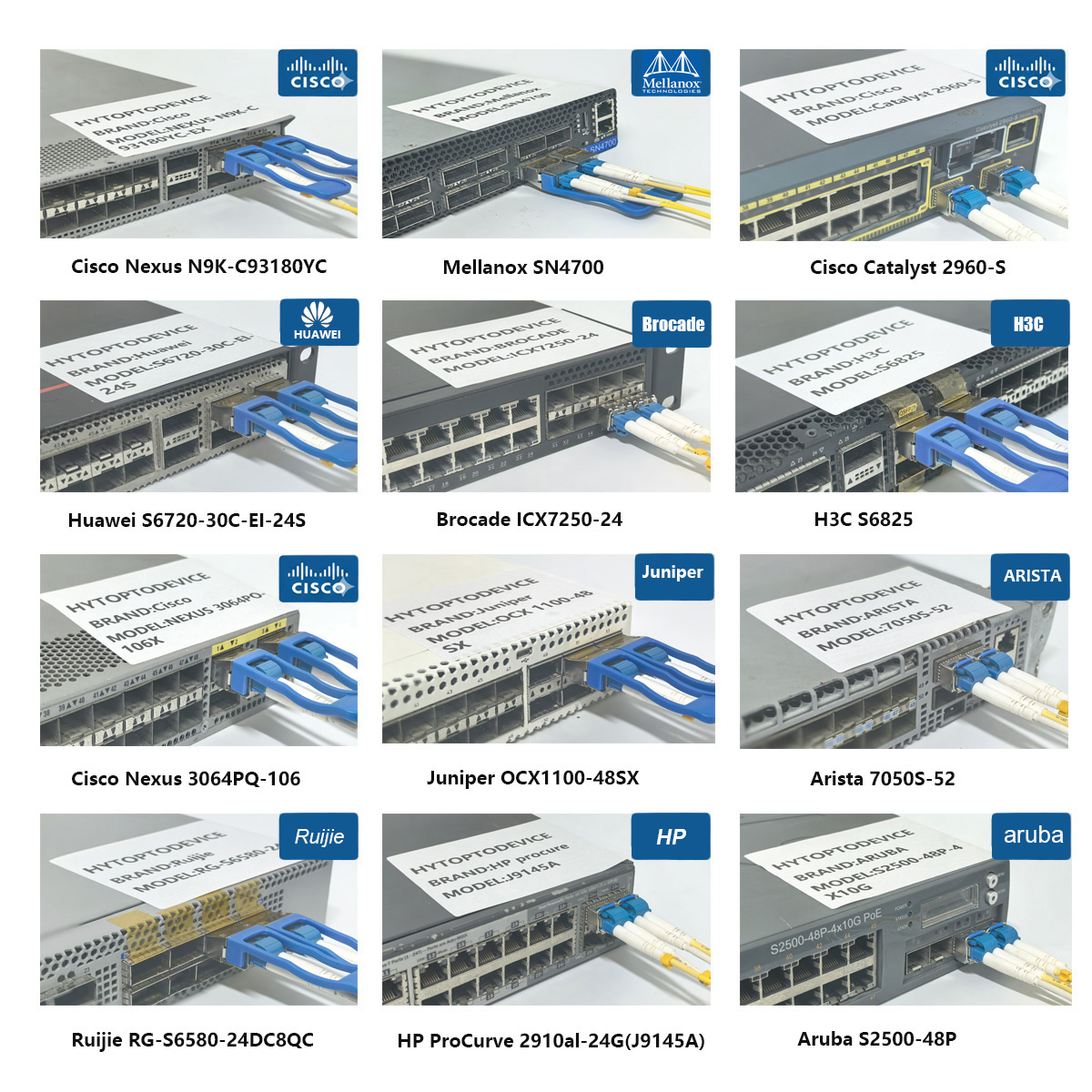
A8: Mainstream enterprise-grade Juniper switching devices adopt strict OEM vendor lock-in authentication mechanisms. Most universal 10G BiDi SFP+ Transceiver 60km are third-party non-original modules; if the EEPROM authentication data, built-in cryptographic keys and factory calibration information are not perfectly adapted to Juniper’s official verification standards, the system will immediately identify uncertified hardware and forcibly block port activation, resulting in port failure and link setup failure.
Q9: Why is rate downgrade deployment of 10G BiDi transceivers on 25G/100G Juniper high-density ports unstable?
A9: New-generation high-density 25G/100G Juniper switch ports are optimized for multi-rate dual-fiber high-speed transmission architecture, with poor compatibility for single-fiber BiDi rate downgrade scenarios. These ports cannot stably lock 10G low-speed rate for 10G BiDi SFP+ Transceiver 60km; even if forced adaptation is successful, frequent clock synchronization abnormalities and signal flapping will occur, leading to continuous intermittent link failures and unable to support stable business transmission.
Q10: What operational risks result from mismatched industrial and commercial grade BiDi modules for outdoor Juniper deployments?
A10: Outdoor roadside and unattended communication cabinet scenarios require wide-temperature industrial-grade optical modules to adapt to extreme weather environments. Commercial-grade 10G BiDi SFP+ Transceiver 60km only supports 0°C~70°C working temperature and cannot withstand ultra-low temperature in winter and ultra-high temperature heat in summer. Improper replacement and deployment will cause frequent module crash reset, link flapping, and even permanent chip burnout in extreme temperatures, seriously threatening the stable operation of outdoor Juniper long-haul links.