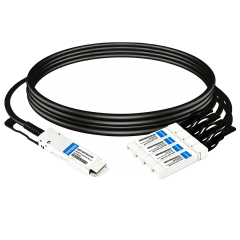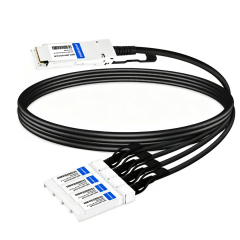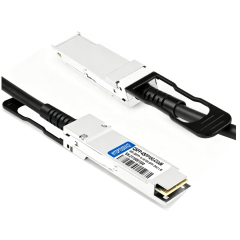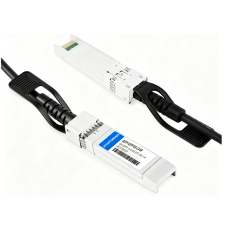
| NO. | Brand | Compatible P/N | Transceiver Type |
| 1 | Cisco | QSFP-4SFP10G-CU50CM | |
| 2 | Arista Networks | CAB-Q-S-0.5M | |
| 3 | Juniper | QFX-QSFP-DACBO-50CM | |
| 4 | Brocade | 40G-QSFP-4SFP-C-0105 | |
| 5 | Dell | 332-1365 | |
| 6 | Intel | X4DACBL50 | |
| 7 | NVIDIA/Mellanox | MC2609130-050 | |
| 8 | IBM | BN-QS-SP-CBL-50CM |
| NVIDIA(Mellanox) Compatible |
MC2609130-050
|
Vendor Name | HYTOPTODEVICE |
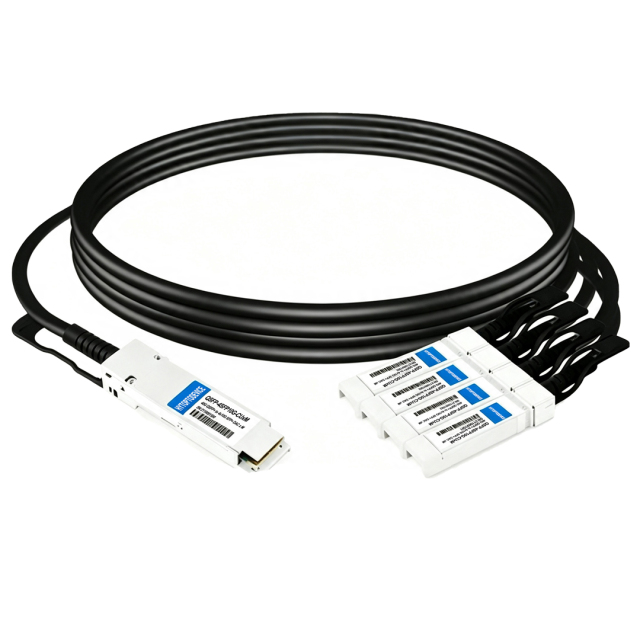
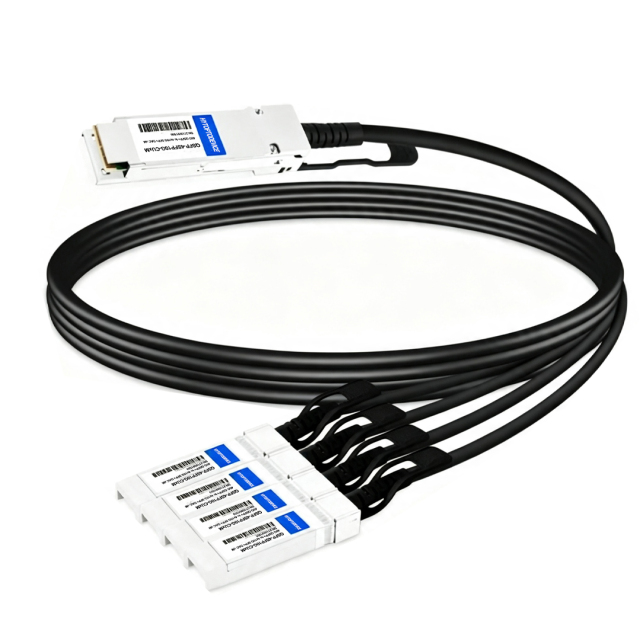
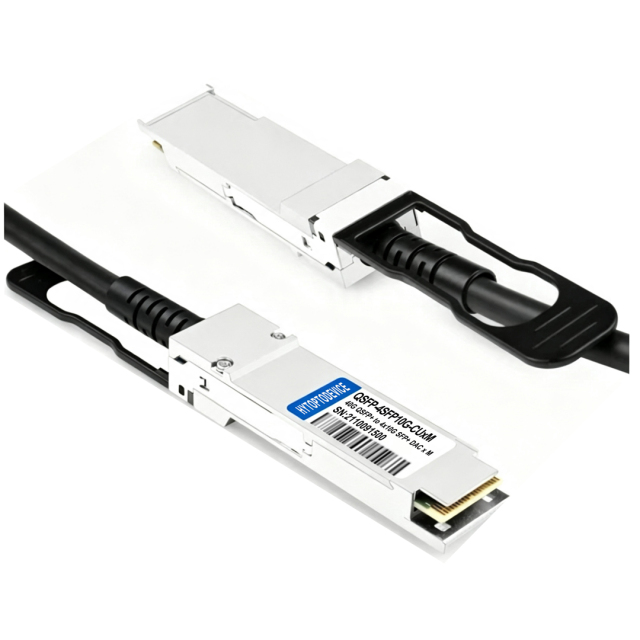
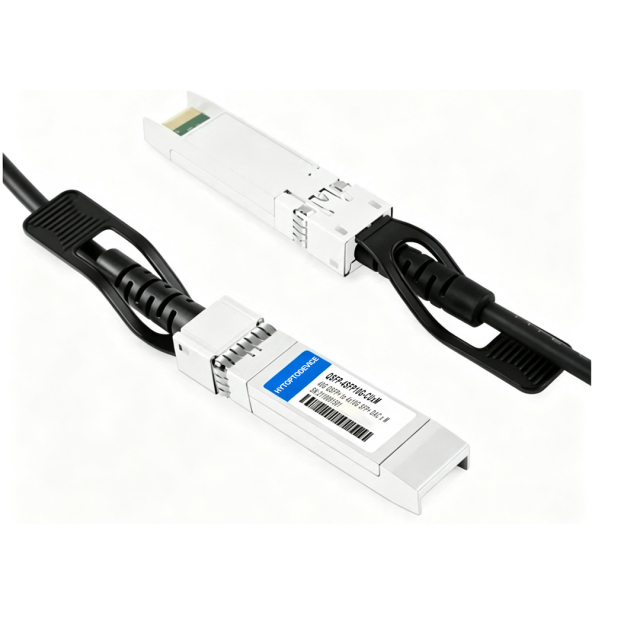
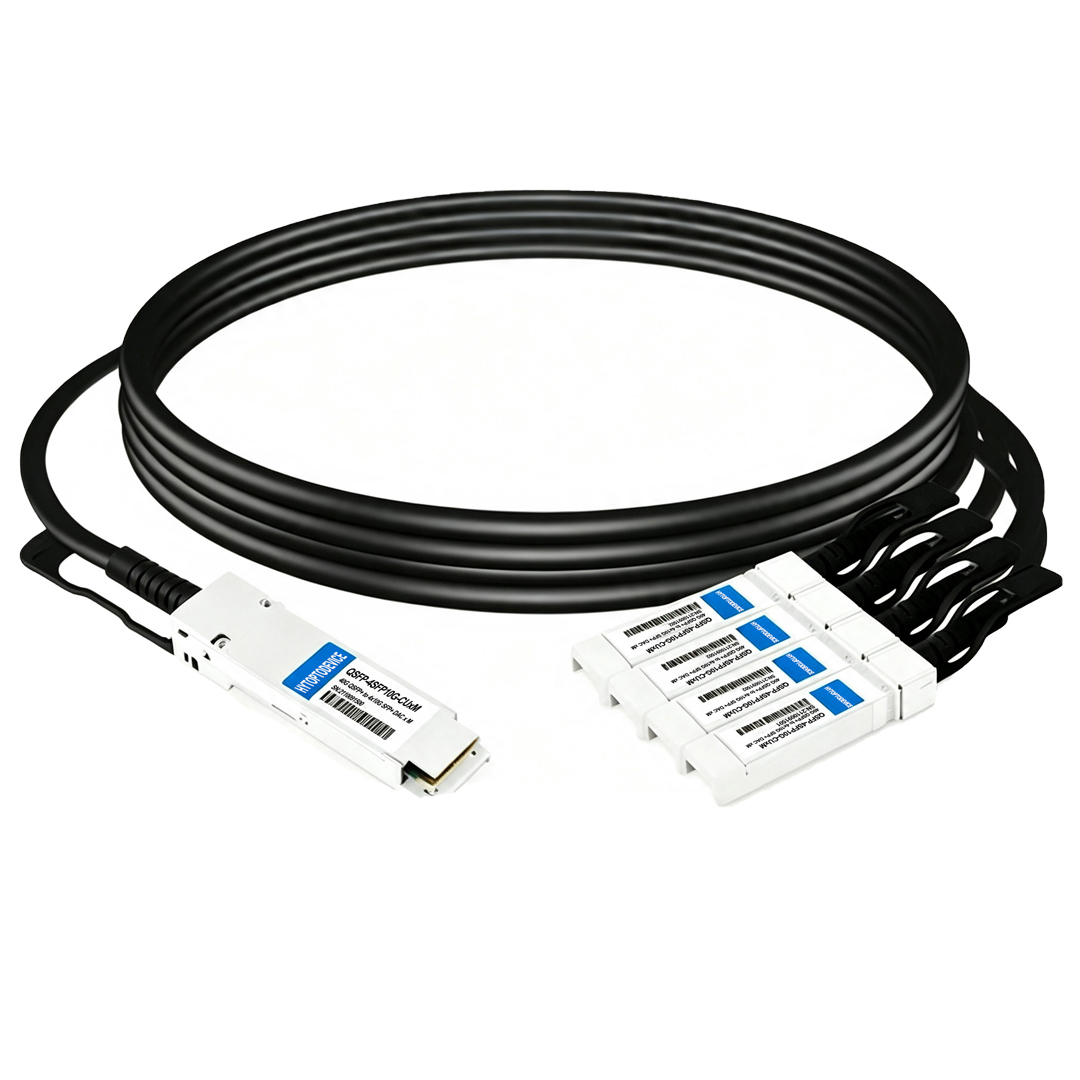
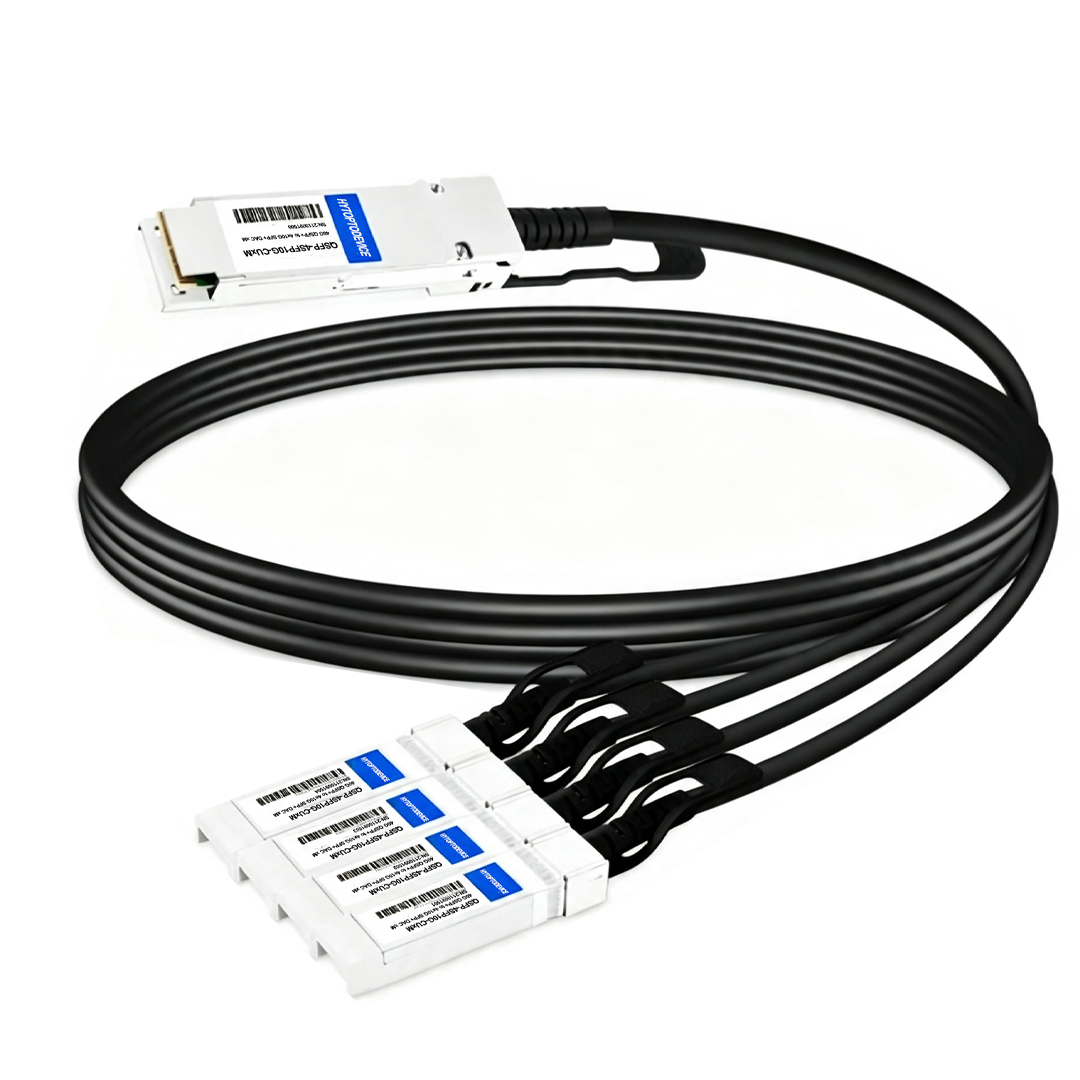
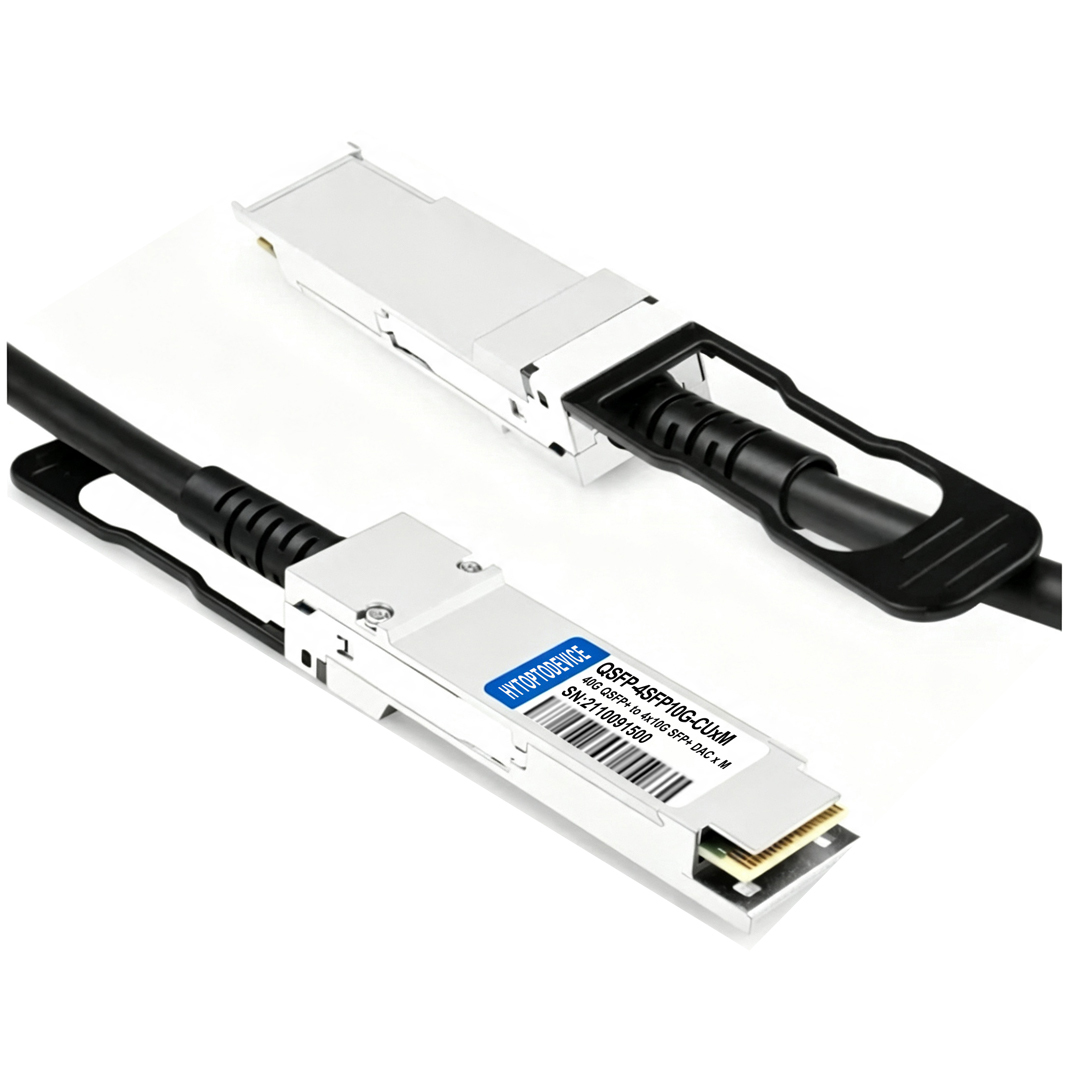
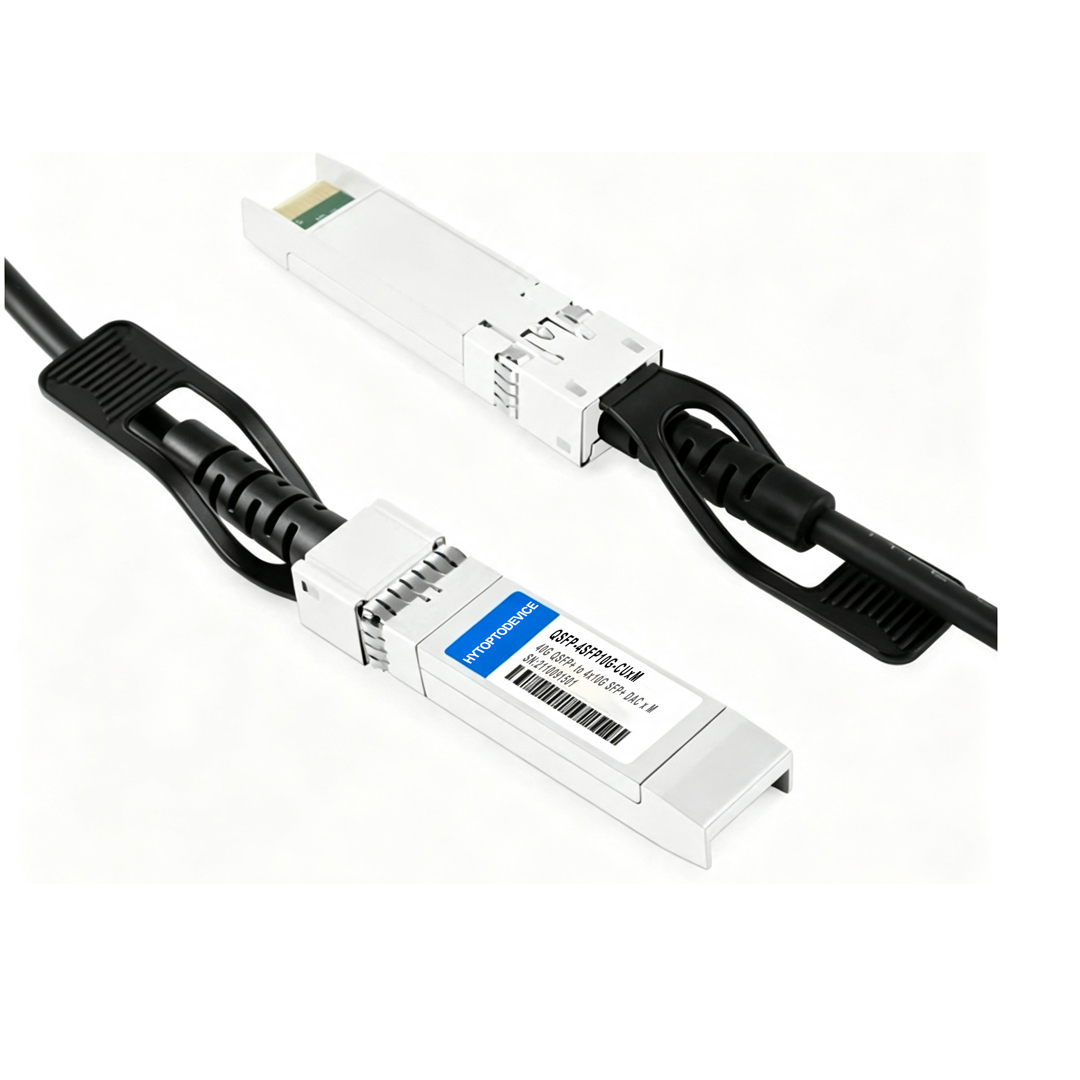
| Connector | QSFP+ to 4 x SFP+ | Max Data Rate | 40Gbps |
| Cable Length | 0.5m (1.6ft) | Wire AWG | AWG 30 |
| Cable Type | Passive Twinax | Power Consumption | ≤0.5W |
| Media | Copper | Operation Temperature | 0~ 70 °C (32 to 158°F) |
| Jacket Material | PVC(OFNR) | Protocols | SFF-8436, SFF-8431 and QSFP+ MSA |
| Minimum Bend Radius | 21mm | Application | 40G InfiniBand 8x DDR, 4x QDR, 10/40 Gigabit Ethernet, Fibre Channel |
Usage Guidelines & Best Practices
Mandatory Port Breakout Configuration: Ensure the host QSFP+ port supports channelization. Enable breakout mode (4x10G) via the switch CLI before connecting the cable.
Cabling Requirements: Do not exceed the minimum 21mm bend radius, avoid sharp folding, heavy extrusion or long-term tension on the cable assembly.
Port Installation Standard: Do not mix this breakout DAC with straight QSFP+ to QSFP+ DAC configuration.
Hot‑swap rule:Never pull or tug directly on the individual breakout legs. Always use the integrated pull-tab or bale latch when inserting or removing connectors.
Operating Environment: 0‑70℃, indoor cabinet deployment only.
For detailed operation instructions, please refer to the User Guide.
Full Compatibility List & Supported Devices
Built on universal MSA open standards, this 40G QSFP+ to 4 x 10G SFP+ passive breakout DAC cable can interoperate with mainstream network brands including Arista, Intel, Juniper, Dell, NVIDIA Mellanox and IBM, for mixed-vendor rack stacking and server fabric expansion.
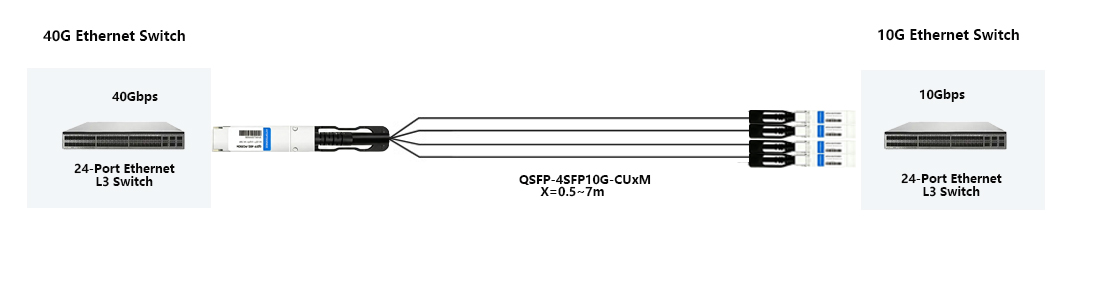
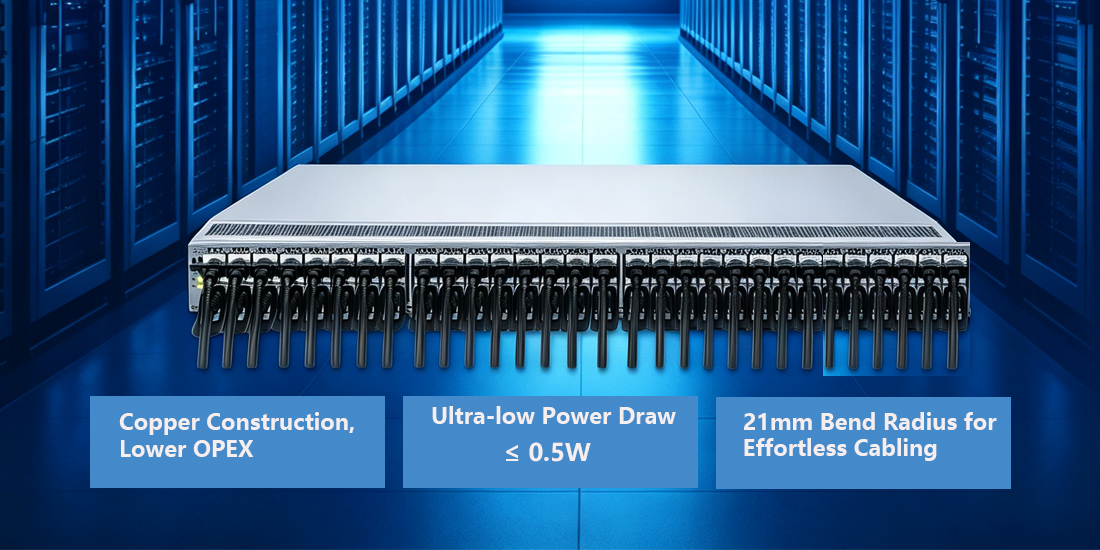


Q1: Can I use different brand codings on each end (e.g., Cisco on the QSFP+ end and Dell on the SFP+ ends)? A: Yes, custom cross-brand EEPROM coding is available for your QSFP+ 40G to 4x10G Breakout Cable when you place an order. HYTOPTODEVICE supports separate programming for both ends to realize multi-vendor interoperability, ideal for system integrators with mixed-brand server and switch fleets.
Q2: Will this cable work interchangeably with HP, Arista, and Juniper equipment? A: No, each OEM network hardware requires its unique EEPROM signature. You need to provide exact device models during purchase, so HYTOPTODEVICE can pre-code the QSFP+ 40G to 4x10G Breakout Cable to match your target hardware.
Q3: Does this cable support secure locking mechanisms to prevent accidental disconnections? A: Yes, both QSFP+ and SFP+ connectors adopt standard industry latch and pull-tab design. The firm locking structure avoids accidental unplugging, a key benefit for wholesalers deploying QSFP+ 40G to 4x10G Breakout Cable inside dense server racks.
Q4: Will mixing this cable with OEM fiber transceivers in the same port group cause negotiation issues? A: No, DAC and fiber transceivers run independently on separate ports. As long as each interface is configured properly, distributors can mix media types without link negotiation faults when using HYTOPTODEVICE QSFP+ 40G to 4x10G Breakout Cable.
Q5: Do I need to buy matching brand cables for both ends of a direct switch-to-switch connection? A: You must match the EEPROM coding of each connector to the port it plugs into. HYTOPTODEVICE can set independent coding on QSFP+ and SFP+ branches for your QSFP+ 40G to 4x10G Breakout Cable according to your cabling plan.
Q6: Can this cable support full 40Gbps bidirectional throughput simultaneously? A: Yes, it delivers full wire-speed 40Gbps aggregate bandwidth. The four independent 10G lanes transmit and receive traffic at the same time, meeting high throughput demands for data center buyers purchasing this QSFP+ 40G to 4x10G Breakout Cable.
Q7: Do I need to manually configure my switch port to split the 40G port into 4x 10G ports? A: Yes, most switches require CLI channelization commands to enable breakout mode. Without this configuration, the switch cannot recognize the four 10G sub-channels of your HYTOPTODEVICE QSFP+ 40G to 4x10G Breakout Cable after installation.
Q8: What happens if I plug the QSFP+ end into a 100G QSFP28 port? A: QSFP+ follows 40G electrical specifications. It will not establish stable links on native 100G QSFP28 ports unless the platform supports special downshift functions, which cannot be guaranteed for stocked QSFP+ 40G to 4x10G Breakout Cable.
Q9: How do I verify if the switch is successfully recognizing all four breakout channels? A: You can run standard CLI commands to check interface status and inventory. This validation step is strongly recommended for IT contractors after deploying HYTOPTODEVICE QSFP+ 40G to 4x10G Breakout Cable on production switches.
Q10: Can I daisy-chain multiple breakout cables together to achieve longer distances? A: No, passive twinax DAC cables cannot be daisy-chained. Cascading cables will exceed signal loss thresholds and trigger link outages, so HYTOPTODEVICE QSFP+ 40G to 4x10G Breakout Cable is only for single-segment rack cabling.
Q11: Is the cable jacket plenum-rated (CMP) or riser-rated (CMR) for in-wall installation? A: Standard HYTOPTODEVICE QSFP+ 40G to 4x10G Breakout Cable uses PVC or LSZH jacket. It is engineered for intra-rack wiring only and not certified for plenum air spaces or concealed in-wall runs for reseller stock.
Q12: Does the cable generate heat during operation? A: No, passive twinax copper has no active chips and consumes zero power. It produces no thermal output, which makes this QSFP+ 40G to 4x10G Breakout Cable a preferred low-heat option for high-density HPC cluster procurement.
Q13: What is the outer diameter (OD) of the cable bundle? A: The main trunk outer diameter ranges 5mm–8mm and splits into thinner individual 10G legs. Its slim profile simplifies cable management for value-added resellers stocking the HYTOPTODEVICE QSFP+ 40G to 4x10G Breakout Cable.
Q14: Is the cable compliant with RoHS and environmental safety standards? A: Yes, all HYTOPTODEVICE QSFP+ 40G to 4x10G Breakout Cable pass RoHS testing. They are lead-free and environmentally compliant for global cross-border buyers and export orders.
Q15: Is there any risk of counterfeit chips or EEPROMs in third-party DAC cables? A: Low-quality third-party cables often carry uncertified counterfeit EEPROM chips and cause handshake failures. Buy your QSFP+ 40G to 4x10G Breakout Cable directly from HYTOPTODEVICE factory to avoid such compatibility risks for bulk inventory.
Packaging & Custom OEM Solutions
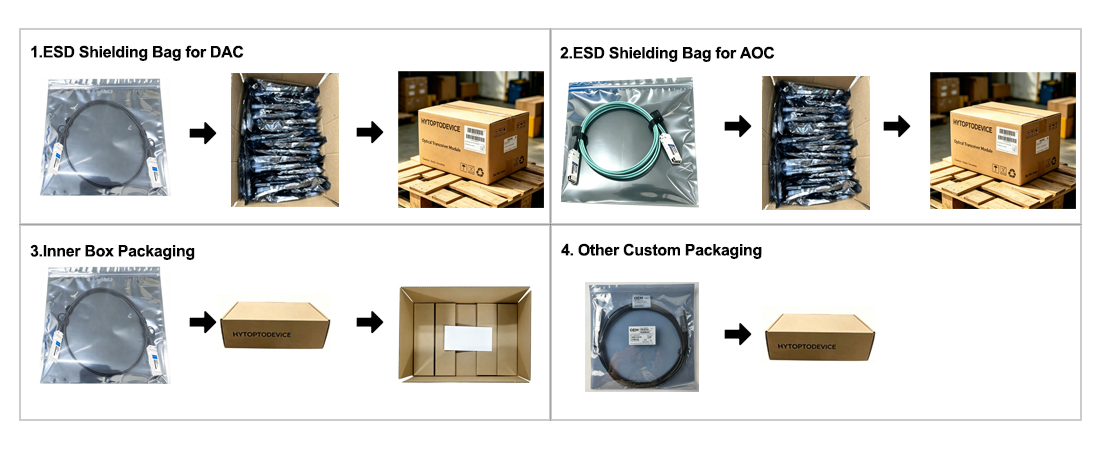
ESD Protection & Fast Shipping: Every transceiver is sealed in an ESD-safe bag and ready for same-day dispatch from stock.
Custom OEM & Branding: We provide logo printing, private labeling, and custom packaging to help distributors and integrators build their brand—no factory investment required.
Why Network Engineers Choose HYTOPTODEVICE
HYTOPTODEVICE has supplied over 5000,000 optical transceiver modules to data centers, ISPs, and enterprise networks across 100+ countries since 2011. Every module undergoes a 72-hour burn-in test and full DDM/DOM validation before shipment.
“Phenomenal performance. We deployed 200 HYTOPTODEVICE SFP modules to replace Cisco OEMs in our backbone network. Result? Zero compatibility issues and a 60% reduction in costs. Highly recommended for mission-critical networks."— Senior Network Engineer, Regional Telecom, Australia
Quality Certification & Compliance
At HYTOPTODEVICE, our quality commitment is backed by industry-standard validations. From fiber optical transceiver manufacturing to final visual inspection, from IQC、IPQC、FQC to OQC, our processes ensure global compliance and reliability.
We adhere to rigorous standards for our SFP modules and network solutions:
ISO 9001: Certified quality management and production consistency.
CE & FCC: Fully compliant for seamless Global Market Access.
RoHS: Committed to environmental responsibility and hazardous material control.
Proven Reliability: Rigorous testing to reduce compliance risk and ensure safety.
Certified Quality. Global Standards. Guaranteed Performance.