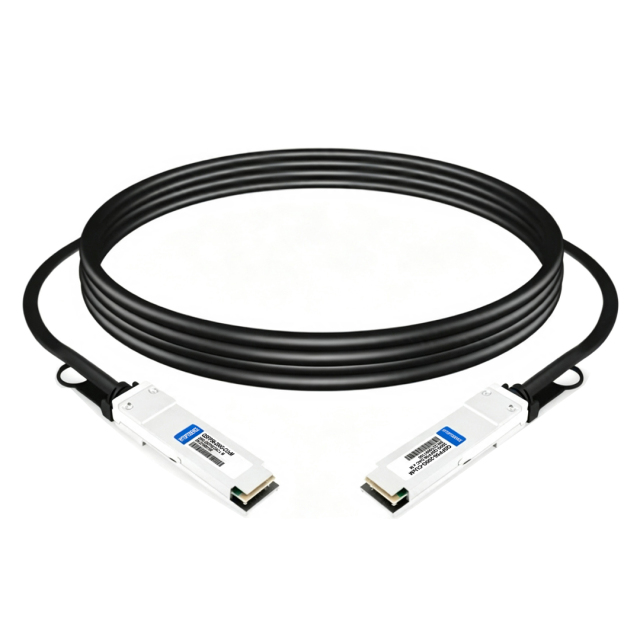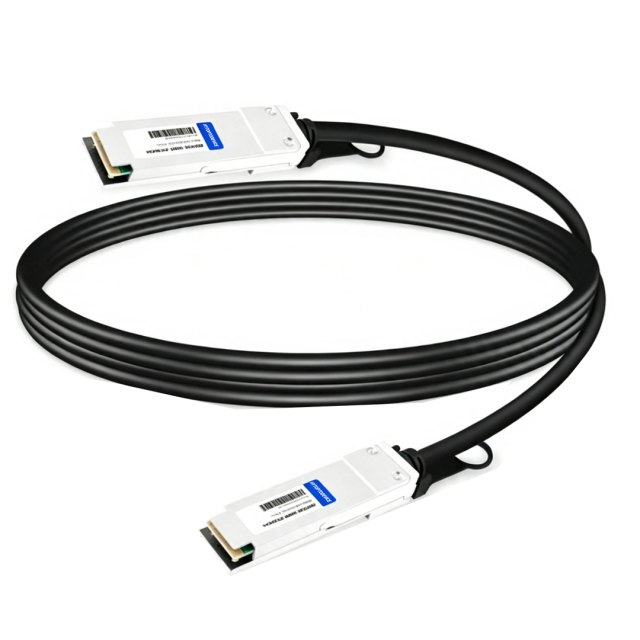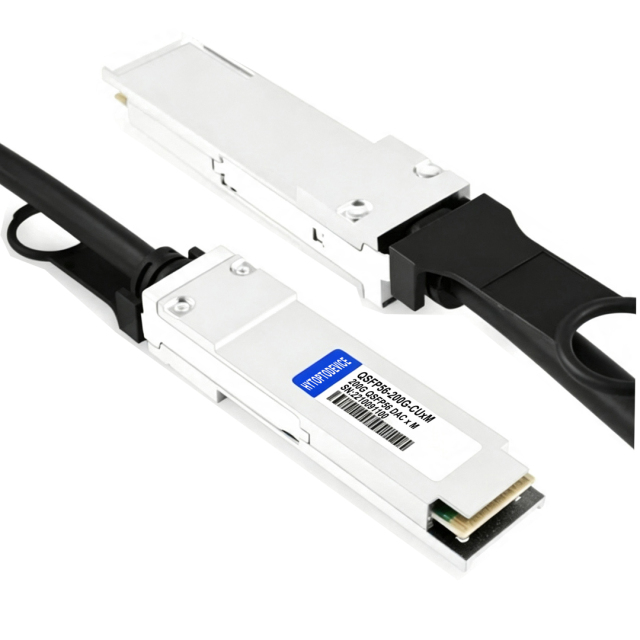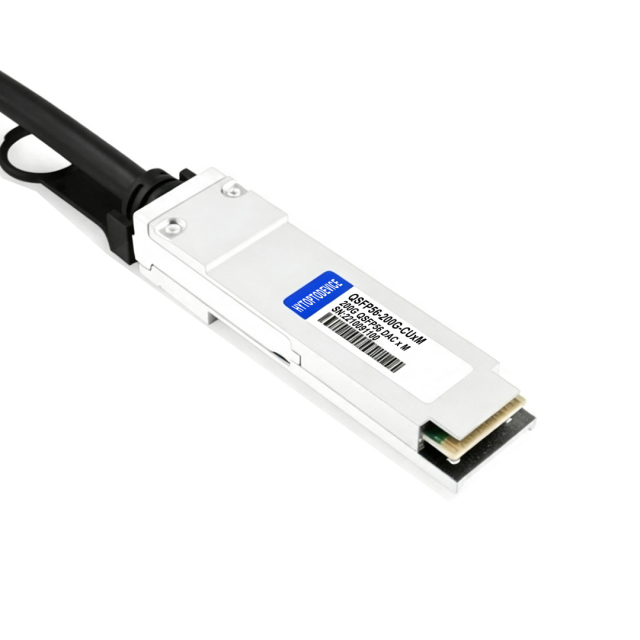
| NO. | Brand | Compatible P/N | Transceiver Type |
| 1 | Cisco | Q56-200-CU1M | |
| 2 | Arista Networks | CAB-Q56-Q56-1M | |
| 3 | Dell | DAC-Q56-200G-1M | |
| 4 | NVIDIA/Mellanox | MCP1650-V001E30 | |
| 5 | H3C | QSFP56-200G-D-DAC-1M | |
| 6 | Huawei | QSFP-200G-CU1M | |
| 7 | Generic | QSFP56-200G-CUxM |
| NVIDIA/Mellanox Compatible |
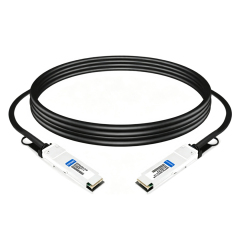
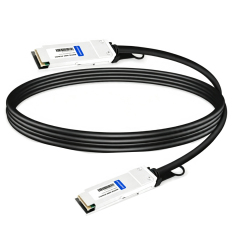
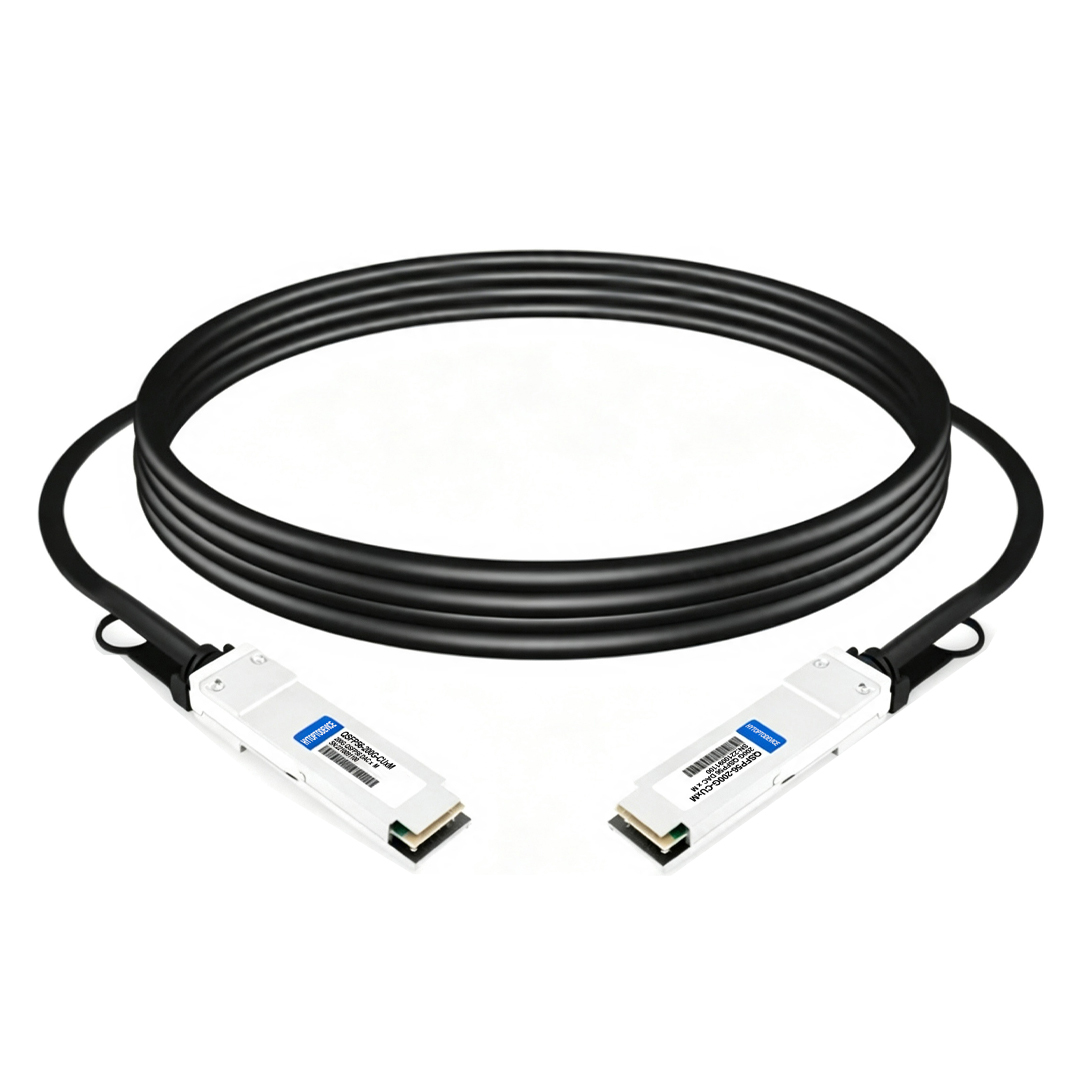
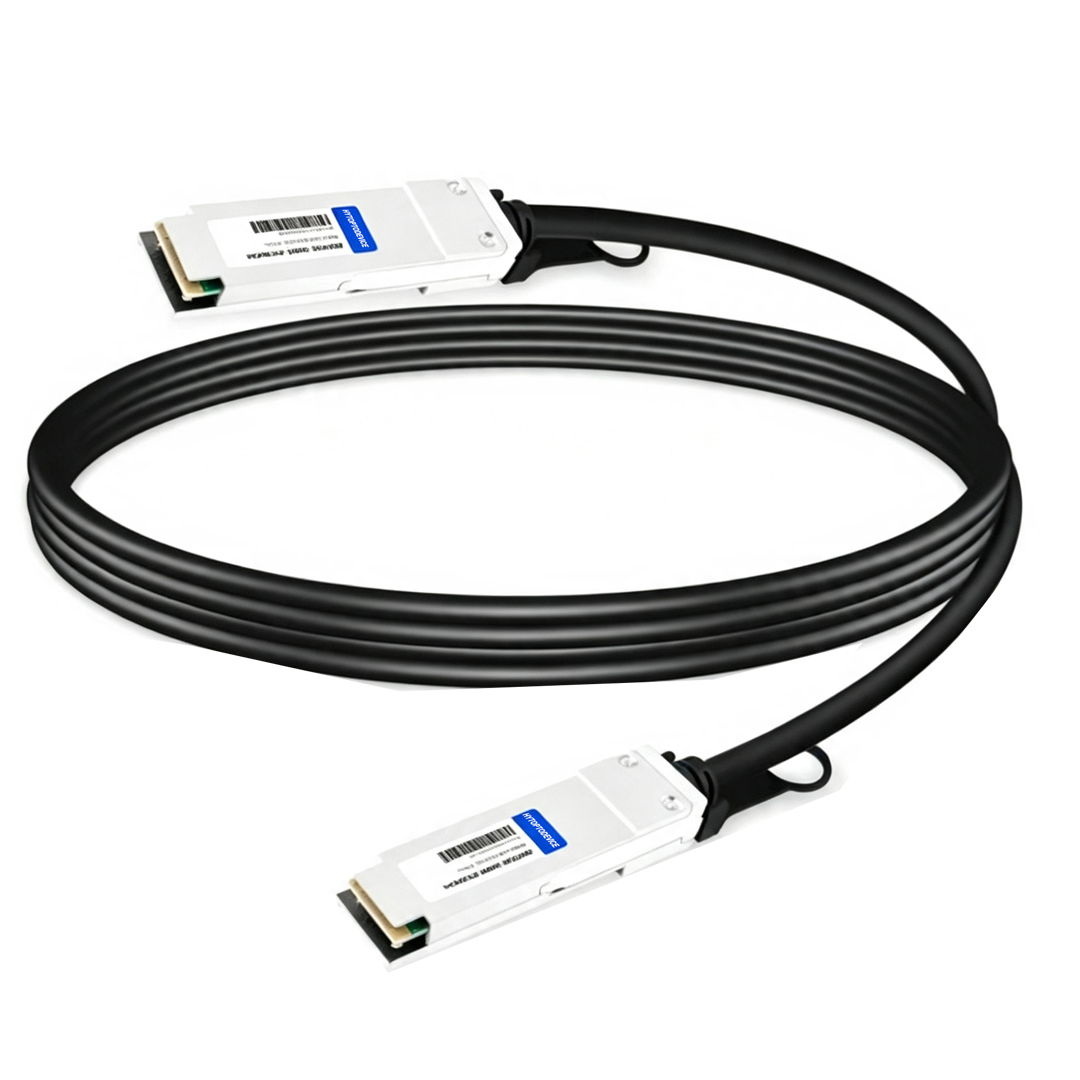
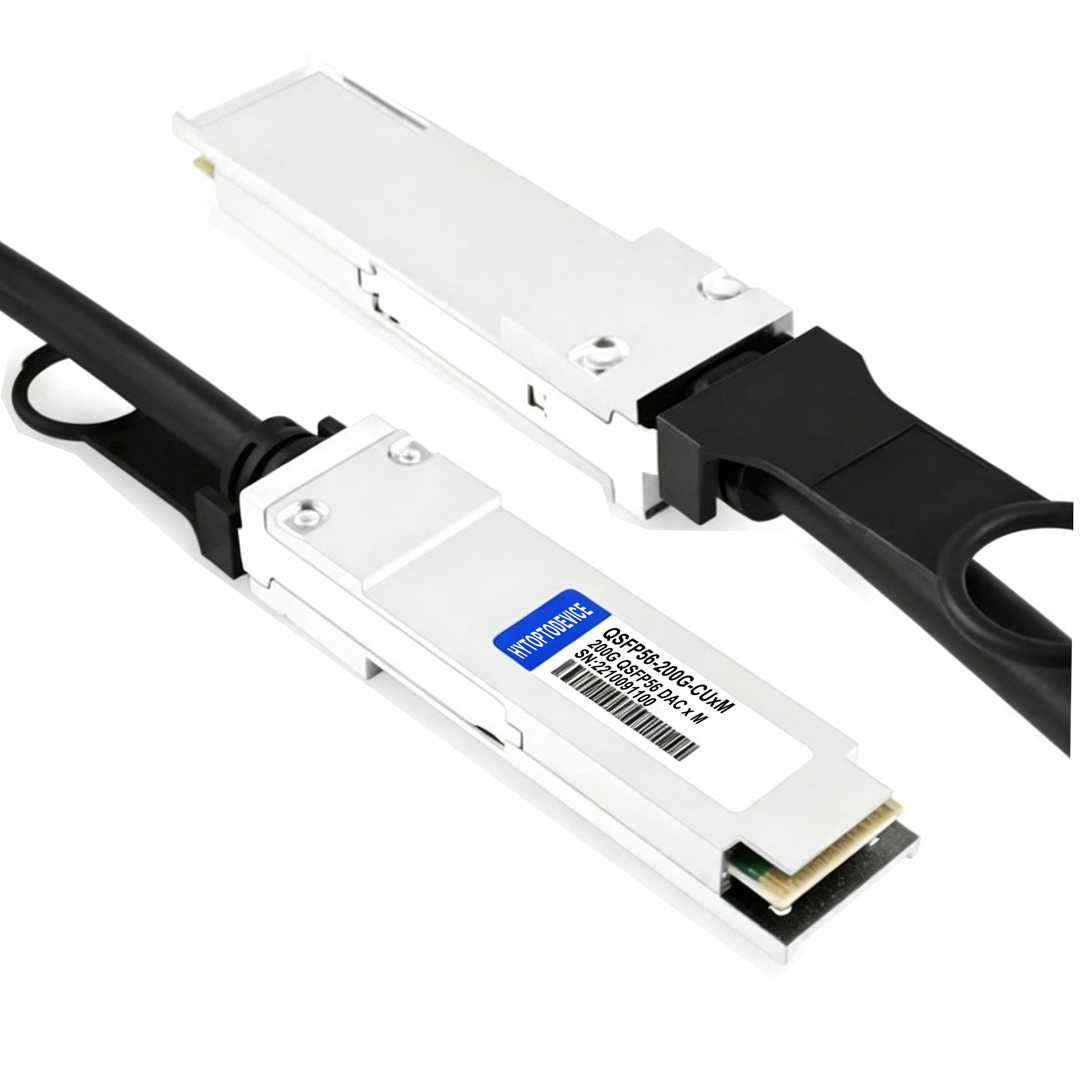
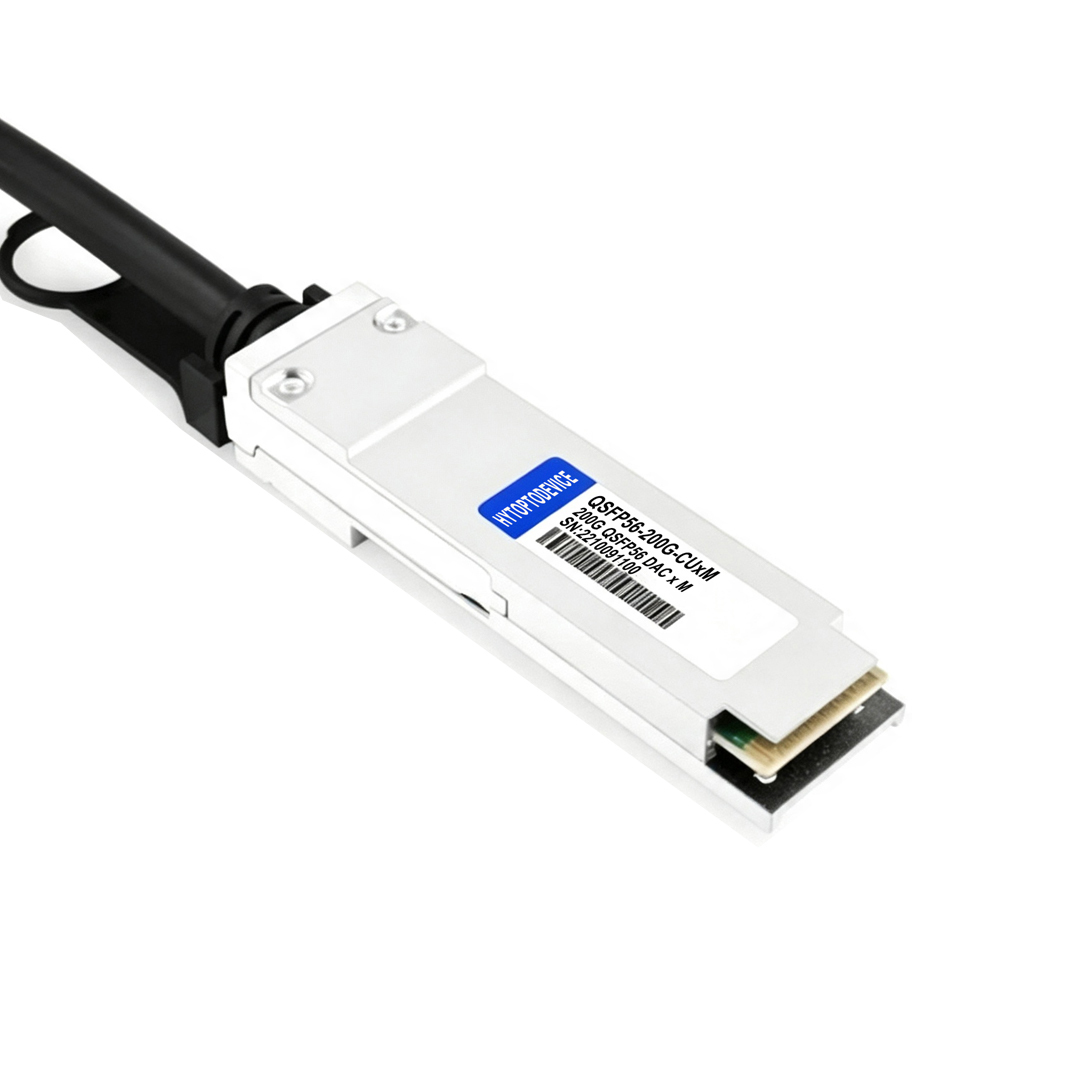
MCP1650-V001E30
|
Vendor Name | HYTOPTODEVICE |
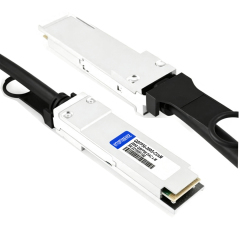
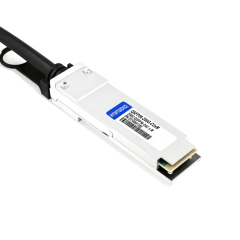
| Connector | QSFP56 to QSFP56 | Max Data Rate | 200Gbps |
| Cable Length | 1m (3ft) | Wire AWG | AWG 30 |
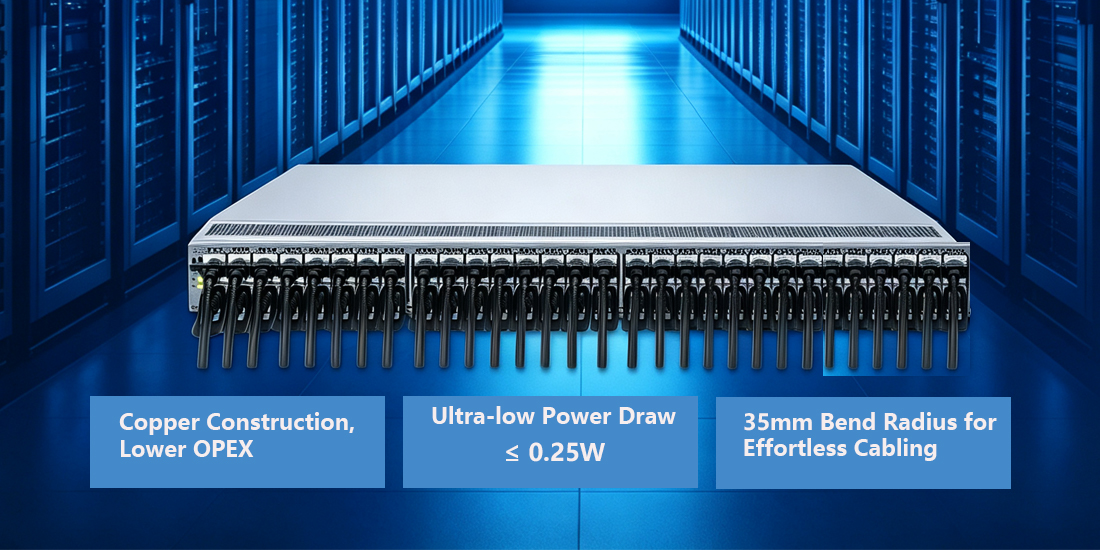
| Cable Type | Passive Twinax | Power Consumption | ≤0.25W |
| Media | Copper | Operation Temperature | 0~ 70 °C (32 to 158°F) |
| Jacket Material | PVC(OFNR) | Protocols | IEEE802.3cd, SFF-8436 |
| Minimum Bend Radius | 35mm | Application | 200G Ethernet and InfiniBand HDR |
Usage Guidelines & Best Practices
Mandatory Port Setting: Host QSFP56 port must enable 200GBASE-CR4 mode; link negotiation failure will happen if forced to optical mode.
Cabling Requirements: Do not exceed the minimum 35mm bend radius, avoid sharp folding, heavy extrusion or long-term tension on the cable assembly.
Port Installation Standard: Works only with standard QSFP56 200G ports; cannot be inserted into QSFP+ or SFP28 slots. Disable the host’s third-party transceiver lock policy in advance if required.
Maintenance Specification: Hot‑swap supported, grip the pull tab instead of pulling the cable body during plug/unplug to prevent internal conductor damage.
Operating Environment: This commercial-grade cable operates reliably within 0℃‑70℃; avoid installation beside high-heat power modules.
For detailed operation instructions, please refer to the User Guide.
Full Compatibility List & Supported Devices
Built on universal MSA open standards, this 200G QSFP56 passive direct attach copper twinax cable can interoperate with mainstream network brands including Arista, H3C, Juniper, Dell, NVIDIA Mellanox and more, for mixed-vendor rack stacking and server fabric expansion.
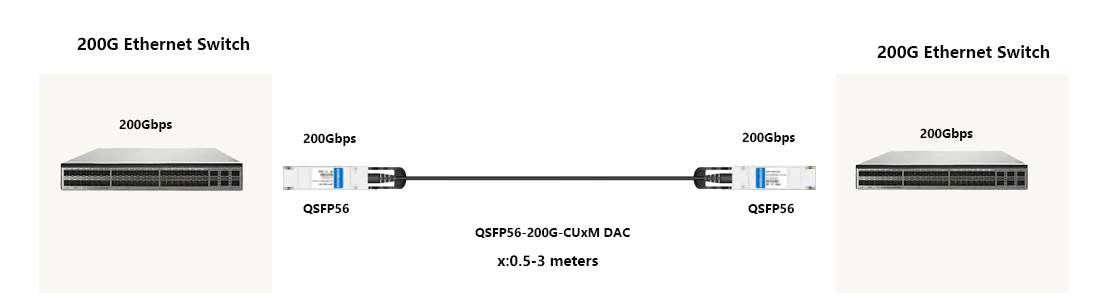
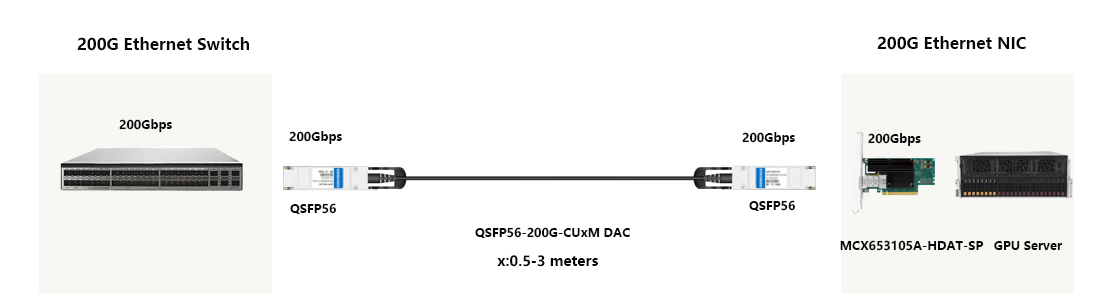



Q1: Do I need special lane splitting or HDR tuning on NVIDIA Quantum switches to bring up this 200G Ethernet passive DAC twinax cable? A1: No extra lane splitting configuration is needed. This is a straight QSFP56 to QSFP56 passive DAC twinax cable for Ethernet, not a breakout cable. HYTOPTODEVICE preloads NVIDIA-compatible EEPROM to establish direct 200G Ethernet negotiation between paired QSFP56 ports.
Q2: Can this NVIDIA compatible 200G passive DAC twinax cable build an Ethernet link between 200G adapters and legacy 100G Ethernet NICs? A2: No, this passive DAC twinax cable cannot interoperate with standalone 100G Ethernet adapters. Its electrical layout and EEPROM are calibrated exclusively for 200G PAM4 Ethernet signaling, and a stable link cannot be established.
Q3: What information should I provide when ordering to get correct NVIDIA/Mellanox Ethernet coding for this passive DAC twinax cable? A3: Please share your NVIDIA switch model, ConnectX adapter model and MLNX_OFED firmware version before shipment. HYTOPTODEVICE will burn matched EEPROM data to guarantee plug-and-play and avoid Ethernet port error alerts.
Q4: Will deploying third-party passive DAC twinax cables break the original hardware warranty of my NVIDIA ConnectX Ethernet adapters? A4: It will not automatically void your adapter warranty. MSA-compliant passive DAC twinax cables such as HYTOPTODEVICE 200G Ethernet twinax cables follow industry specifications; you may confirm detailed warranty terms with your NVIDIA vendor.
Q5: Can Ethernet auto-negotiation activate immediately after plugging this NVIDIA passive DAC twinax cable into DGX GPU servers? A5: Ethernet auto-negotiation performance depends on MLNX_OFED and adapter firmware. The cable itself does not block negotiation, while accurate NVIDIA vendor coding from HYTOPTODEVICE is critical for stable Ethernet auto-negotiation.
Q6: What total line rate can this point-to-point passive DAC twinax cable deliver between two NVIDIA Ethernet networking devices? A6: This non-breakout 200G passive DAC twinax cable delivers aggregate 200Gbps Ethernet bandwidth. It uses four independent 50G PAM4 lanes to build a full-rate 200GBASE-CR4 point-to-point Ethernet link between paired QSFP56 ports.
Q7: What is the maximum reliable working distance supported by passive 200G Ethernet DAC twinax cables? A7: Passive 200G DAC twinax cables are limited to short distances due to high-frequency signal attenuation from PAM4 modulation, typically ranging from 0.5m to 3m. HYTOPTODEVICE strictly controls signal integrity to deliver stable Ethernet links within this working range.
Q8: Why do NVIDIA DGX and HPC Ethernet clusters prefer passive DAC twinax cable over fiber optic Ethernet links? A8: 200G passive DAC twinax cable delivers lower latency than fiber Ethernet links. Copper twinax removes optical transceiver conversion delay, making HYTOPTODEVICE 200G Ethernet DAC ideal for low-latency AI training and HPC Ethernet workloads.
Q9: What AWG conductor sizes are widely used for 200G passive DAC twinax cables deployed in NVIDIA GPU Ethernet clusters? A9: They commonly adopt 26AWG or 30AWG conductors. Thinner 30AWG delivers greater flexibility for tight Ethernet rack routing, while thicker 26AWG is deployed to support the maximum passive reach for 200G PAM4 Ethernet signals. HYTOPTODEVICE matches the AWG spec by cable length for optimized performance.
Q10: Are 200G PAM4 Ethernet signals more prone to crosstalk and EMI than older 100G NRZ Ethernet signals on passive DAC twinax cable? A10: Yes, PAM4 Ethernet signals are more susceptible to EMI and crosstalk. HYTOPTODEVICE’s passive DAC twinax cables use full foil and braided shielding to suppress crosstalk and EMI and maintain stable Ethernet signal integrity.
Q11: Can this NVIDIA compatible 200G passive DAC twinax cable run continuous full line-rate Ethernet traffic for long-duration AI training jobs? A11: Yes, it supports sustained full line-rate Ethernet traffic without packet loss. Every HYTOPTODEVICE 200G passive DAC twinax cable passes insertion loss, return loss and eye diagram testing before delivery.
Q12: How does the bending performance of 200G passive DAC twinax cable compare with traditional 100G Ethernet DAC inside dense GPU racks? A12: 200G passive DAC twinax cables are slightly stiffer than 100G NRZ DAC variants. Denser internal wiring and enhanced shielding requirements create this difference, so users must closely follow minimum bend radius guidelines during Ethernet installation.
Q13: Is this passive DAC twinax cable suitable for Ethernet cabling across separate GPU server racks? A13: No. Because passive DAC twinax cables are restricted to very short distances (usually max 3 meters), they are strictly intended for intra-rack Ethernet use. Cross-rack deployment will trigger severe signal attenuation and unstable Ethernet links.
Q14: Will repeated plug cycles and cable weight damage the QSFP56 Ethernet ports on NVIDIA Quantum switches? A14: Properly routed, it will not cause excessive strain. We recommend cable support brackets for heavier assemblies; our pull-tab design also reduces stress when plugging and unplugging the Ethernet passive DAC twinax cable.
Q15: Can I customize jacket material and color for bulk OEM orders of this NVIDIA 200G QSFP56 Ethernet passive DAC twinax cable? A15: Black LSZH jacket is our standard option. HYTOPTODEVICE supports custom jacket color and material for bulk OEM orders of this passive DAC twinax cable, subject to minimum order quantity requirements.
Packaging & Custom OEM Solutions
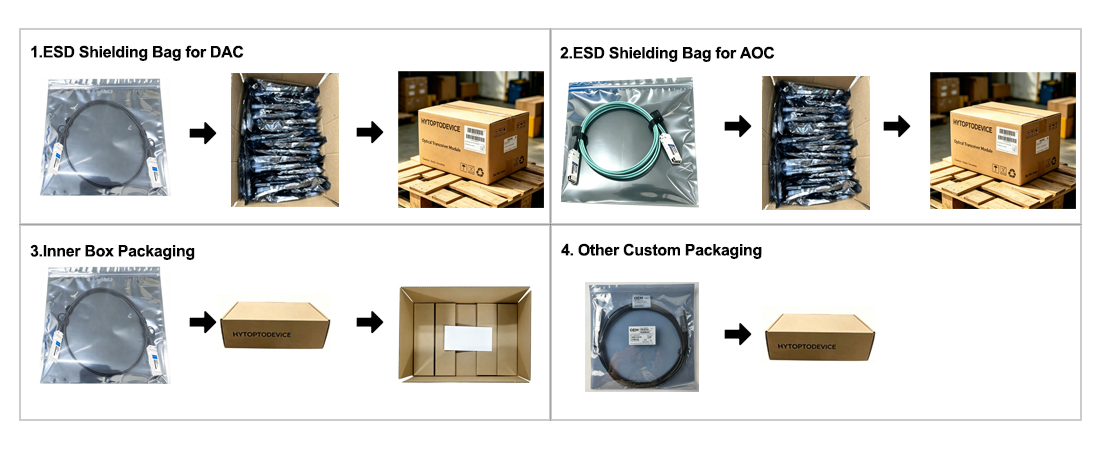
ESD Protection & Fast Shipping: Every transceiver is sealed in an ESD-safe bag and ready for same-day dispatch from stock.
Custom OEM & Branding: We provide logo printing, private labeling, and custom packaging to help distributors and integrators build their brand—no factory investment required.
Why Network Engineers Choose HYTOPTODEVICE
HYTOPTODEVICE has supplied over 5000,000 optical transceiver modules to data centers, ISPs, and enterprise networks across 100+ countries since 2011. Every module undergoes a 72-hour burn-in test and full DDM/DOM validation before shipment.
“Phenomenal performance. We deployed 200 HYTOPTODEVICE SFP modules to replace Cisco OEMs in our backbone network. Result? Zero compatibility issues and a 60% reduction in costs. Highly recommended for mission-critical networks."— Senior Network Engineer, Regional Telecom, Australia
Quality Certification & Compliance
At HYTOPTODEVICE, our quality commitment is backed by industry-standard validations. From fiber optical transceiver manufacturing to final visual inspection, from IQC、IPQC、FQC to OQC, our processes ensure global compliance and reliability.
We adhere to rigorous standards for our SFP modules and network solutions:
ISO 9001: Certified quality management and production consistency.
CE & FCC: Fully compliant for seamless Global Market Access.
RoHS: Committed to environmental responsibility and hazardous material control.
Proven Reliability: Rigorous testing to reduce compliance risk and ensure safety.
Certified Quality. Global Standards. Guaranteed Performance.