Q1: Why do premium single-lambda 100G DR data center transceivers integrate built-in DSP chips?
A1: HYTOPTODEVICE industrial-grade 100G DR single-lambda modules adopt professional DSP digital signal processing chips as core configuration. Unlike traditional multi-channel 100G optics relying on simple NRZ modulation, modern 100GBASE-DR applies high-density PAM4 encoding. Our independent DSP chip actively compensates fiber dispersion, signal attenuation and crosstalk interference during 500m short-reach transmission. It precisely executes real-time FEC error correction and signal equalization, ensuring ultra-low BER stable links for Juniper and multi-brand data center switching environments.
Q2: What standard fiber connector interface do commercial 100GBASE-DR QSFP28 modules adopt?
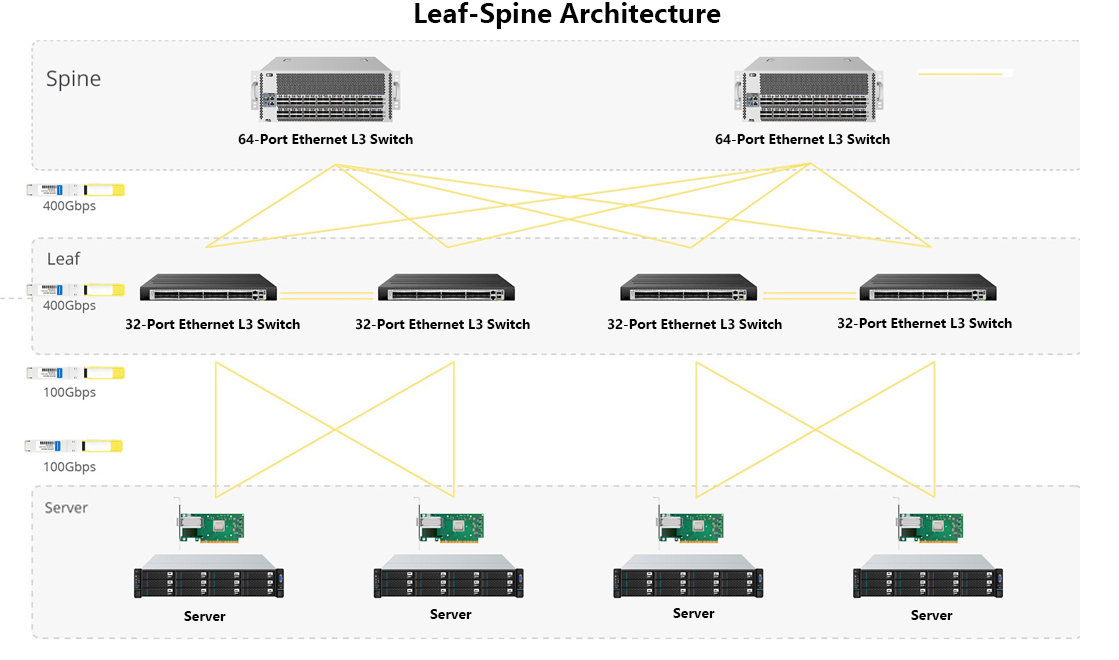
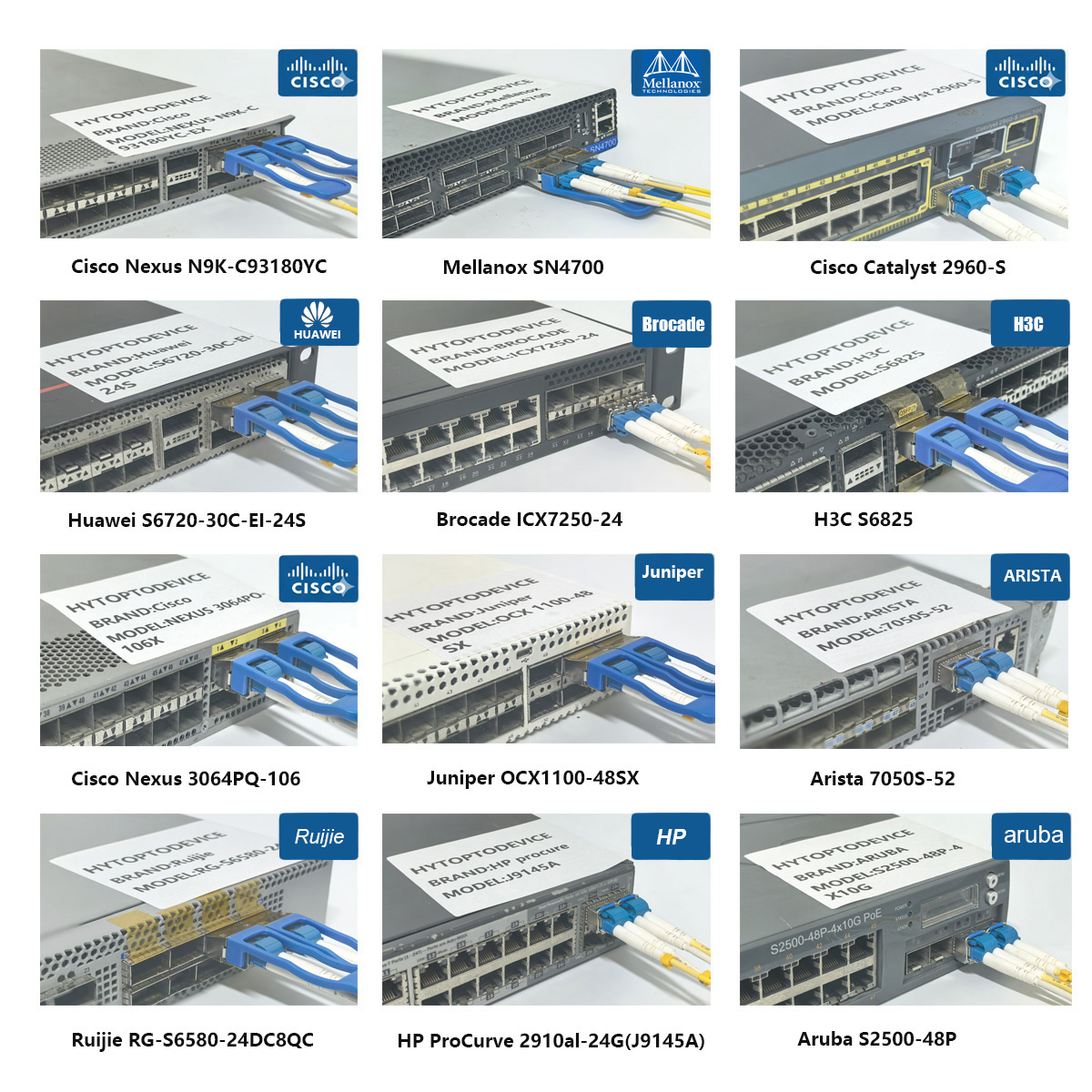
A2: All HYTOPTODEVICE Juniper-compatible 100G DR transceivers are uniformly equipped with duplex LC/UPC high-precision optical connectors. This mainstream dual-fiber transmit-receive separation design perfectly matches OS2 single-mode fiber cabling systems. It supports dense rack deployment in leaf-spine architectures, delivers neat wiring, and guarantees long-term stable physical connection for 100G short-reach inter-switch links.
Q3: Is direct interconnection achievable between 100G DR transceivers and 400G DR4 switch ports?
A3: HYTOPTODEVICE technical team clarifies that direct out-of-the-box interworking between 100G DR and 400G DR4 is unavailable. Our 100G DR utilizes single-lambda single-channel PAM4 transmission, while 400G DR4 operates via four parallel 100G optical lanes with different lane mapping mechanisms. To implement 100G-to-400G mixed networking, users need standard DR4 breakout configuration, and our team provides free port tuning guidance for phased data center upgrades.
Q4: Can 100G DR optical modules run on existing OM3/OM4 multimode fiber cabling?
A4: HYTOPTODEVICE explicitly does not support multimode fiber deployment for 100G DR modules. Designed exclusively for OS2 single-mode fiber, our 1310nm PAM4 optical solution is extremely sensitive to modal dispersion. OM3 and OM4 multimode cables generate severe signal distortion at DR working wavelengths, causing link negotiation failure and continuous packet loss. We strictly recommend matching standard OS2 single-mode fiber for valid 100G DR transmission.
Q5: Do low-power 100G DR transceivers cause overheating in high-density switch cabinets?
A5: HYTOPTODEVICE optimizes the power consumption of Juniper-compatible 100G DR modules to below 4.0W, achieving industry-leading low power heat generation. Different from high-power multi-channel 100G modules, our single-lambda design greatly reduces single-port heat load. Even in high-density 100G port stacking scenarios, the overall cabinet temperature rise is effectively controlled, avoiding switch overheating and ensuring 24/7 non-stop operation of data center high-density equipment.
Q6: Do HYTOPTODEVICE 100G DR replacement modules support real-time optical digital monitoring?
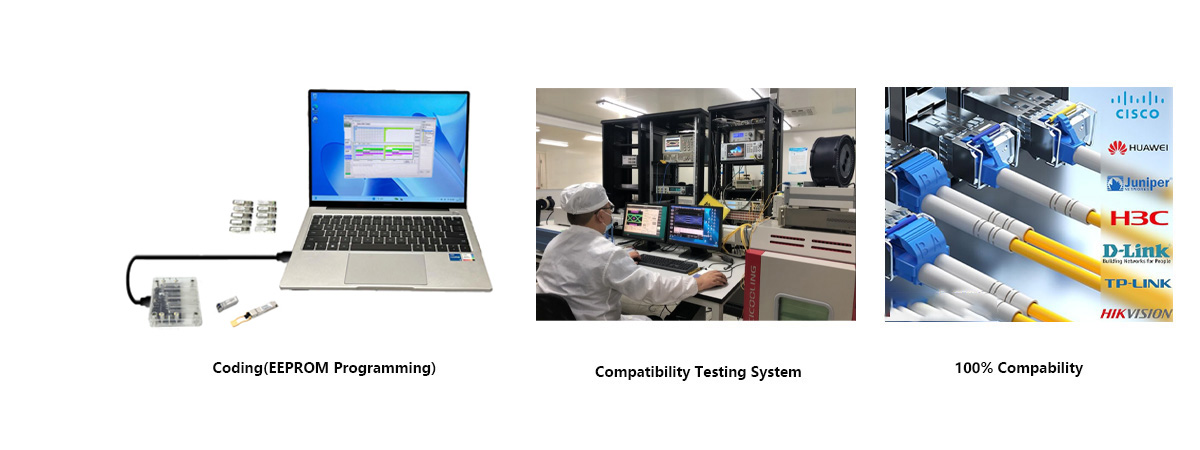
A6: Yes, all HYTOPTODEVICE 100GBASE-DR transceivers fully support standard DDM/DOM digital diagnostic monitoring functions. After deployment on Juniper switches, users can remotely view real-time data including module operating temperature, working voltage, transmit/receive optical power and laser bias current. This built-in monitoring capability helps enterprises quickly locate link faults, simplify daily operation and maintenance, and improve data center network manageability.
Q7: Does the 100G DR optical link budget fully cover the standard 500m transmission distance?
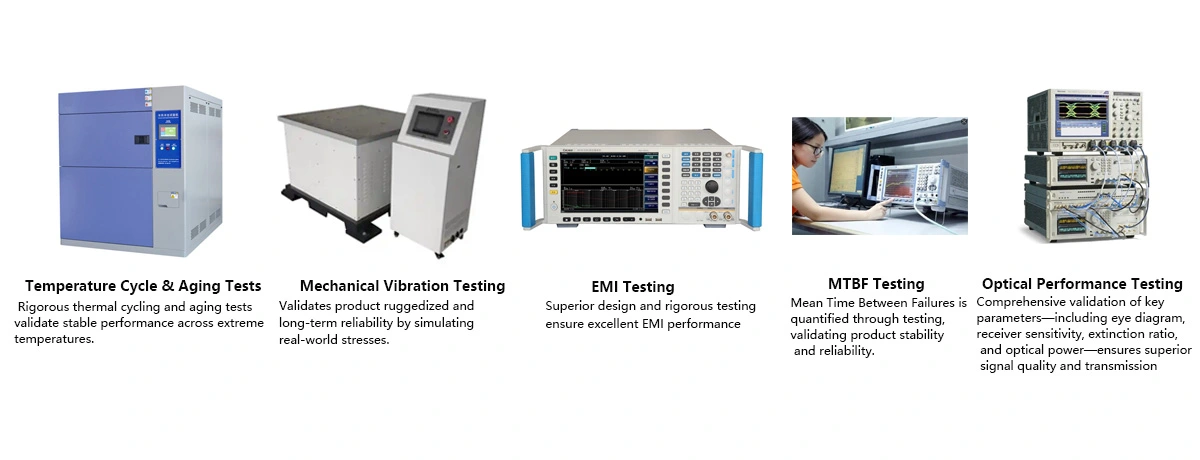
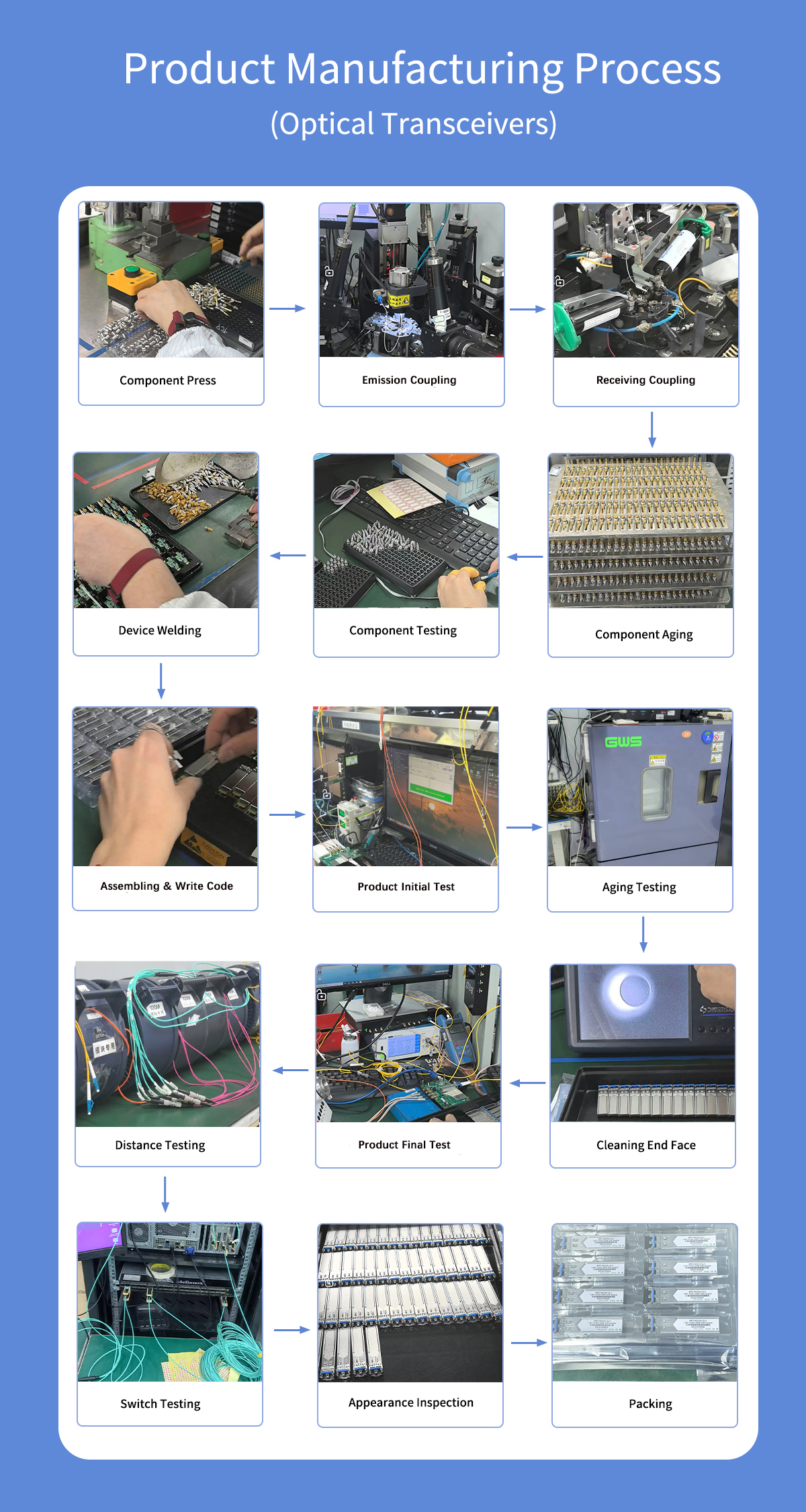
A7: HYTOPTODEVICE’s optimized 100G DR optical budget is strictly calibrated based on IEEE 802.3cd standards, fully meeting the loss margin requirements for 500m OS2 single-mode fiber transmission. Every module undergoes factory optical power calibration and full-load aging testing. Under standard wiring and clean end-face conditions, our products maintain sufficient link margin to resist splicing loss and connector loss, ensuring zero-error transmission at the rated 500m distance.
Q8: Why do PAM4-based 100G DR links require stricter fiber cleaning standards than legacy 100G optics?
A8: HYTOPTODEVICE explains that PAM4 modulation adopted by 100G DR has far higher signal resolution than traditional NRZ 100G modules. PAM4 carries double data volume per symbol, resulting in stricter signal-to-noise ratio thresholds. Tiny dust, scratches or stains on fiber end faces that are negligible for ordinary 100G links will trigger obvious signal interference, increased bit error rate and intermittent link flapping on DR links. Therefore, our official deployment guidelines mandate ultra-clean fiber end-face processing for PAM4 100G DR networking.
Q9: What professional testing methods verify genuine 100G DR transceiver quality during project acceptance?
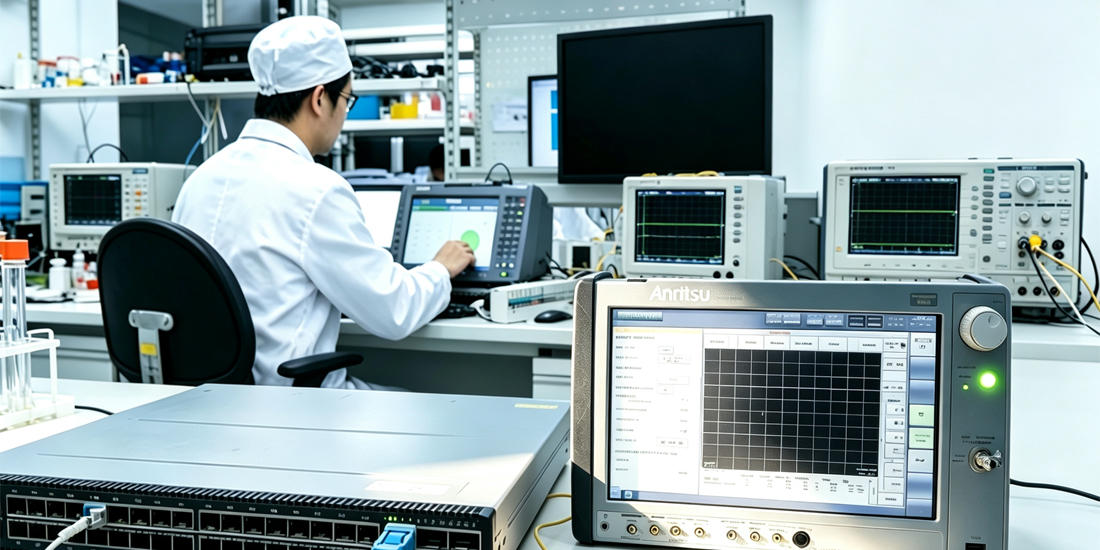
A9: HYTOPTODEVICE provides standardized acceptance testing solutions for bulk 100G DR modules. Enterprise users can complete quality verification through three core steps: first, confirm normal switch identification and complete DDM data display; second, conduct 72-hour full-rate traffic pressure test with FEC enabled to check for zero packet loss and zero link flapping; third, test optical power indexes at both ends to verify compliance with standard link budget. All our products pass full pre-shipment testing to meet project delivery standards.
Q10: Can Juniper-compatible 100G DR transceivers achieve automatic rate downgrade to 40G networking?
A10: HYTOPTODEVICE 100GBASE-DR modules adopt fixed single-rate 100G working mode, which does not support native automatic down-stepping to 40G rate. The 100G DR PAM4 modulation mechanism and hardware chip scheme are uniquely designed for 100G high-speed transmission, incompatible with 40G NRZ signal parsing. For scenarios requiring 40G low-rate networking, we recommend customers select our dedicated 40G QSFP+ transceiver series to ensure stable link compatibility.