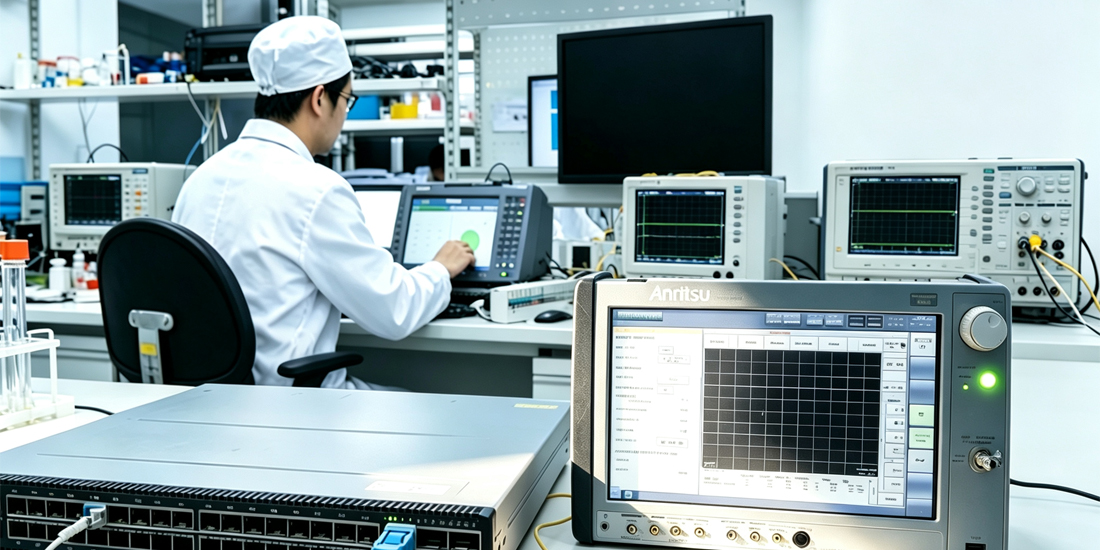
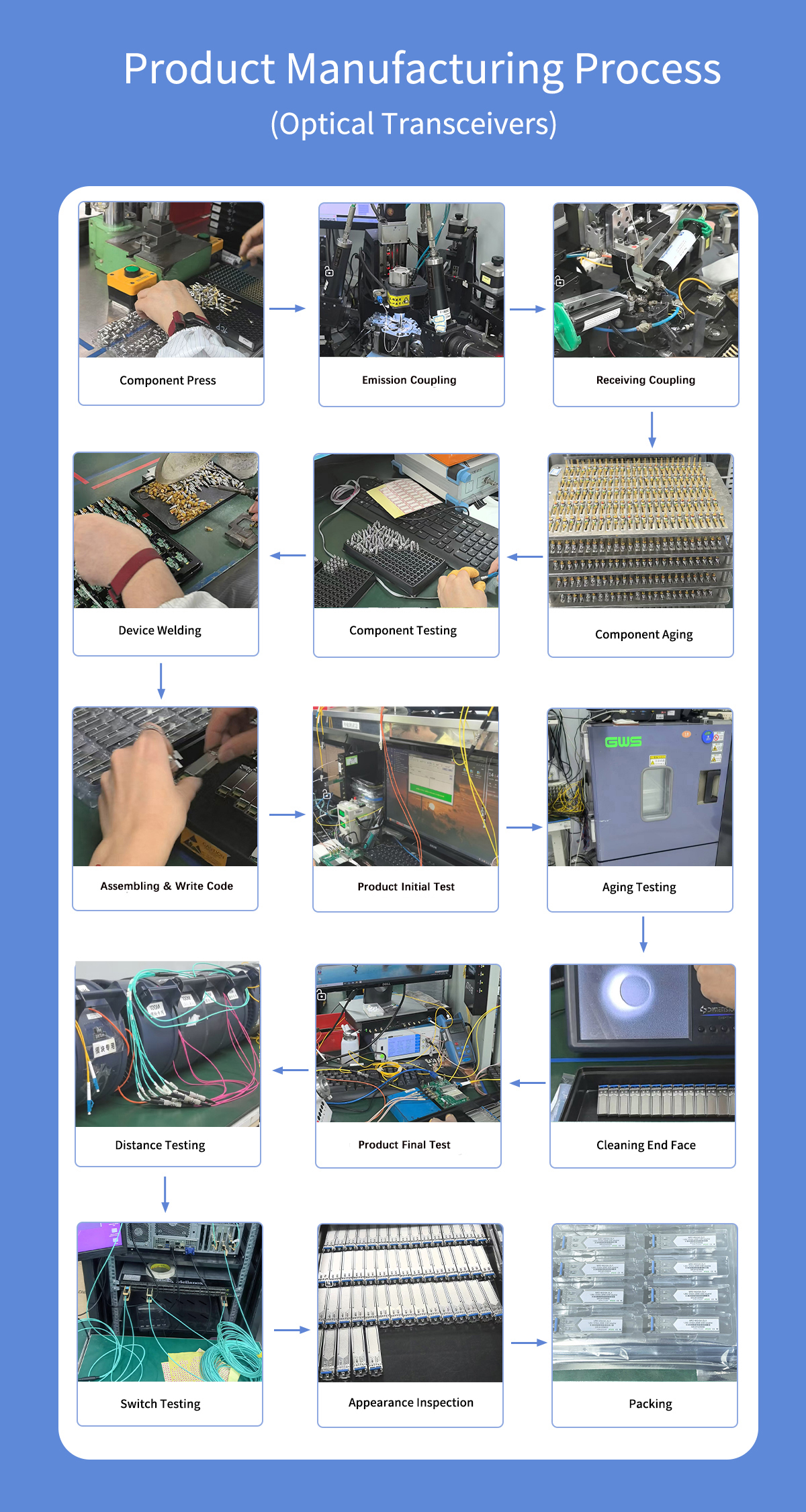
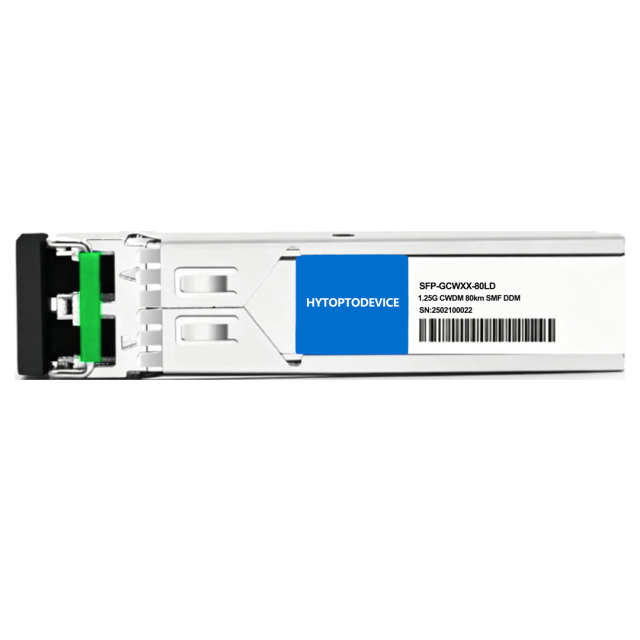
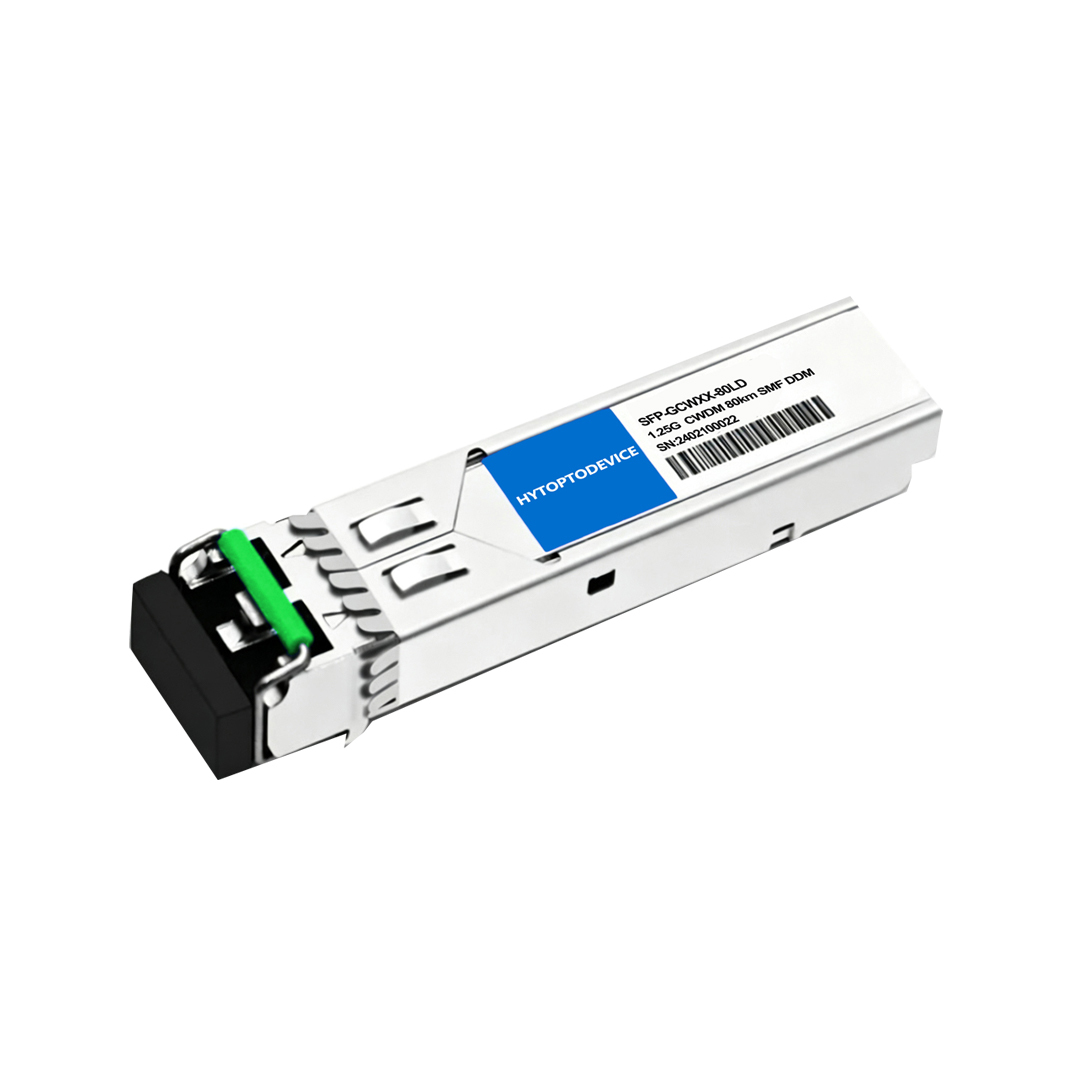
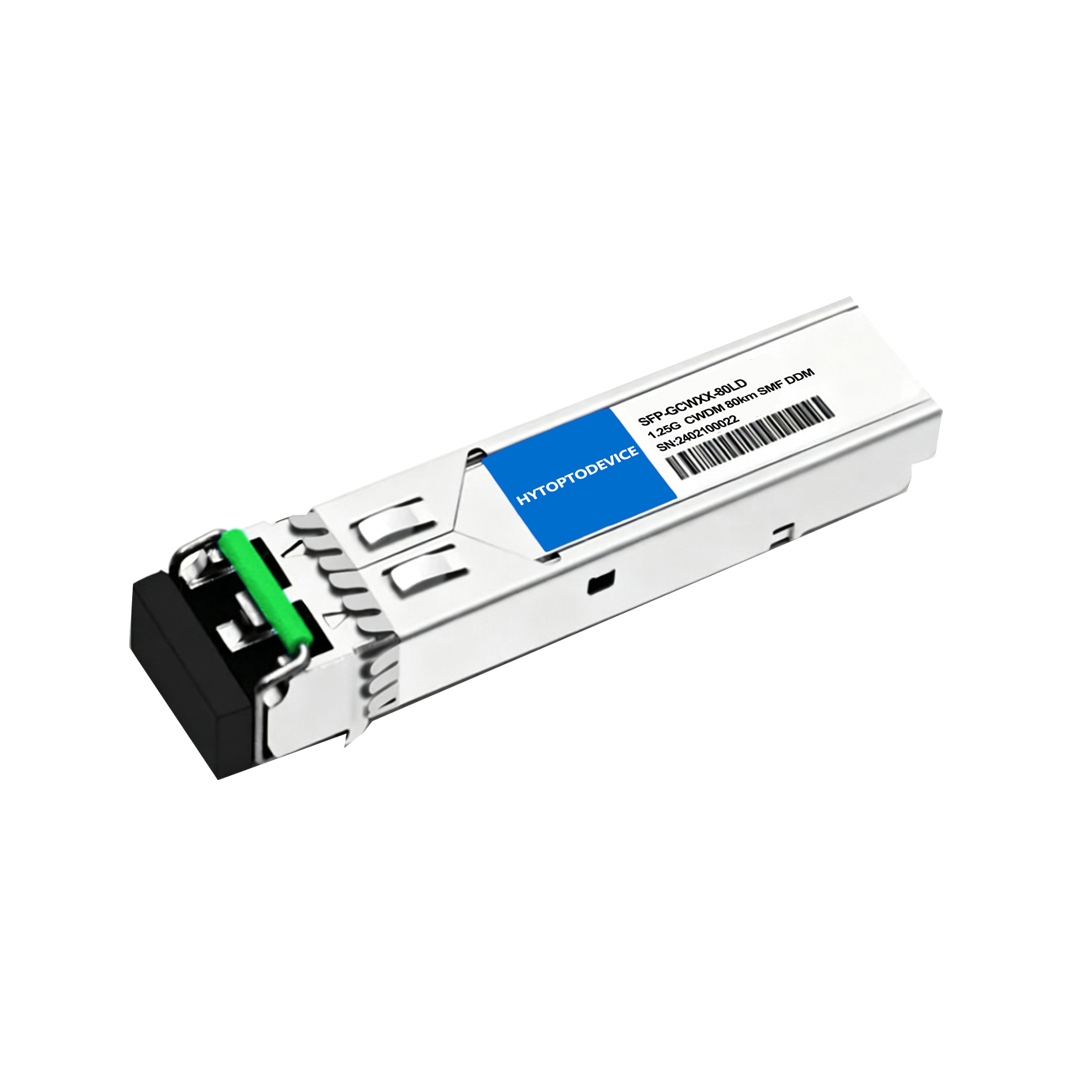
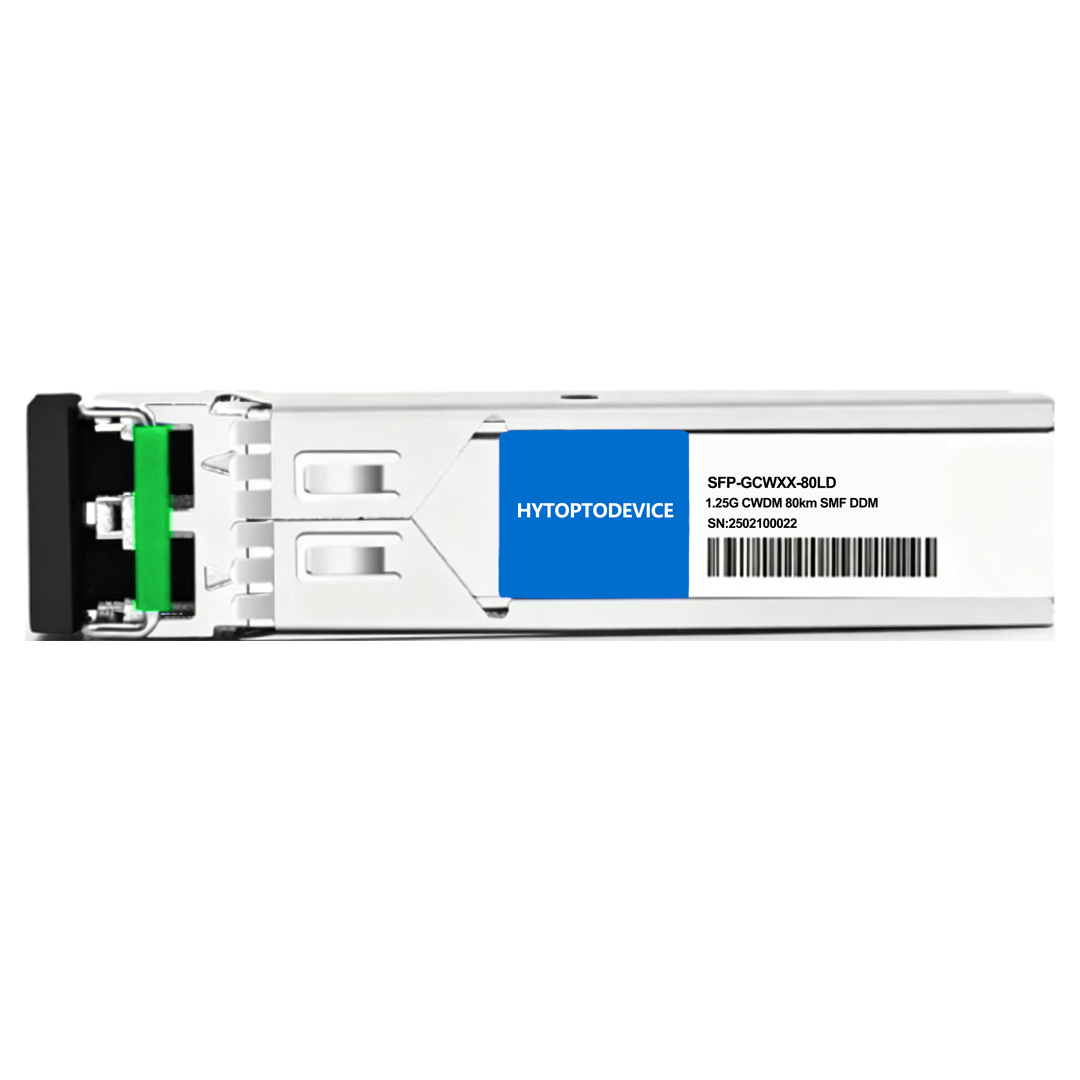
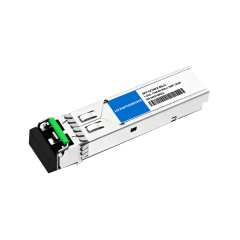
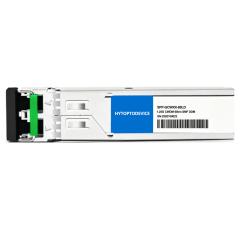
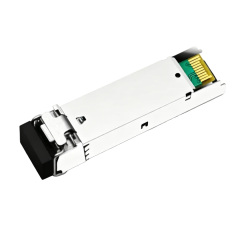
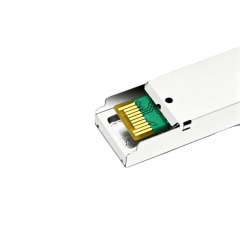
Every CWDM transceiver undergoes multi-stage strict testing including optical calibration, aging and temperature cycling. Built-in DDM monitoring supports real-time operating data viewing, ensuring long-term stable operation in complex metro networking environments and lowering field failure rates.
Q1: Can the 1611nm 80km CWDM SFP realize full-span transmission without optical amplifiers?
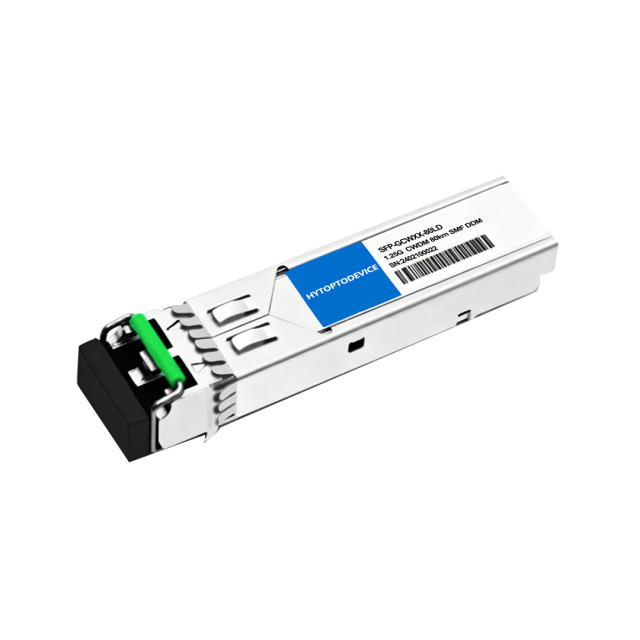
A: Yes. This Huawei eSFP-LH80-SM1611 compatible module adopts high-sensitivity PIN receiver and high-performance DFB laser design, with sufficient optical power margin. It supports stable 80km full-span gigabit transmission on standard OS2 single-mode fiber without external signal amplification equipment, suitable for passive CWDM long-haul networking scenarios.
Q2: What is the optical power budget of this 1611nm 80km CWDM module?
A: Optimized for 80km ultra-long links, the module features 0–+5dBm transmit optical power and -28dBm receiving sensitivity, providing a stable 24–26dB effective link budget. It can fully cover conventional fiber attenuation, splicing loss and adapter loss in standard metro long-haul networking.
Q3: How much insertion loss does a complete CWDM Mux/Demux pair bring?
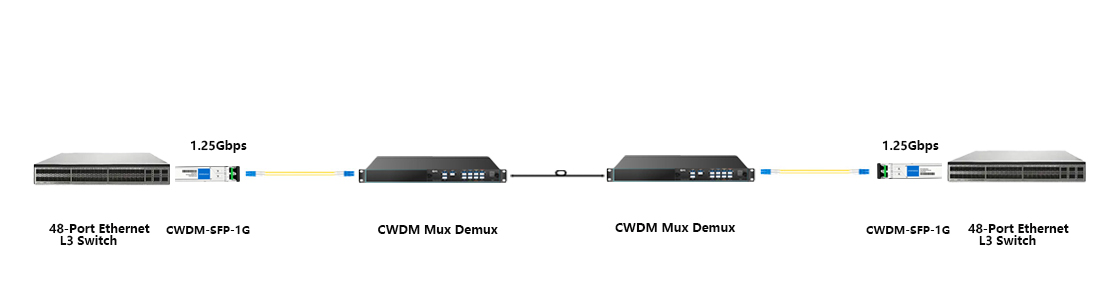
A: Standard 8-channel passive CWDM Mux or Demux has 1.5–2.5dB single-side insertion loss, and a complete transceiving module pair produces 3–5dB total cumulative loss. This loss needs to be deducted from the overall link budget to ensure reliable 80km end-to-end transmission.
Q4: Does this replacement module comply with international CWDM wavelength grid standards?
A: It strictly follows global CWDM standard wavelength grid specifications. The standardized 1611nm terminal independent channel ensures universal compatibility with all mainstream CWDM MUX/DEMUX devices on the market for standardized multi-channel fiber multiplexing.
Q5: What are the unique advantages of 1611nm terminal long-wave for 80km transmission?
A: The 1611nm terminal long-wave is the end channel of the CWDM spectrum, with ultra-low natural attenuation and chromatic dispersion on single-mode fiber. It can effectively suppress signal attenuation and waveform distortion during ultra-long-distance transmission, maintaining high-quality and consistent gigabit signal transmission over full 80km fiber links.
Q6: Does this Huawei-compatible CWDM SFP support DDM real-time monitoring?
A: Absolutely. The module fully supports SFF-8472 standard DDM/DOM digital intelligent monitoring, enabling real-time remote viewing of core operating parameters such as TX/RX optical power, module operating temperature and supply voltage on Huawei devices for visualized link operation and maintenance management.
Q7: Why is DDM monitoring crucial for 80km ultra-long CWDM links?
A: 80km ultra-long fiber links are highly susceptible to environmental temperature changes and cumulative loss accumulation. DDM monitoring realizes real-time fault pre-detection and early warning, quickly locating common faults such as dirty port end faces, excessive link loss and module overheating, greatly reducing network maintenance pressure and sudden failure risks.
Q8: What is the stable operating temperature range of the module?
A: This industrial-grade CWDM module supports stable continuous operation in the range of 0°C to 70°C, adapting to complex temperature environments such as indoor constant-temperature equipment rooms and outdoor variable-temperature communication cabinets to ensure consistent transmission performance.
Q9: What are the main causes of CWDM link negotiation failure?
A: Excessive total link loss is the core cause, including over-distance transmission, excessive fiber splicing points, contaminated port end faces and wavelength channel mismatch. This high-loss-tolerant 1611nm module can effectively avoid negotiation failures in conventional engineering deployment.
Q10: DDM shows -28dBm Rx power, why is the CWDM link offline?
A: -28dBm is the minimum receiving sensitivity threshold of the module. Slight fiber damage, port dust contamination or insufficient residual link margin will lead to unstable signal reception and link disconnection. Cleaning LC interface end faces and optimizing overall link loss can effectively restore transmission stability.
Q11: Is 80km CWDM SFP more cost-effective than short-range modules for long-distance projects?
A: Yes. Although the unit price of 80km long-reach CWDM modules is slightly higher, it eliminates the need for intermediate signal repeaters and secondary cabling construction, significantly reducing total project investment and improving the utilization rate of existing fiber resources for cross-regional long-distance networking.
Q12: What advantages does CWDM have over DWDM for 80km metro long-haul networking?
A: Compared with DWDM solutions, CWDM networking has a simpler system architecture without high-precision cooling and wavelength locking components. It features lower equipment procurement costs and daily operation and maintenance costs, making it the most cost-effective and practical solution for 80km enterprise and metro gigabit long-haul transmission.