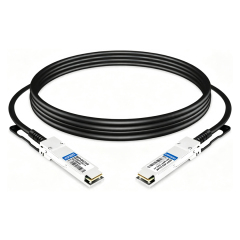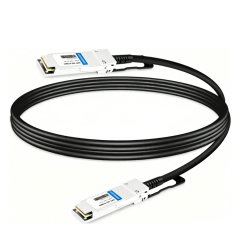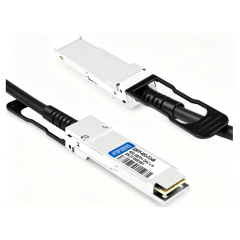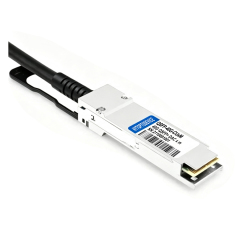
| NO. | Brand | Compatible P/N | Transceiver Type |
| 1 | Cisco | QSFP-H40G-CU50CM | |
| 2 | Arista Networks | CAB-Q-Q-0.5M | |
| 3 | Juniper | EX-QSFP-40GE-DAC-50CM | |
| 4 | Brocade | 40G-QSFP-C-00501 | |
| 5 | Dell | 332-1362 | |
| 6 | Intel | XLDACBL05 | |
| 7 | NVIDIA/Mellanox | MC2206130-00A |
| Juniper Compatible |
EX-QSFP-40GE-DAC-50CM
|
Vendor Name | HYTOPTODEVICE |
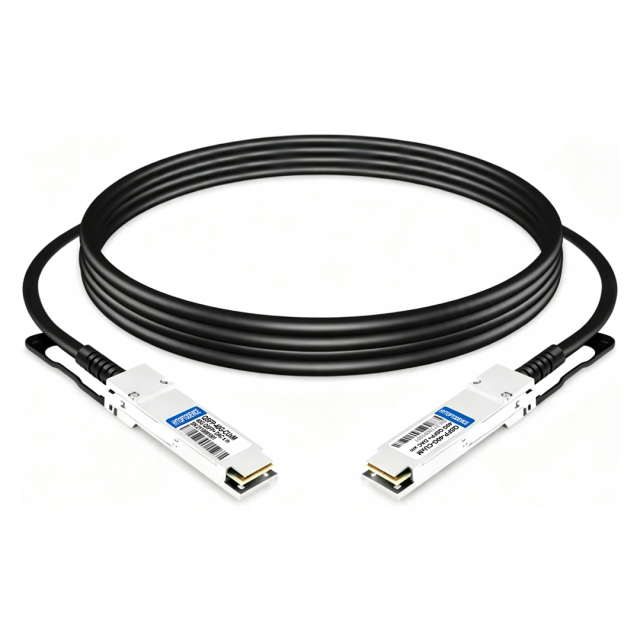
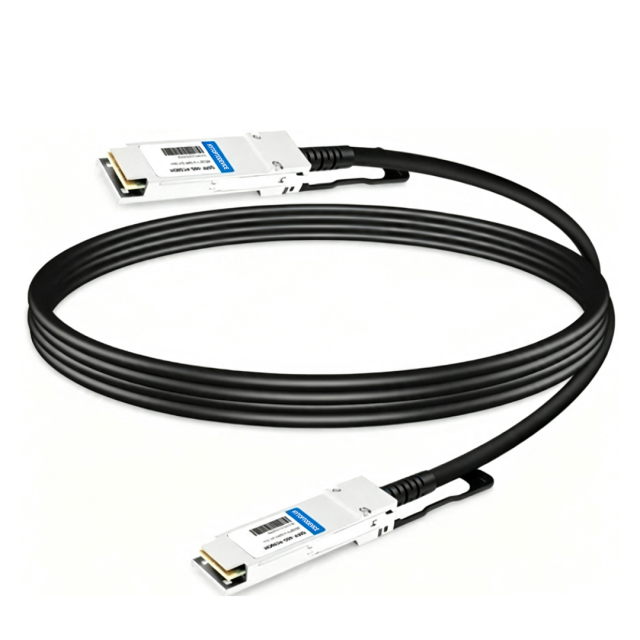
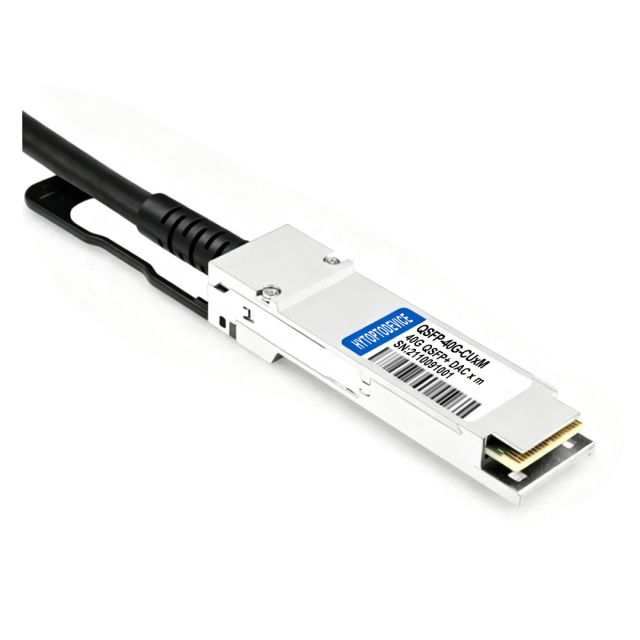
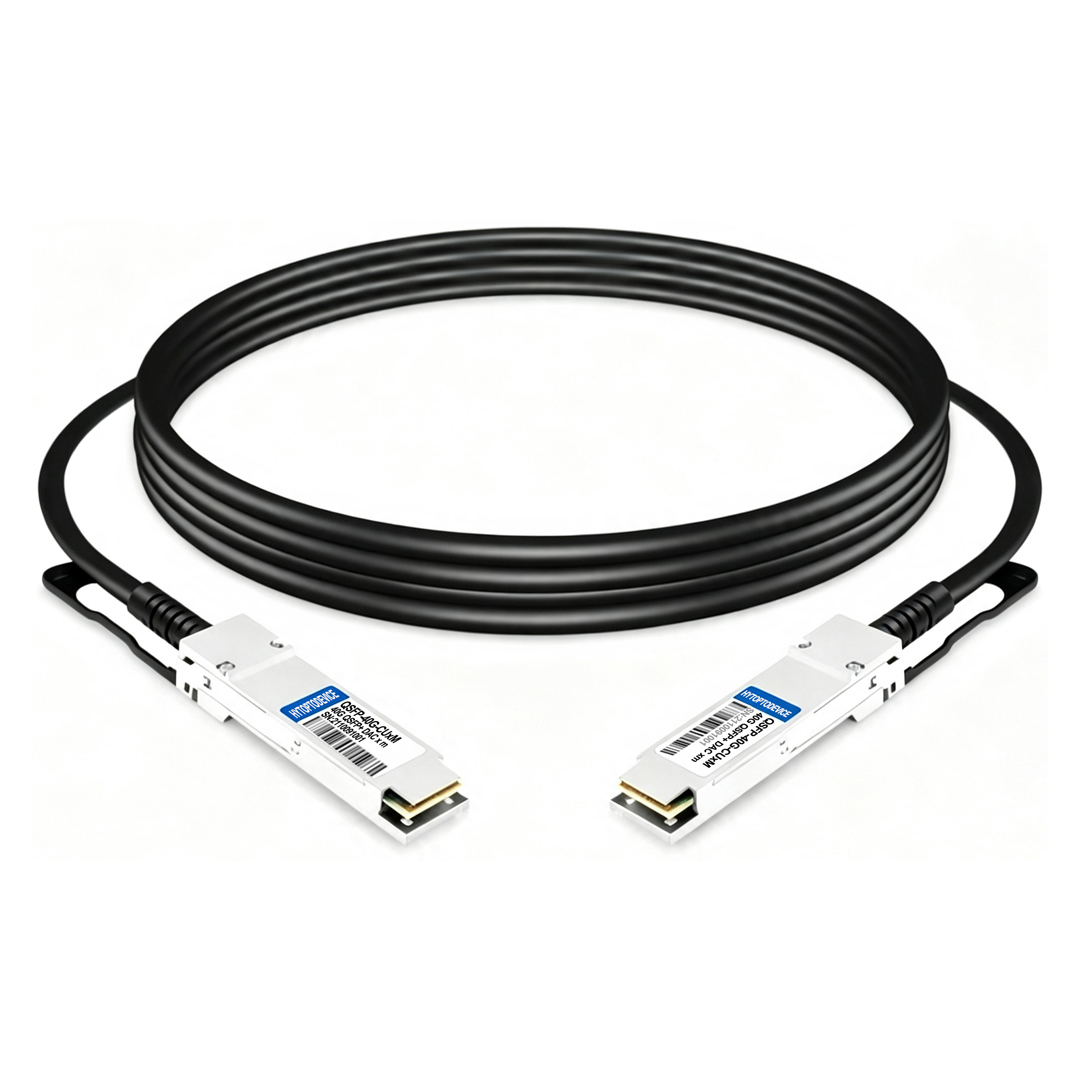
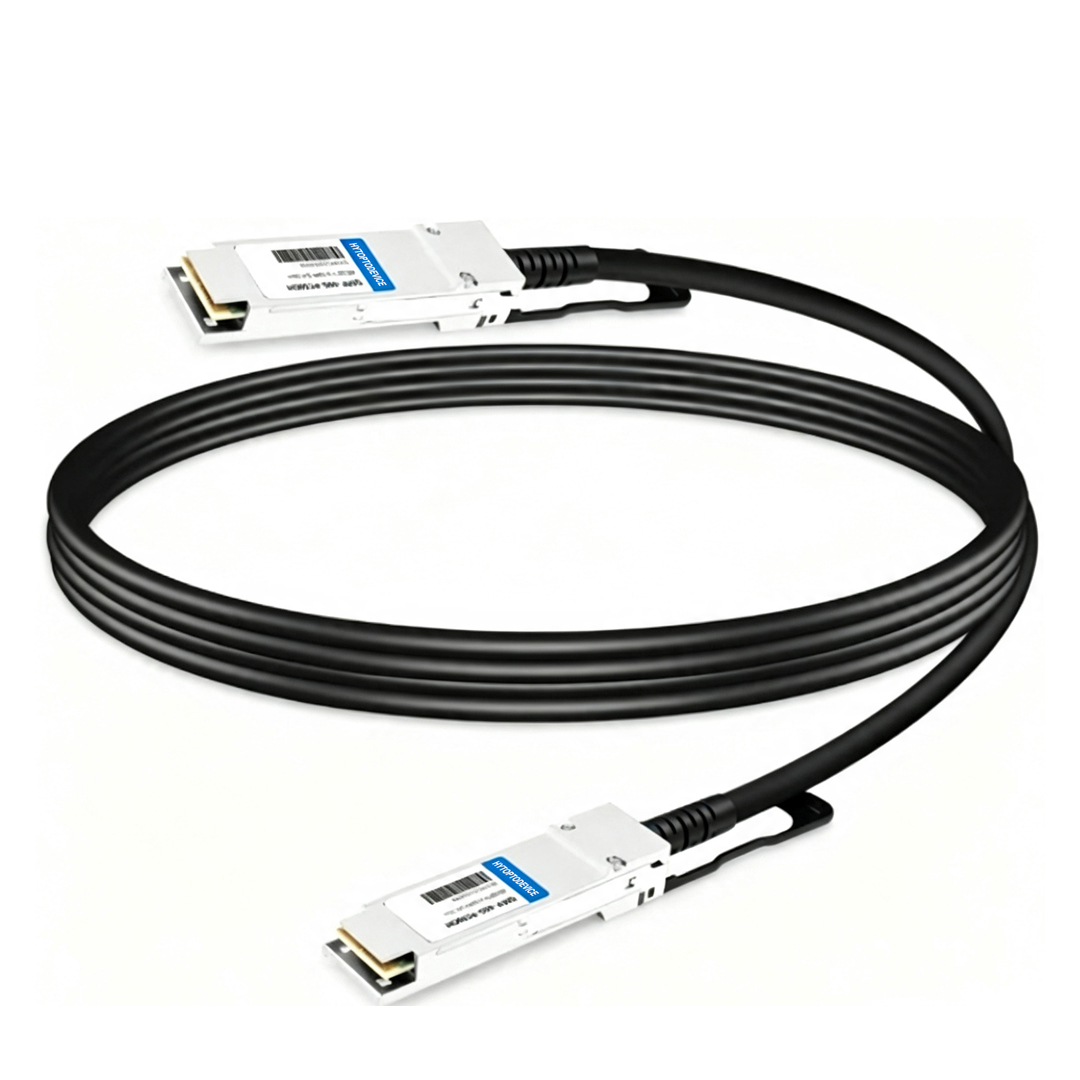
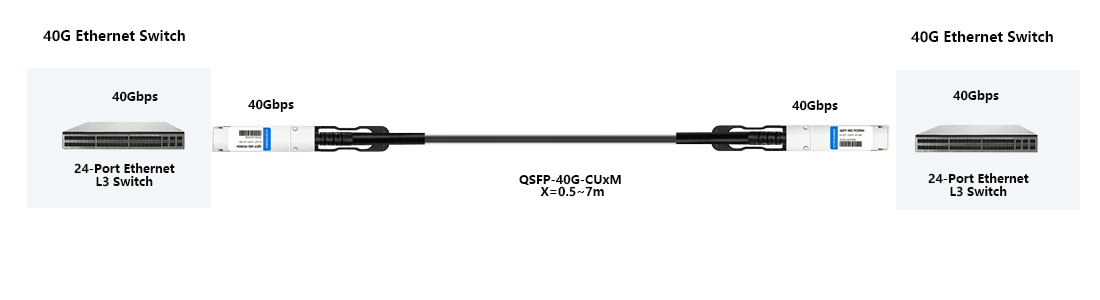
| Connector | QSFP+ to QSFP+ | Max Data Rate | 40Gbps |
| Cable Length | 0.5m (1.6ft) | Wire AWG | AWG 30 |
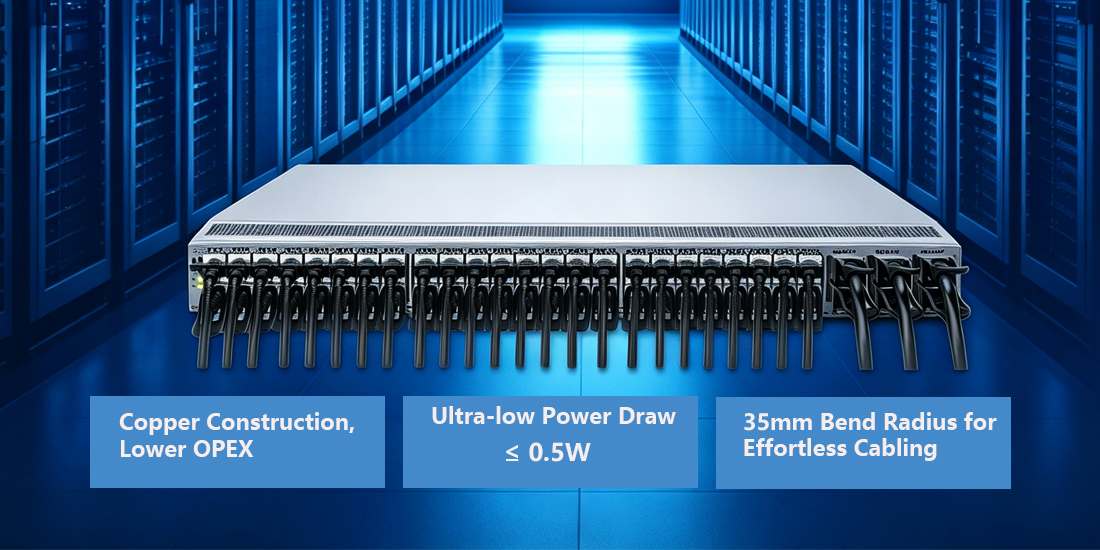
| Cable Type | Passive Twinax | Power Consumption | ≤0.5W |
| Media | Copper | Operation Temperature | 0~ 70 °C (32 to 158°F) |
| Jacket Material | PVC(OFNR) | Protocols | SFF-8436, QSFP+ MSA and IEEE 802.3ba |
| Minimum Bend Radius | 35mm | Application | 40G InfiniBand 8x DDR, 4x QDR, 10/40 Gigabit Ethernet, Fibre Channel |
Usage Guidelines & Best Practices
Mandatory Port Setting: Host QSFP+ port must enable 40GBASE-CR4 mode; link negotiation failure will happen if forced to optical mode.
Cabling Requirements: Do not exceed the minimum 35mm bend radius, avoid sharp folding, heavy extrusion or long-term tension on the cable assembly.
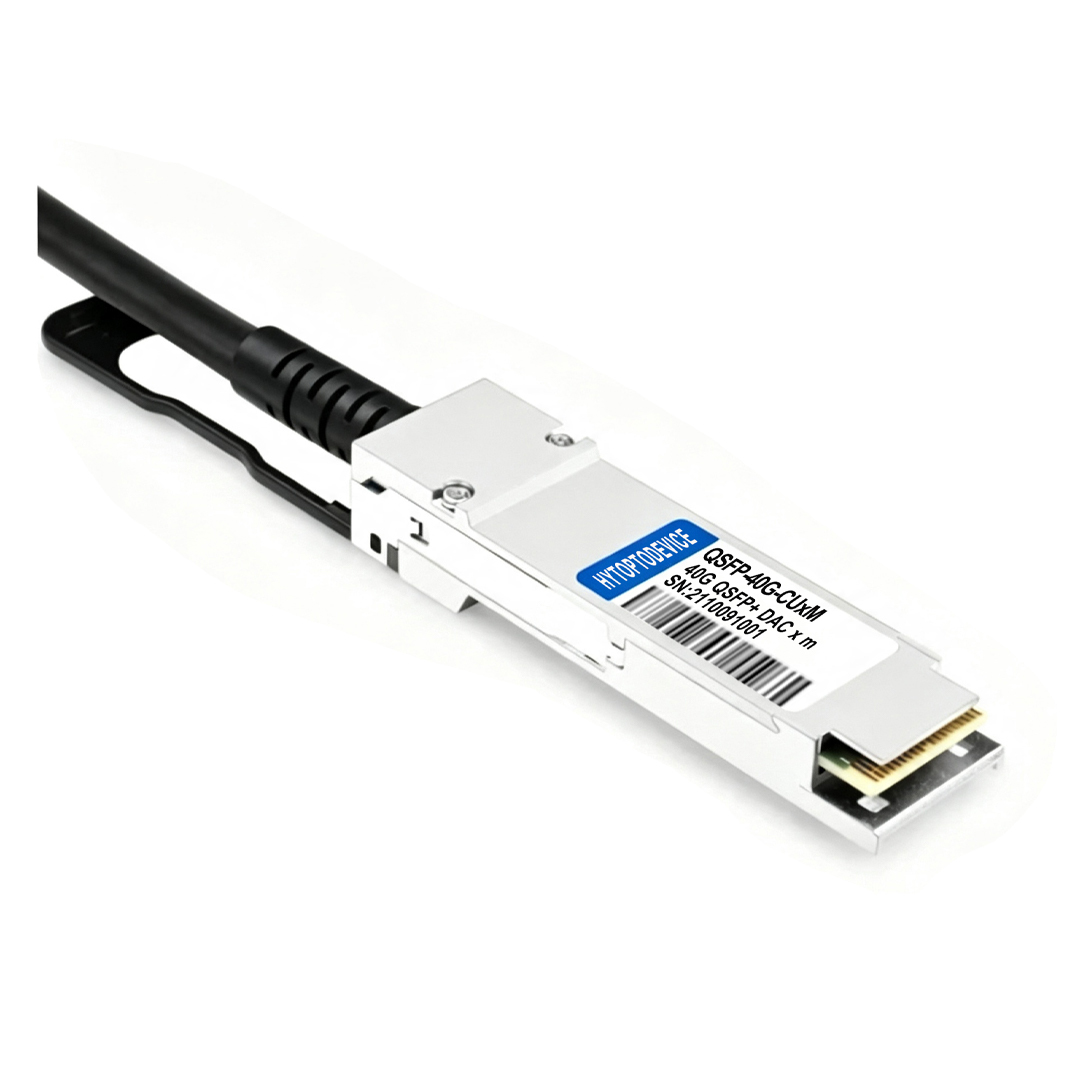
Port Installation Standard: Works only with standard QSFP+ 40G ports; cannot be inserted into SFP+ or XFP slots. Disable the host’s third-party transceiver lock policy in advance if required.
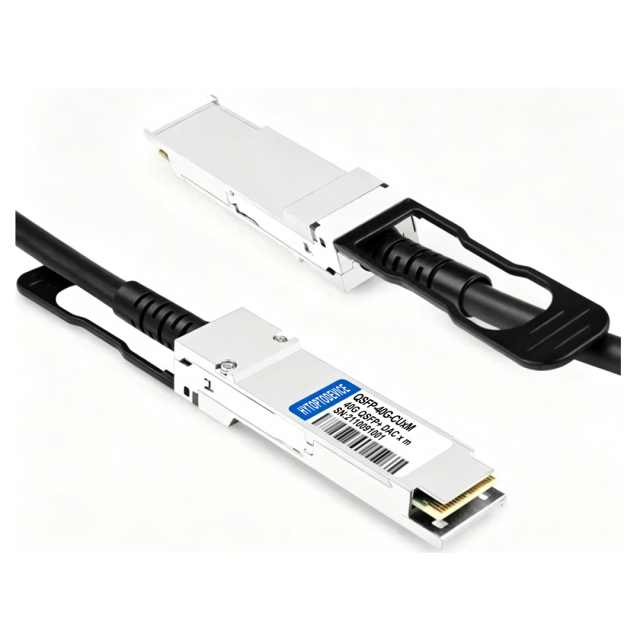
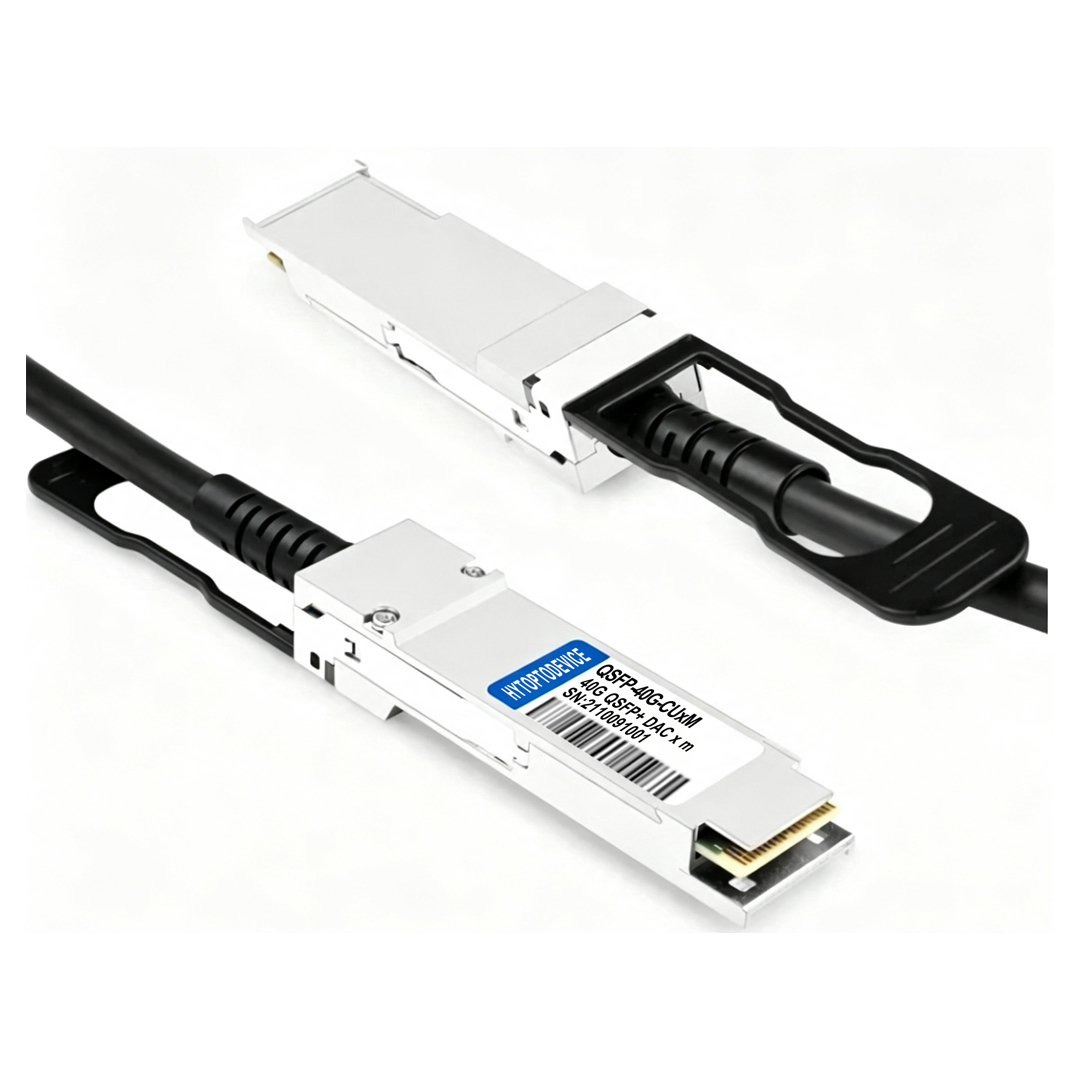
Maintenance Specification: Hot‑swap supported, grip the pull tab instead of pulling the cable body during plug/unplug to prevent internal conductor damage.
Operating Environment: This commercial-grade cable operates reliably within 0℃‑70℃; avoid installation beside high-heat power modules.
For detailed operation instructions, please refer to the User Guide.
Full Compatibility List & Supported Devices
Built on universal MSA open standards, this 40G QSFP+ passive copper cable can interoperate with mainstream network brands including Arista, H3C, Juniper, Dell, NVIDIA Mellanox and Fortinet, for mixed-vendor rack stacking and server fabric expansion.


Q1: Will this Juniper compatible 40G QSFP+ passive copper cable interoperate with my existing multi-vendor switching hardware? A: Yes, this HYTOPTODEVICE 40G QSFP+ passive copper cable supports cross-brand interoperation. It is preloaded with Juniper Junos optimized EEPROM and tested, delivering stable 40GBASE Ethernet links across mainstream switch platforms.
Q2: Why does Junos OS throw a transceiver incompatible alert after plugging in the DAC cable? A: This alert usually triggers from unmatched vendor signature checks. HYTOPTODEVICE pre-programs Juniper-specific EEPROM for this 40G QSFP+ passive copper cable to greatly lower incompatible alerts in 40GBASE Ethernet deployments.
Q3: Can MSA-compliant 40G twinax DAC guarantee plug-and-play performance on white-box open switches? A: No, MSA standards only cover mechanical and electrical parameters. Generic twinax may lack valid identification data, while HYTOPTODEVICE 40G QSFP+ passive copper cable completes real hardware verification for open switch 40GBASE Ethernet.
Q4: What network topology applies to a QSFP+ to 4×SFP+ breakout twinax DAC? A: A breakout DAC splits one 40G QSFP+ port into four separate 10G SFP+ links. This straight HYTOPTODEVICE 40G QSFP+ passive copper cable carries full 40G bandwidth natively for point-to-point Juniper 40GBASE Ethernet.
Q5: Does a Juniper QFX switch require special port settings to activate breakout DAC links? A: Yes, breakout mode must be enabled via Junos CLI on supported ports. This HYTOPTODEVICE straight 40G QSFP+ passive copper cable needs no breakout configuration and runs native 40GBASE Ethernet right away.
Q6: What deployment scenarios suit straight 40G DAC versus breakout 40G DAC? A: Straight 40G DAC builds one full 40G connection between two QSFP+ ports; breakout DAC splits bandwidth for 10G downlinks. Our 40G QSFP+ passive copper cable is designed for Juniper native 40GBASE Ethernet interconnection.
Q7: What is the maximum reliable reach you can get with passive 40G QSFP+ twinax copper? A: The reliable upper limit for passive 40G QSFP+ twinax is 5–7 meters. This 0.5m HYTOPTODEVICE 40G QSFP+ passive copper cable is ideal for ultra-short rack internal 40GBASE Ethernet with minimal signal attenuation.
Q8: How do different AWG ratings change signal loss for 40G twinax DAC on Juniper racks? A: Thicker wires (lower AWG numbers like 24AWG) experience lower signal attenuation over longer runs (5m–7m), whereas thinner wires (30AWG) are better suited for short, flexible runs (0.5m–2m). This 30AWG HYTOPTODEVICE 40G QSFP+ passive copper cable balances flexible routing and steady signal integrity for short 40GBASE Ethernet links.
Q9: Which AWG grade works best for dense cable management with 40G QSFP+ DAC assemblies? A: Yes. 24AWG cables are thick, heavy, and rigid. They require careful bend radius management to prevent putting excessive mechanical strain on switch port cages. 30AWG twinax offers superior flexibility for dense layouts. This HYTOPTODEVICE 0.5-2m 40G QSFP+ passive copper cable uses 30AWG, making routing easier on high-density Juniper patch panels and cable arms for 40GBASE Ethernet.
Q10: Is it permitted to route passive 40G QSFP+ DAC outside the server cabinet or through walls? A: No, passive twinax DAC is engineered only for indoor cabinet deployment. It has no outdoor-rated jacket, so this 40G QSFP+ passive copper cable should stay within data racks for 40GBASE Ethernet.
Q11: What upgrade option replaces passive 40G DAC when connection length exceeds 5 meters? A: Active Optical Cable (AOC) is the proper choice for links over 5m. This HYTOPTODEVICE 40G QSFP+ passive copper cable delivers a budget-friendly zero-power solution for short rack-local 40GBASE Ethernet.
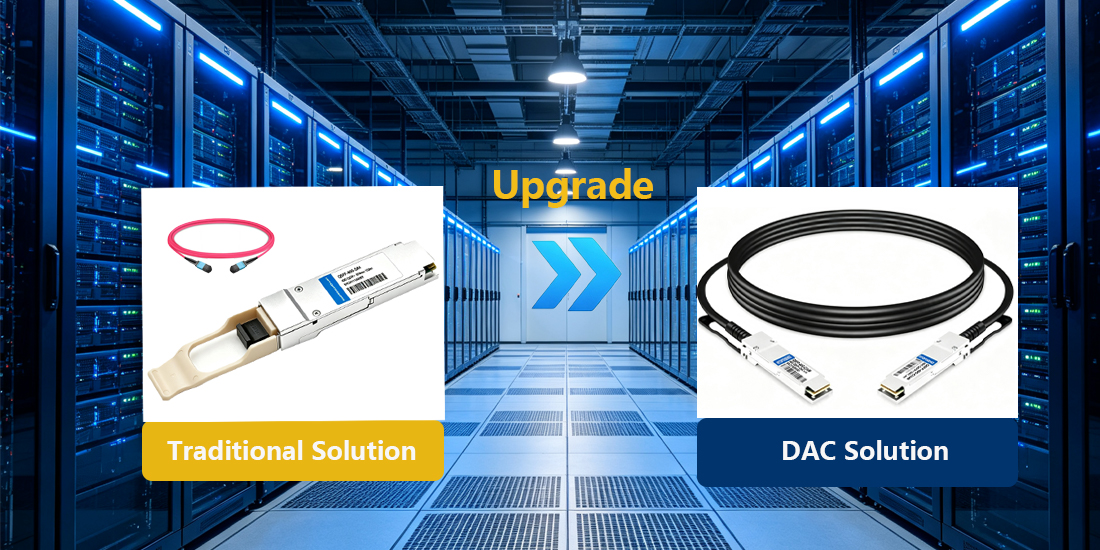
Q12: How does total cost compare between 40G twinax DAC and QSFP+ transceivers plus MTP fiber? A: Passive twinax DAC cuts cost significantly by removing optical module expenses. This HYTOPTODEVICE 40G QSFP+ passive copper cable lowers total hardware spend for short Juniper 40GBASE Ethernet fabric links.
Q13: Will nearby power cables create EMI issues for 40G QSFP+ passive copper DAC? A: Shielded twinax suppresses EMI but remains more sensitive than fiber. HYTOPTODEVICE adopts high-grade shielding for this 40G QSFP+ passive copper cable to stabilize 40GBASE Ethernet performance beside power cabling.
Q14: Can an adapter let a 40G QSFP+ DAC work inside a standard 10G SFP+ port? A: No, QSFP+ and SFP+ differ in pin definition and lane grouping. This 40G QSFP+ passive copper cable only operates between two native QSFP+ ports to establish valid 40GBASE Ethernet.
Q15: Can this Juniper compatible 40G QSFP+ DAC directly connect a server QSFP+ NIC to a switch? A: Yes, as long as the server NIC has native QSFP+ interface. This HYTOPTODEVICE 40G QSFP+ passive copper cable builds low-latency 40GBASE Ethernet links between 40G NICs and Juniper switching hardware.
Packaging & Custom OEM Solutions
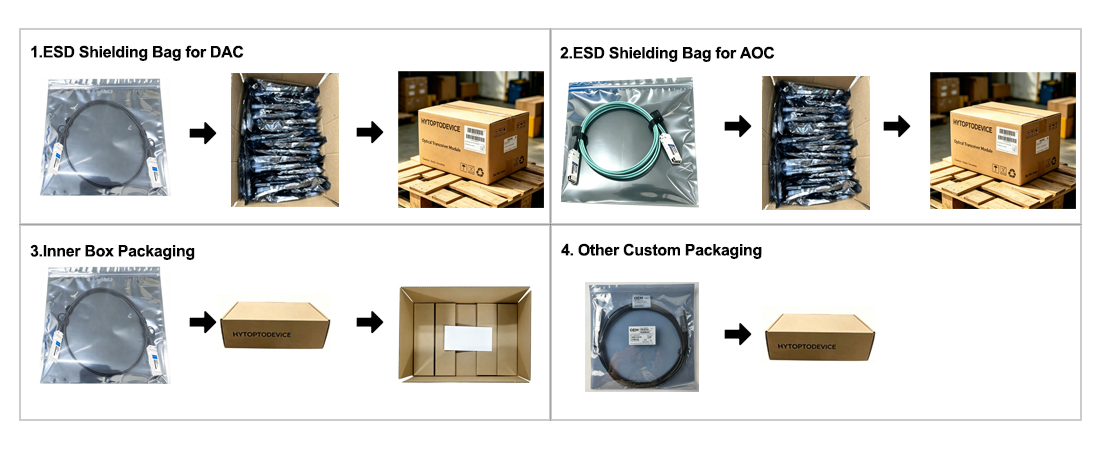
ESD Protection & Fast Shipping: Every transceiver is sealed in an ESD-safe bag and ready for same-day dispatch from stock.
Custom OEM & Branding: We provide logo printing, private labeling, and custom packaging to help distributors and integrators build their brand—no factory investment required.
Why Network Engineers Choose HYTOPTODEVICE
HYTOPTODEVICE has supplied over 5000,000 optical transceiver modules to data centers, ISPs, and enterprise networks across 100+ countries since 2011. Every module undergoes a 72-hour burn-in test and full DDM/DOM validation before shipment.
“Phenomenal performance. We deployed 200 HYTOPTODEVICE SFP modules to replace Cisco OEMs in our backbone network. Result? Zero compatibility issues and a 60% reduction in costs. Highly recommended for mission-critical networks."— Senior Network Engineer, Regional Telecom, Australia
Quality Certification & Compliance
At HYTOPTODEVICE, our quality commitment is backed by industry-standard validations. From fiber optical transceiver manufacturing to final visual inspection, from IQC、IPQC、FQC to OQC, our processes ensure global compliance and reliability.
We adhere to rigorous standards for our SFP modules and network solutions:
ISO 9001: Certified quality management and production consistency.
CE & FCC: Fully compliant for seamless Global Market Access.
RoHS: Committed to environmental responsibility and hazardous material control.
Proven Reliability: Rigorous testing to reduce compliance risk and ensure safety.
Certified Quality. Global Standards. Guaranteed Performance.