When the IBM compatible transceiver Module SFP is used in short distance transmission, please match it with the appropriate attenuator according to the table.
A1: To ensure reliable 160km long-haul transmission for IBM enterprise networks, our Transceiver Module SFP requires a 34dB–36dB minimum optical power budget. With 0~+5dBm stable transmit power and -30~-32dBm high receiving sensitivity, it fully covers standard fiber attenuation and reserves sufficient operational tolerance for complex field links.
Q2: How much power safety buffer is required to resist fiber aging for IBM 160km Transceiver Module SFP links?
A2: For long-term stable operation of IBM enterprise core links, we recommend reserving a 3dB–5dB extra power safety margin for this Transceiver Module SFP. This buffer offsets signal loss caused by fiber aging, line splicing repairs and changing environmental humidity and temperature interference.
Q3: Is IBM E1MG-ZXC-160 Transceiver Module SFP compatible with G.655 NZDSF single mode fiber lines?
A3: Our IBM compatible 160km Transceiver Module SFP is fully adaptable to G.655 non-zero dispersion shifted fiber. G.655 fiber delivers lower 1550nm chromatic dispersion than traditional G.652 fiber, effectively reducing long-distance dispersion penalties and improving overall link transmission stability.
Q4: Why IBM switch shows unknown transceiver prompt while E1MG-ZXC-160 Transceiver Module SFP link stays up?
A4: The minor unknown transceiver alert is caused by unrecognized third-party vendor ID in the module DDM EEPROM. Our Transceiver Module SFP features complete physical layer compatibility with IBM devices, ensuring normal data forwarding and stable link status without functional failure.
Q5: What are the standard DDM monitoring parameters for IBM 160km enterprise Transceiver Module SFP?
A5: This enterprise-grade Transceiver Module SFP supports precise real-time DDM monitoring, with a standard 3.3V operating voltage (±5% tolerance) and commercial working temperature range of 0℃–70℃, providing accurate operational data for IBM network management systems.
Q6: How to avoid thermal bottlenecks for dense deployment of IBM 160km Transceiver Module SFP on high-density switches?
A6: Concentrated side-by-side installation of high-power 160km Transceiver Module SFP will form local thermal hotspots on 48-port IBM switches. Staggering long-haul modules with short-range SFPs optimizes chassis airflow and effectively prevents equipment overheating and performance degradation.
Q7: What performance issues occur when commercial IBM E1MG-ZXC-160 Transceiver Module SFP works above 75℃?
A7: Sustained temperatures exceeding 75℃ will cause this Transceiver Module SFP to generate DFB laser wavelength drift, reduced transmit power and sharply increased bit error rate. Long-term overheating leads to continuous packet loss and eventual long-haul link disconnection.
Q8: How often should fiber connectors be cleaned for IBM 160km long-haul Transceiver Module SFP links?
A8: For high-power IBM 160km Transceiver Module SFP links, fiber end faces must be professionally cleaned every time connectors are plugged and unplugged. Tiny dust particles will be permanently burned on the module lens under high laser power, causing persistent signal attenuation and unstable links.
Q9: Why IBM 160km Transceiver Module SFP has higher cost than conventional 80km optical modules?
A9: Our IBM dedicated 160km Transceiver Module SFP adopts high-precision low-yield cooled DFB lasers, high-sensitivity APD receivers and professional TEC temperature control components, which are not equipped on ordinary 80km modules. Premium core components ensure ultra-long-distance stability, resulting in higher manufacturing standards and costs.
Q10: Why cheap unbranded 160km SFP modules are not suitable for IBM mission-critical links?
A10: Generic unbranded 160km modules lack rigorous enterprise-grade aging testing and adopt recycled low-grade optical components. Deploying them on IBM core storage and network links easily causes premature laser decay, random packet loss and sudden link outages, bringing huge operational risks.
Q11: Can 1310nm optical modules pair with IBM 1550nm 160km Transceiver Module SFP for link interconnection?
A11: Bidirectional long-haul transmission requires strict wavelength consistency. Our 1550nm IBM E1MG-ZXC-160 Transceiver Module SFP cannot match 1310nm modules, and wavelength mismatch will fail to establish valid and stable fiber links.
Q12: What triggers severe packet loss on IBM Transceiver Module SFP links with normally displayed link status?
A12: Normal link status with frequent packet loss indicates the link is running at the critical sensitivity threshold of the module’s APD receiver. Excessive fiber attenuation pushes the operating limit of the 160km Transceiver Module SFP, resulting in intermittent bit errors and data loss.
Q13: Does HYTOPTODEVICE IBM E1MG-ZXC-160 Transceiver Module SFP support remote loopback fault diagnosis?
A13: This enterprise-grade Transceiver Module SFP supports built-in digital loopback testing via switch CLI commands. The diagnostic function helps engineers quickly distinguish whether network faults come from IBM device hardware or remote long-distance fiber lines.
Q14: What does high Tx bias current alarm mean on IBM 160km Transceiver Module SFP?
A14: A high Tx bias current alarm indicates the internal laser driver is overloaded to maintain normal optical output. This is a typical early aging warning, proving the laser component is approaching end-of-life and needs timely replacement to avoid sudden link failure.
Why Network Engineers Choose HYTOPTODEVICE
HYTOPTODEVICE has supplied over 5000,000 optical transceiver modules to data centers, ISPs, and enterprise networks across 100+ countries since 2011. Every module undergoes a 72-hour burn-in test and full DDM/DOM validation before shipment.
- Up to 70% cost savings vs OEM, transparent pricing & flexible bulk rates, supported quality returns
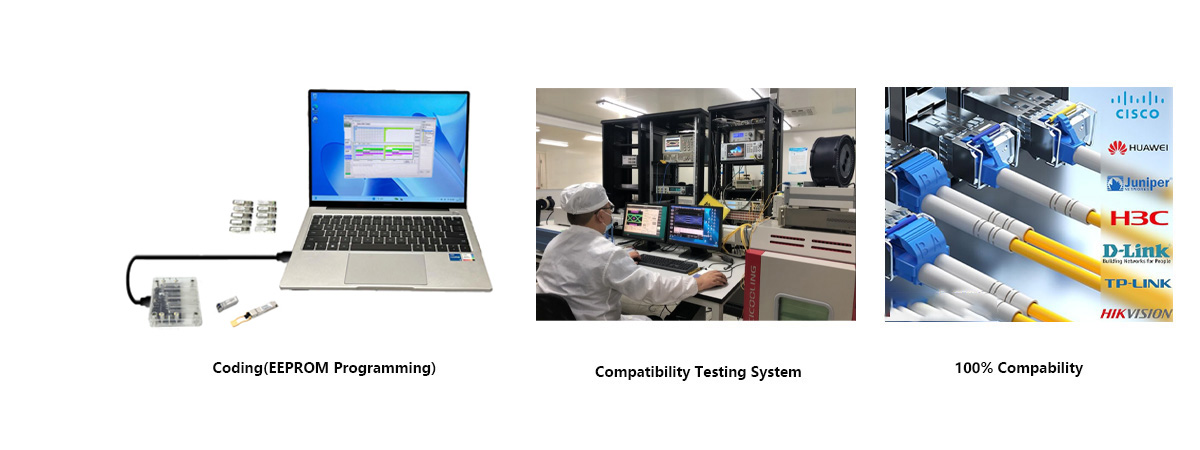
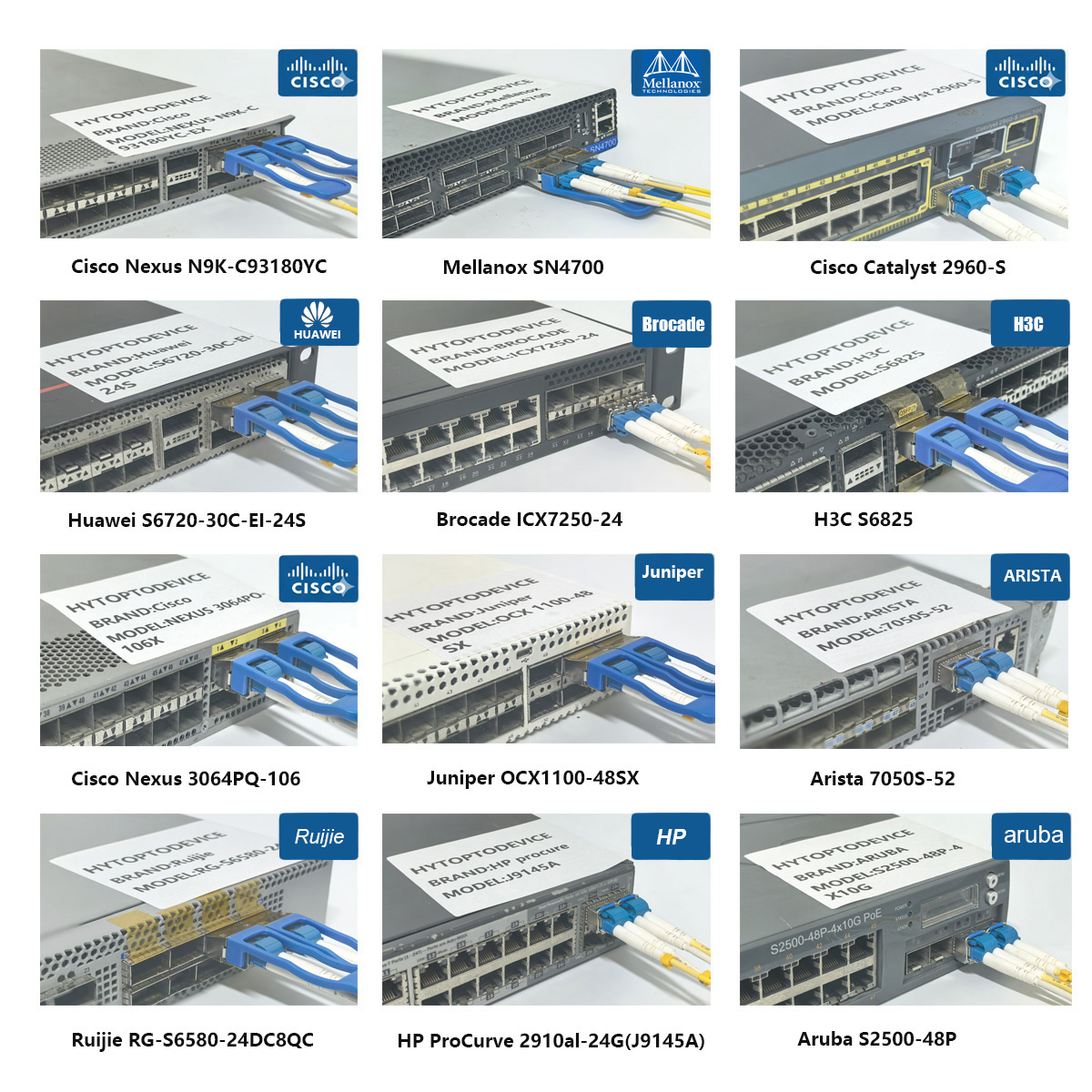
- 100% real-device compatible with Cisco, Huawei,Dell,Juniper, and Arista
- ISO 9001:2015 Shenzhen factory, full lineup: 1.25G/10G/25G/40G/100G/200G/400G/800G/1.6T transceivers
- Ample stock, fast global DHL/FedEx shipping in 3–5 working days
- Free pre-sales engineering support for custom EEPROM & private label firmware
- Real switch test videos available for pre-purchase review; inspection & shipping videos provided per order
“Phenomenal performance. We deployed 200 HYTOPTODEVICE SFP modules to replace Cisco OEMs in our backbone network. Result? Zero compatibility issues and a 60% reduction in costs. Highly recommended for mission-critical networks."— Senior Network Engineer, Regional Telecom, Australia
Quality Certification & Compliance
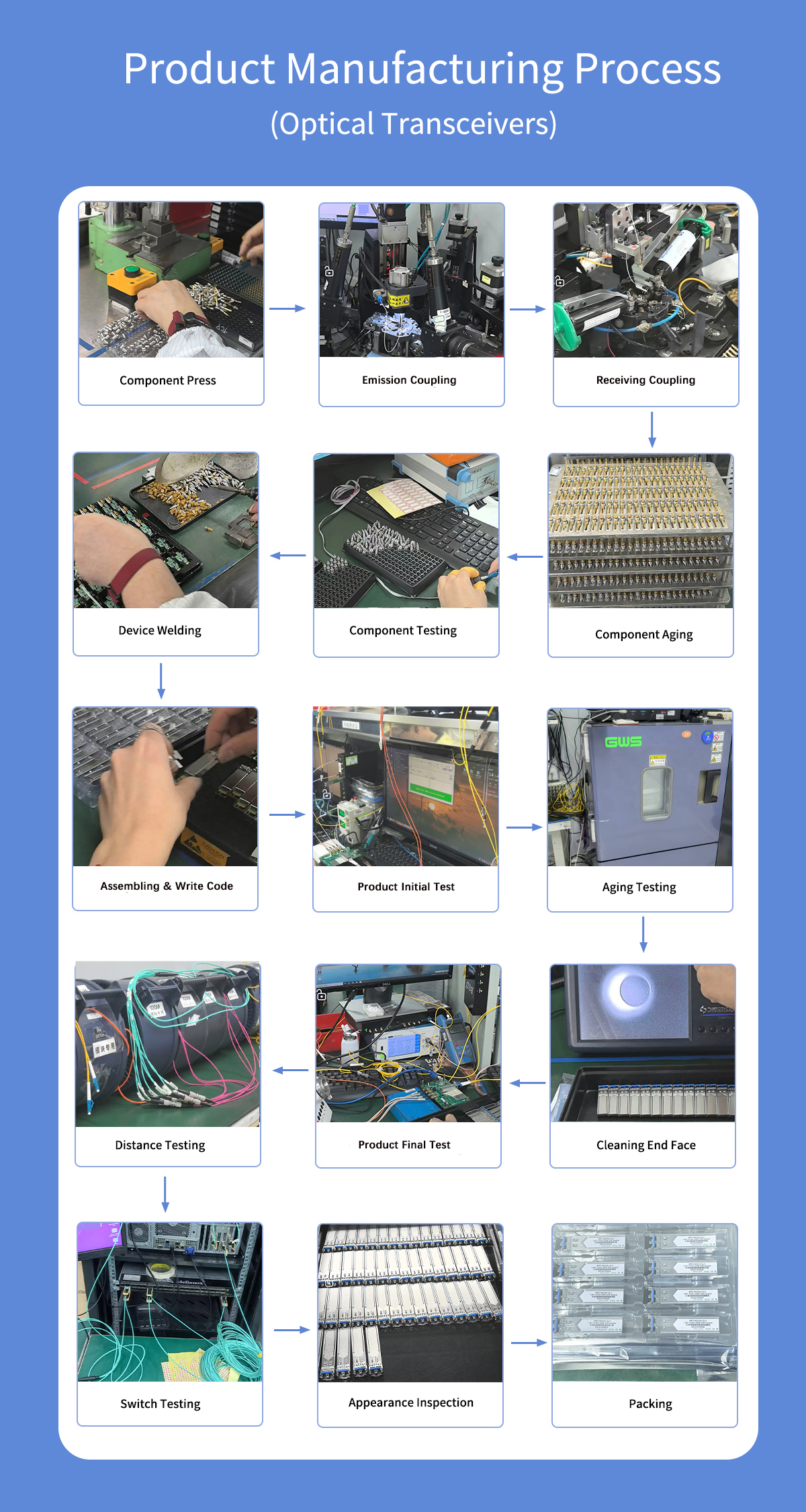
At HYTOPTODEVICE, our quality commitment is backed by industry-standard validations. From fiber optical transceiver manufacturing to final visual inspection, from IQC、IPQC、FQC to OQC, our processes ensure global compliance and reliability.
We adhere to rigorous standards for our SFP modules and network solutions:
-
ISO 9001: Certified quality management and production consistency.
-
CE & FCC: Fully compliant for seamless Global Market Access.
-
RoHS: Committed to environmental responsibility and hazardous material control.
-
Proven Reliability: Rigorous testing to reduce compliance risk and ensure safety.
Certified Quality. Global Standards. Guaranteed Performance.

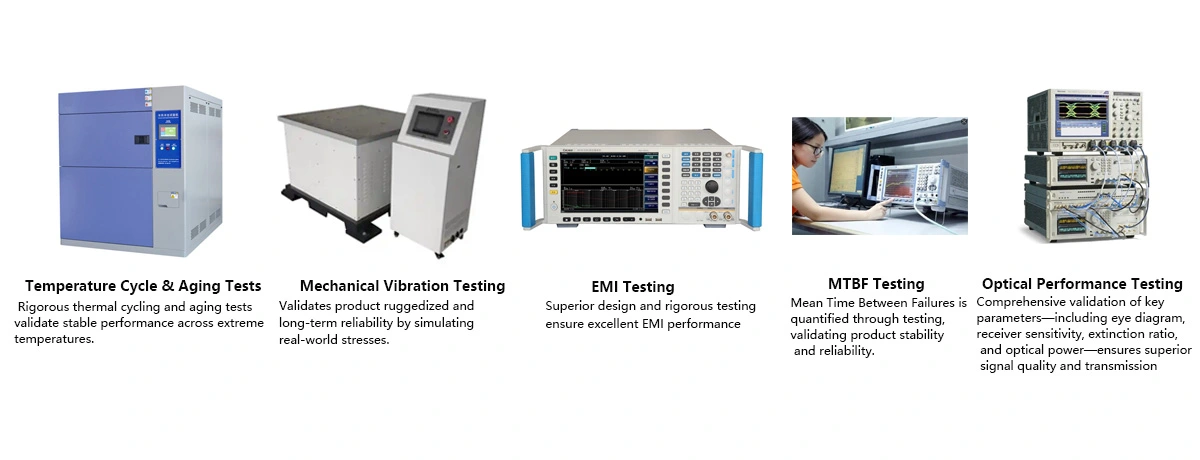
Rigorous Industrial Product Testing
100% 3rd Party Compatible
Partial Test Demonstration
Others
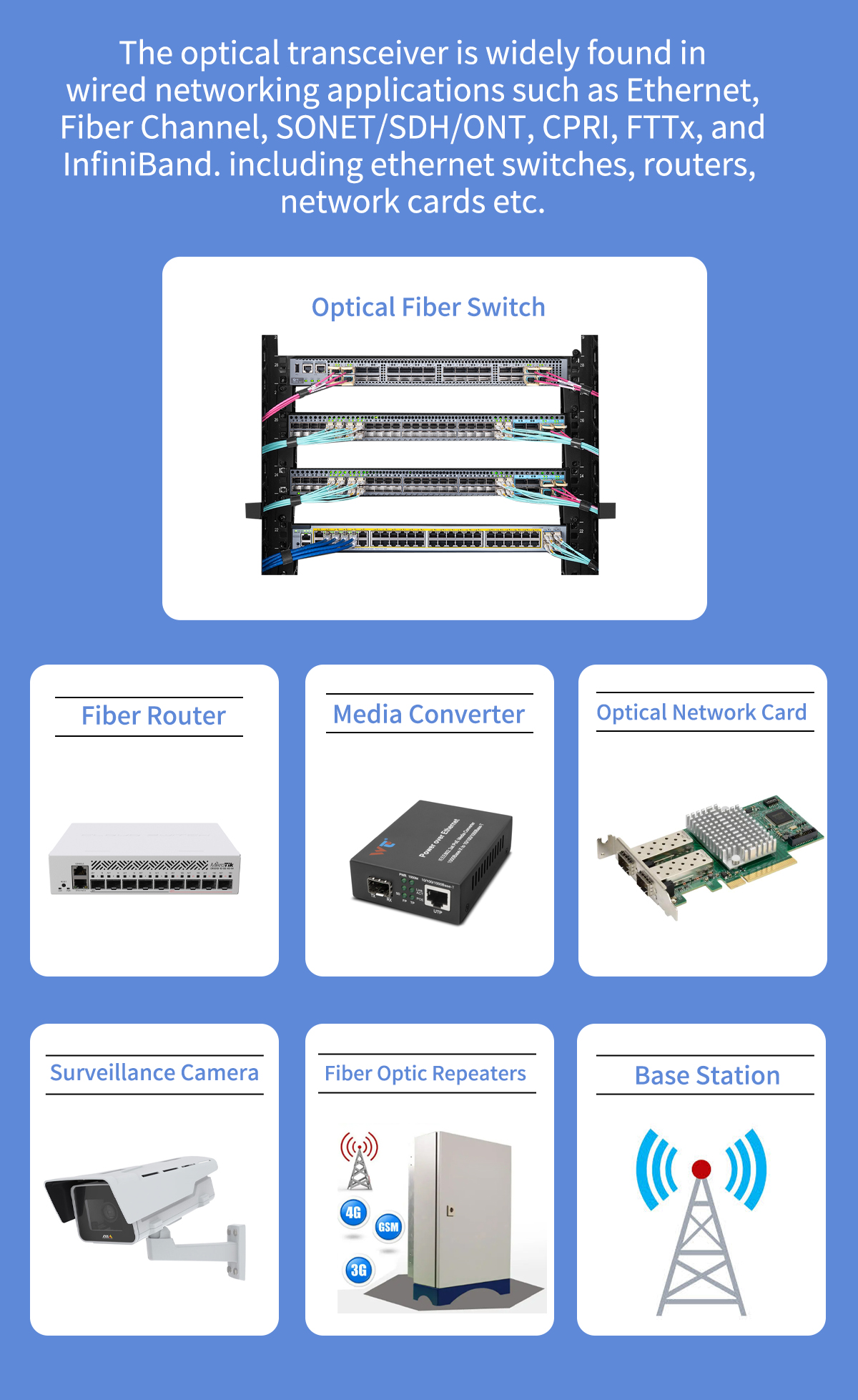



 3.Enterprise Integrated Structured Cabling System
 FAQ
FAQ


