Q1: What is the minimum link distance required before it is safe to connect QSFP28 100G ER4 Transceiver without an attenuator?
A: Typically, at least 15km to 20km of single-mode fiber span is required to naturally attenuate transmit power and fit the module’s safe receiver input range. HYTOPTODEVICE recommends following this distance threshold to prevent optical overload and protect Dell switch port transceivers during long-reach network deployment.
Q2: Can high-reach QSFP28 100G ER4 Transceiver be used for ultra-short 1km Dell switch interconnection?
A: Technically feasible for short-distance connections, but mandatory deployment of heavy optical attenuators is required to simulate the natural signal loss of 30km–40km fiber spans. This setup eliminates receiver saturation and ensures stable link status for short-range cross-rack Dell networking.
Q3: Can network engineers disable FEC to lower latency on ultra-clean fiber with QSFP28 100G ER4 Transceiver?
A: Manual FEC shutdown is achievable but not recommended for long-haul scenarios. Even flawless low-loss fiber will generate high Pre-FEC BER and random intermittent packet drops once the transmission distance exceeds 25km–30km, undermining Dell data center trunk link stability.
Q4: Why do Dell switch CLI prompts show checksum errors after inserting third-party QSFP28 100G ER4 Transceiver?
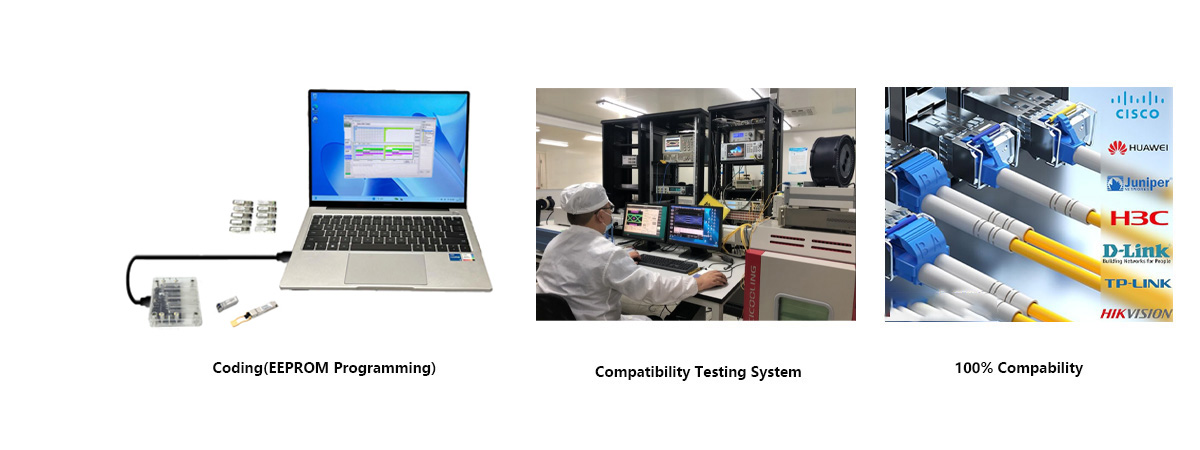
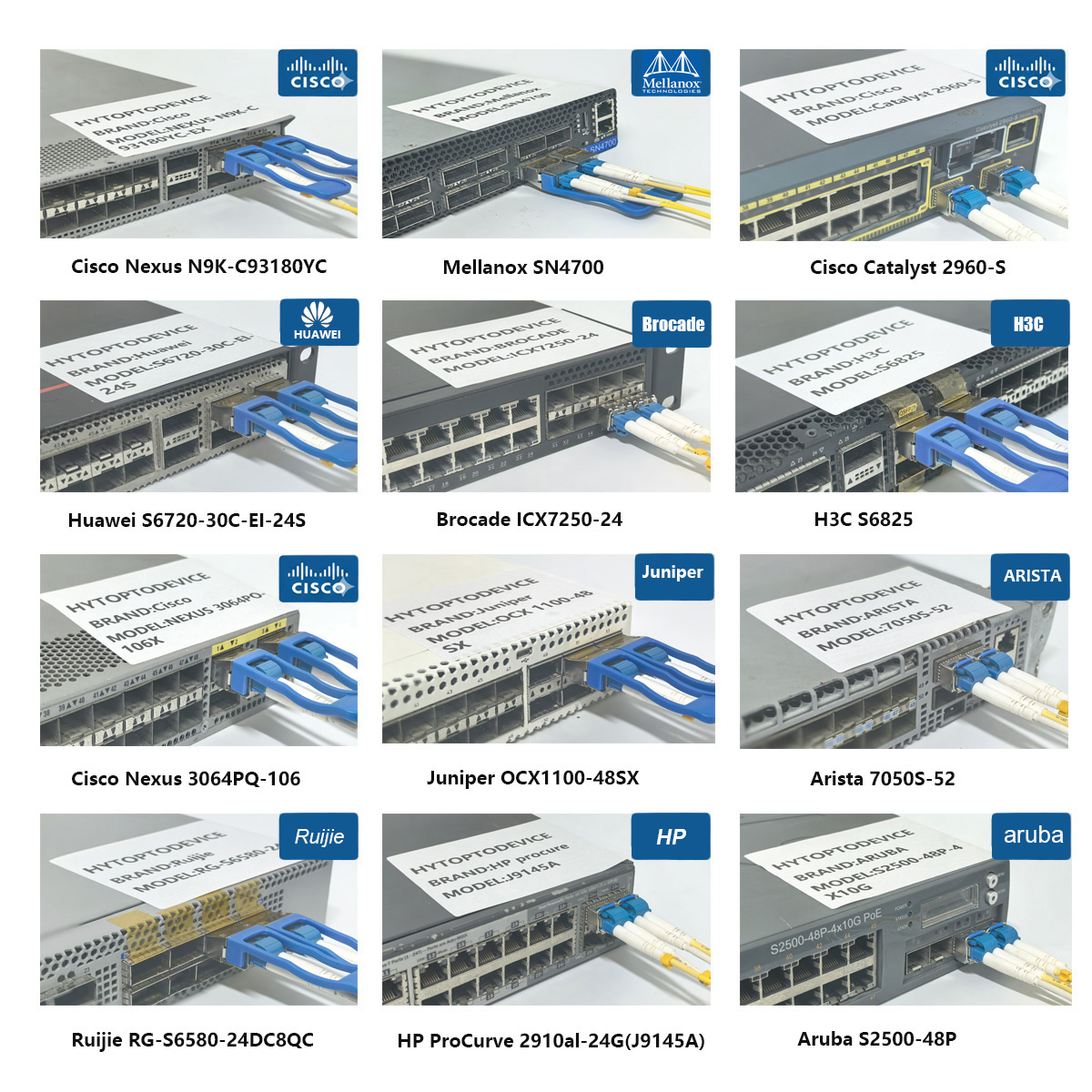
A: This issue is mainly caused by incomplete or corrupted EEPROM configuration data from non-standard module coding. HYTOPTODEVICE strictly calibrates all firmware parameters during production to avoid checksum mismatch and ensure full OS10 system compatibility for Dell devices.
Q5: Does high-density port stacking of QSFP28 100G ER4 Transceiver trigger Dell switch overheating risks?
A: Yes. Each 100G ER4 module consumes over 4.5W power, and dense stacking will form local thermal hotspots inside the switch chassis. Insufficient chassis heat dissipation will trigger automatic port shutdowns, affecting high-density Dell data center fabric operation.
Q6: What are the core practical differences between standard QSFP28 ER4 and ER4-Lite transceiver for Dell networking?
A: The key gap lies in FEC dependency and transmission distance. Standard ER4 supports 40km error-free transmission without FEC, while ER4-Lite models require switch-side RS-FEC activation to reach 40km, with a maximum reliable distance of only 30km when FEC is disabled for Dell switch deployment.
Q7: Can QSFP28 100G ER4 Transceiver deliver stable transmission over G.652 and G.655 single-mode fiber?
A: This transceiver is fully optimized for mainstream G.652 single-mode fiber with matched dispersion parameters for 1310nm wavelength. G.655 non-zero dispersion shifted fiber has unique optical characteristics that will reduce effective transmission distance and weaken long-haul link stability.
Q8: Why do DDM Rx power readings show zero on online QSFP28 100G ER4 Transceiver with physical active links?
A: Zero DOM receive power data under normal link status usually stems from internal DDM calibration firmware deviation or minor system adaptation bugs with individual Dell switch OS versions. All HYTOPTODEVICE modules undergo strict DDM calibration to avoid such monitoring anomalies.
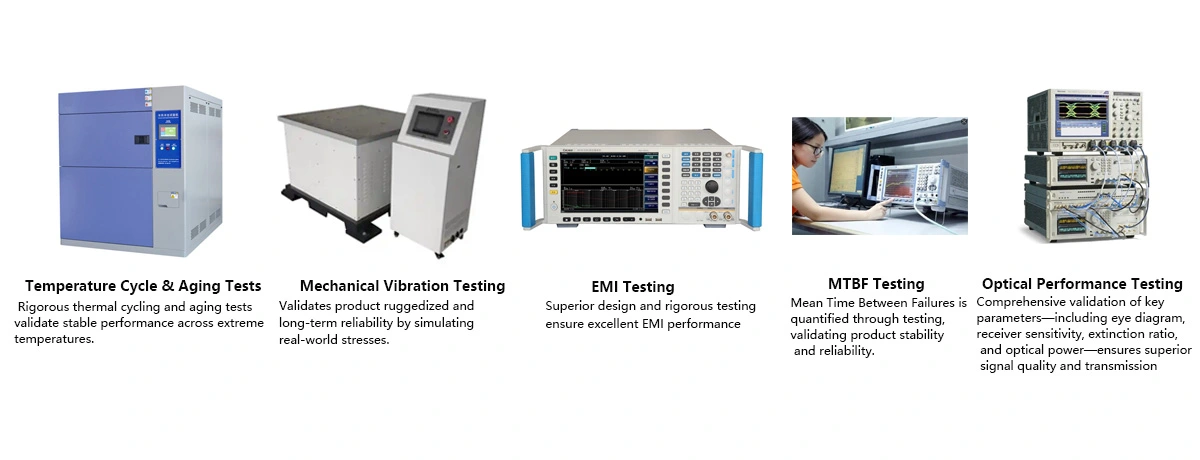
Q9: What is the standard MTBF value of industrial-grade third-party QSFP28 100G ER4 Transceiver? A: Premium tier-1 compatible 100G optical transceivers feature a professional reliability design, with a guaranteed MTBF of 2.5 to 3 million hours. HYTOPTODEVICE adheres to strict production testing standards to ensure long-term stable operation in commercial Dell data center environments.
Q10: Is QSFP28 100G ER4 Transceiver applicable for precision SyncE timing transmission scenarios?
A: Yes. The physical layer design of this 100G ER4 transceiver stably transmits synchronous clock signals without introducing variable packet delay variation. It fully meets the high-precision timing requirements of Synchronous Ethernet for enterprise and carrier-grade network deployment.
Q11: Do Dell-compatible QSFP28 100G ER4 Transceiver meet international environmental compliance standards?
A: Absolutely. All HYTOPTODEVICE finished optical transceivers pass formal RoHS and CE certification tests, complying with global environmental protection and safety regulations. It fully meets strict data center audit standards for commercial and industrial network projects.
Q12: Which latch design is more suitable for high-density Dell switch deployment: pull-tab or rubber bale-clasp QSFP28 100G ER4 Transceiver?
A: Pull-tab latch structure is highly recommended for high-density cabinet layouts. It enables convenient, scratch-free module plugging and unplugging without disturbing adjacent fiber jumpers, greatly improving daily maintenance efficiency for dense Dell 100G port arrays.