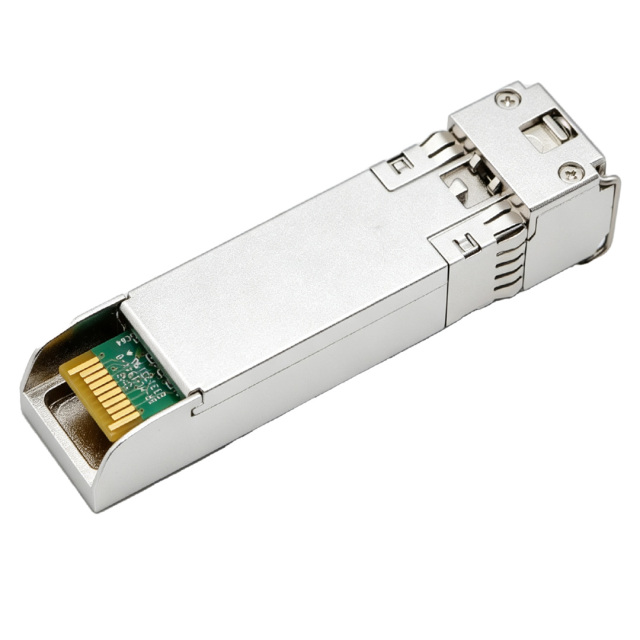
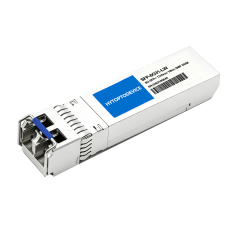
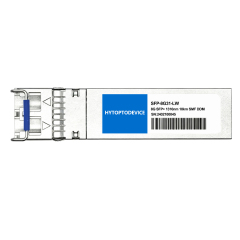
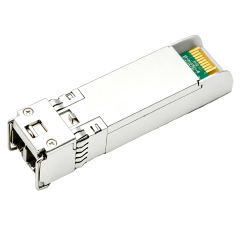
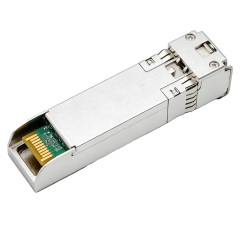
Q1: What is the maximum transmission distance for SFP-8G-LW?
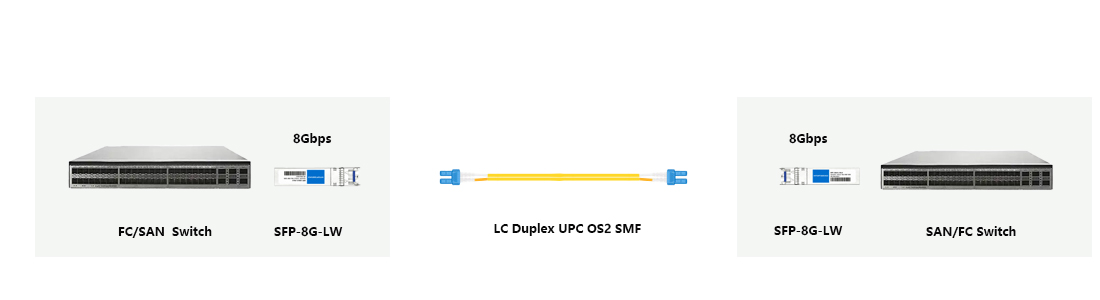
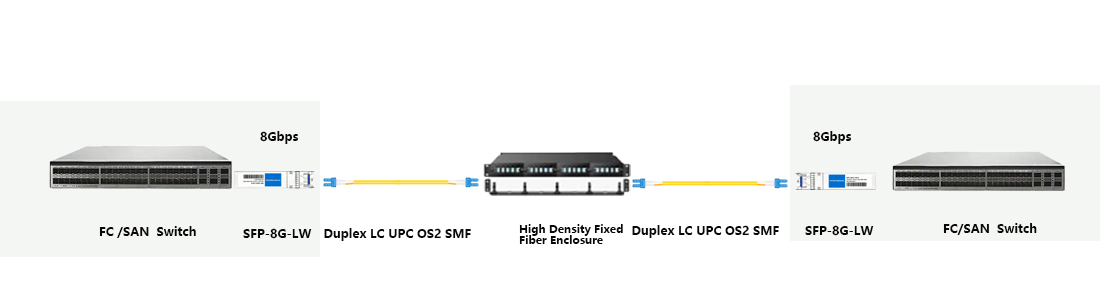
A: The Dell 330-4328 compatible 8G SFP+ LW module supports a maximum stable transmission distance of 10km over standard single-mode fiber (SMF). Designed for long-wave Fibre Channel networking, it maintains error-free, low-latency data transmission within the rated distance, perfectly matching remote Dell SAN interconnection and cross-data center deployment requirements.
Q2: Why doesn't SFP-8G-LW work in a standard 10G Ethernet SFP+ slot?
A: SFP-8G-LW is a dedicated Fibre Channel (FC) transceiver with exclusive FC protocol coding and physical layer tuning, while 10G Ethernet SFP+ slots follow Ethernet protocol specifications. The two devices adopt different signal encoding, clock rates and firmware definitions, resulting in protocol incompatibility. Plugging an FC LW module into an Ethernet slot will trigger port recognition failure and link downtime.
Q3: Why is product obsolescence (EOL) a growing pain point for SFP-8G-LW?
A: Official original Dell 8G SFP+ LW transceivers have entered EOL (End of Life) status, leading to insufficient official inventory, high procurement costs and difficult after-sales maintenance for legacy Dell SAN systems. HYTOPTODEVICE’s Dell 330-4328 compatible modules solve this pain point perfectly, providing long-term stable supply, consistent batch quality and zero-compatibility replacement for EOL original modules.
Q4: Why do SAN switches throw "Incompatible Transceiver" errors when inserting an SFP-8G-LW?
A: Transceiver incompatibility errors are mainly caused by unrecognized vendor ID, incorrect firmware coding or mismatched parameter calibration. Ordinary generic modules lack dedicated Dell 330-4328 protocol programming. Our 8G SFP+ LW modules are pre-flashed with official-matched firmware and precisely calibrated, effectively eliminating incompatible transceiver alarms and realizing zero-alarm plug-and-play.
Q5: Can SFP-8G-LW cause optical receiver overload on short patch cables?
A: Yes. The SFP-8G-LW features a relatively high transmit power range of -6.5 ~ -0.5 dBm. When used on ultra-short single-mode patch cables without optical attenuation, excessive optical power may cause receiver overload, resulting in signal saturation, bit errors or unstable links. For short-distance deployment, proper optical attenuation matching is recommended to ensure link stability.
Q6: What is the receiver sensitivity threshold for SFP-8G-LW?
A: The Dell 330-4328 compatible 8G SFP+ LW module features an industry-standard receiver sensitivity threshold of ≤ -12 dBm. This high-sensitivity design ensures stable signal reception even in long-distance 10km SMF transmission scenarios, resisting optical signal attenuation and guaranteeing continuous and reliable SAN data transmission.
Q7: Can SFP-8G-LW be connected directly to an SFP-8G-SW (Short Wavelength) module?
A: No. Direct interconnection between SFP-8G-LW (1310nm long-wave) and SFP-8G-SW (850nm short-wave) modules is not supported. The two adopt completely different working wavelengths and are designed for single-mode and multimode fiber respectively, leading to severe wavelength mismatch and signal attenuation, which cannot establish valid Fibre Channel links.
Q8: Why does an SFP-8G-LW module report high Tx Bias Current in SAN logs?
A: High Tx bias current is usually caused by aging laser chips, poor fiber end-face cleanliness or long-term high-temperature operation. Unclean optical ports will increase laser transmission load and raise bias current. Our 8G SFP+ LW modules adopt high-quality DFB lasers and strict aging tests, with stable bias current parameters, effectively avoiding abnormal log alarms and link jitter caused by current surge.
Q9: What is the typical power consumption of an SFP-8G-LW module?
A: The 8G SFP+ LW long-wave module features low-power chip design, with typical single-module power consumption far lower than traditional optical transceivers. Its low heat generation and power-saving performance adapt to high-density Dell SAN cabinet deployment, reducing overall equipment energy consumption and long-term operation costs for data centers.
Q10: What line coding does SFP-8G-LW use at the physical layer?
A: Compliant with FC-PI-4 Fibre Channel standards, SFP-8G-LW adopts standard 8b/10b line coding at the physical layer. This coding mechanism ensures high-speed, error-free data transmission for 8G Fibre Channel links, supporting stable clock synchronization and data verification for long-distance SAN transmission.
Q11: Why does a Fibre Channel link with SFP-8G-LW stay in a No Light or Offline state?
A: Common causes include mismatched transceiver wavelengths, wrong fiber type (MMF instead of SMF), dirty or damaged fiber end faces, inconsistent parameters at both link ends, and faulty port configuration. Using standard 1310nm single-mode fiber, cleaning optical ports and deploying matched 8G LW modules at both ends can effectively solve No Light and Offline faults.
Q12: What happens if I insert an SFP-8G-LW into a 16G Fibre Channel switch port?
A: Most 16G FC switch ports support backward multi-rate adaptation. The 8G SFP+ LW module can be normally identified and locked at 8G FC speed, realizing normal link communication without port damage. However, the link bandwidth will be limited to 8G, failing to give full play to the 16G port performance. It is a feasible temporary replacement scheme but not recommended for long-term high-performance SAN deployment.