| NO. | Brand | Compatible P/N | Transceiver Type |
| 1 | Cisco | GLC-BX80-UA | |
| 2 | Cisco | Cisco GLC-BX80-UA-I | |
| 3 | Brocade | E1MG-1G-BXU-80 | |
| 4 | Dell | SFP-GE-BX80-1490 | |
| 5 | Extreme | MGBIC-BX80-U | |
| 6 | H3C | SFP-GE-LH70-SM1490-BIDI | |
| 7 | HPE H3C | SFP-1G-BXU-80 | |
| 8 | Huawei | SFP-GE-ZBXD1 | |
| 9 | Juniper | SFP-GE80KT14R15 | |
| 10 | MikroTik | S-4554LC80D-1490 | |
| 11 | Netgear | SFP-GE-BX80 |
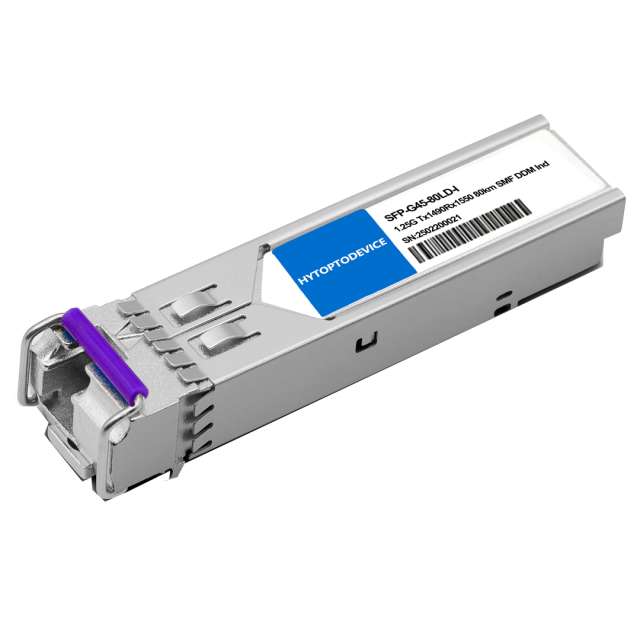
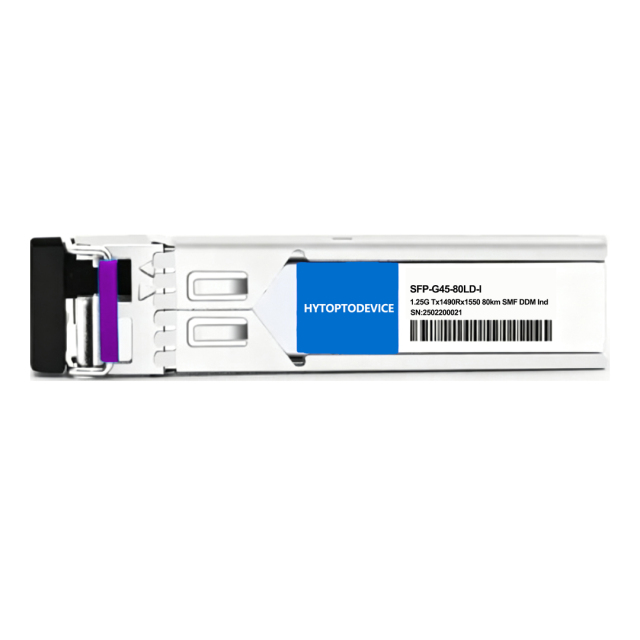
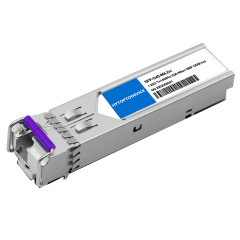
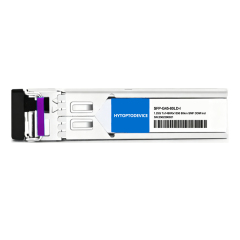
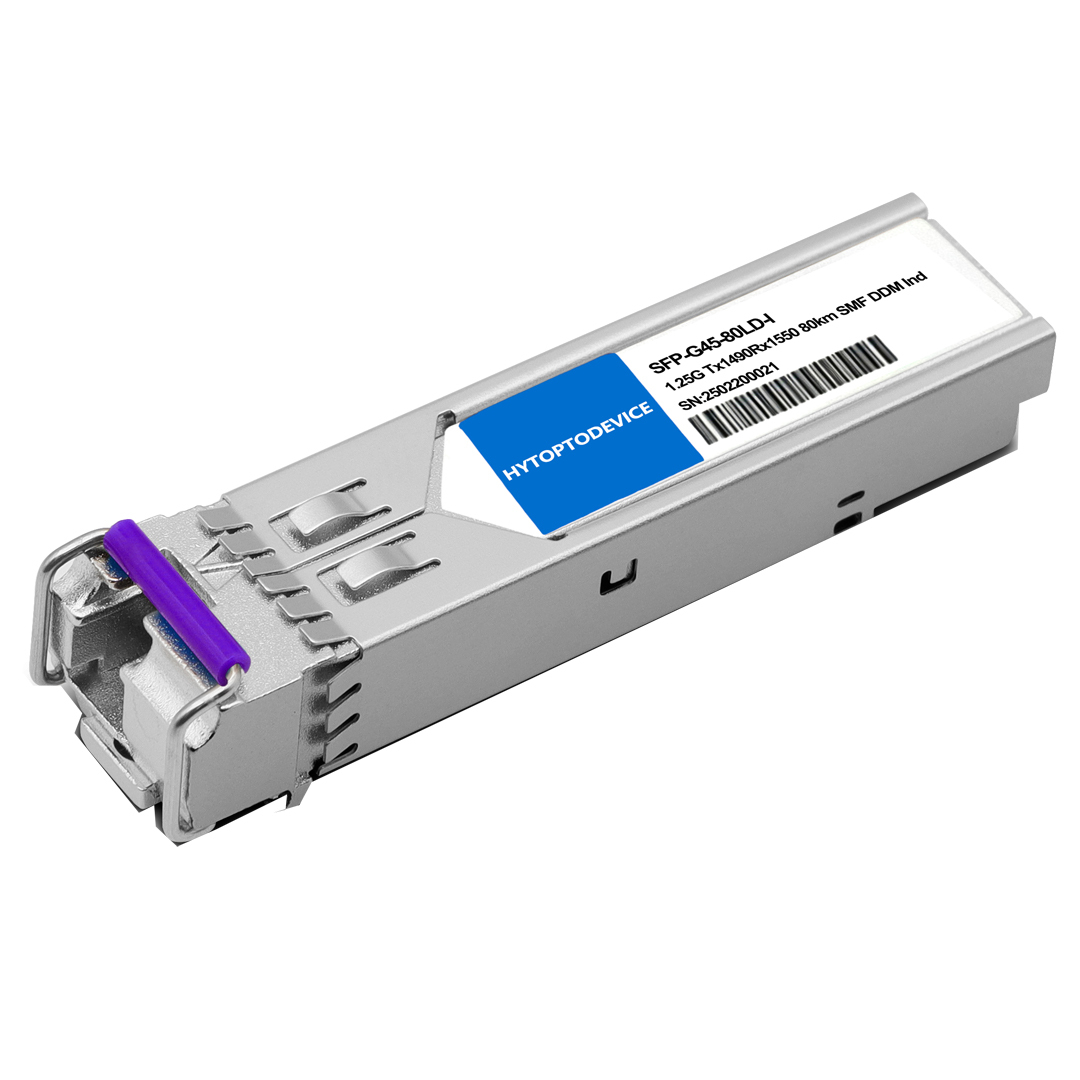
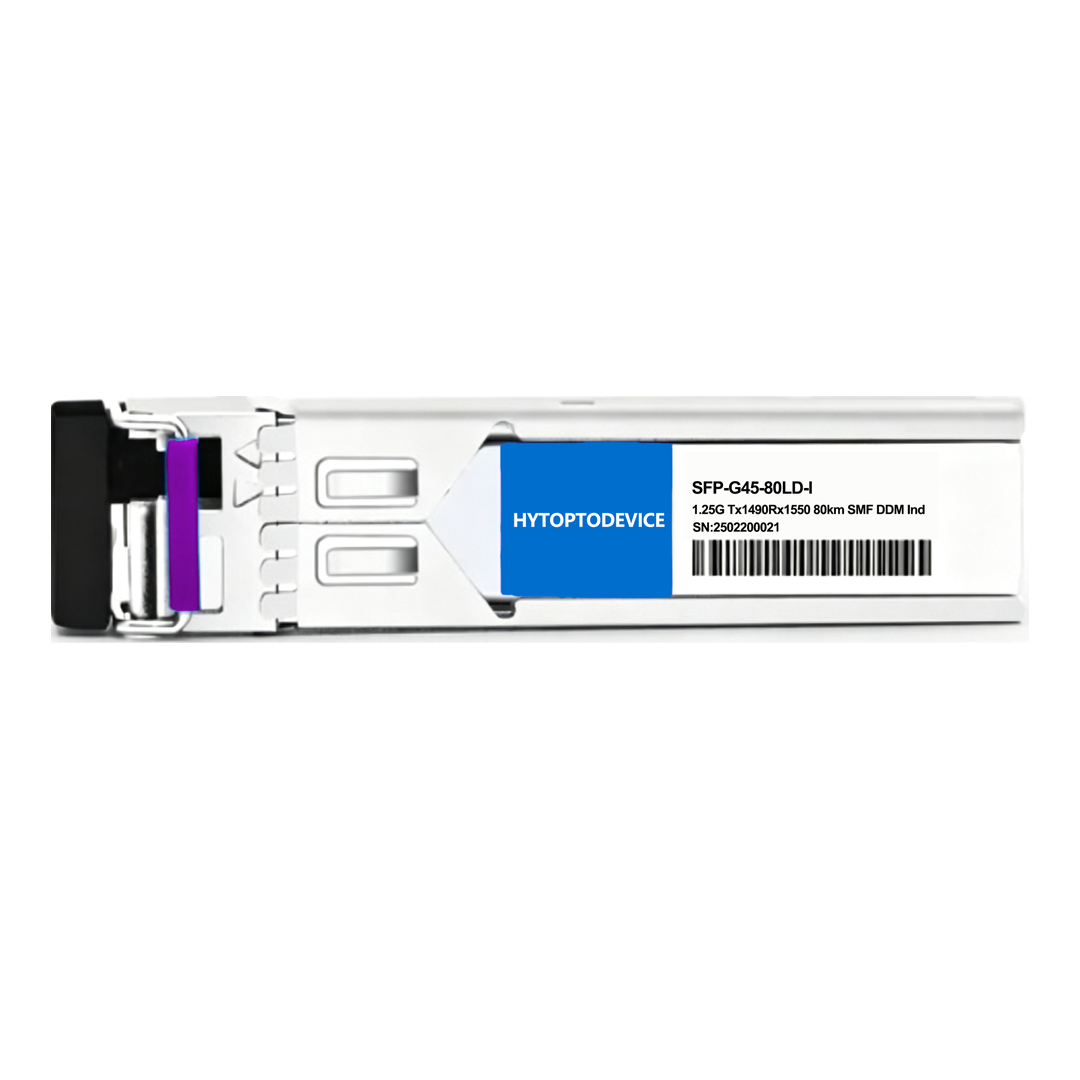
| HPE H3C Compatible | SFP-1G-BXU-80 | Vendor Name | HYTOPTODEVICE |
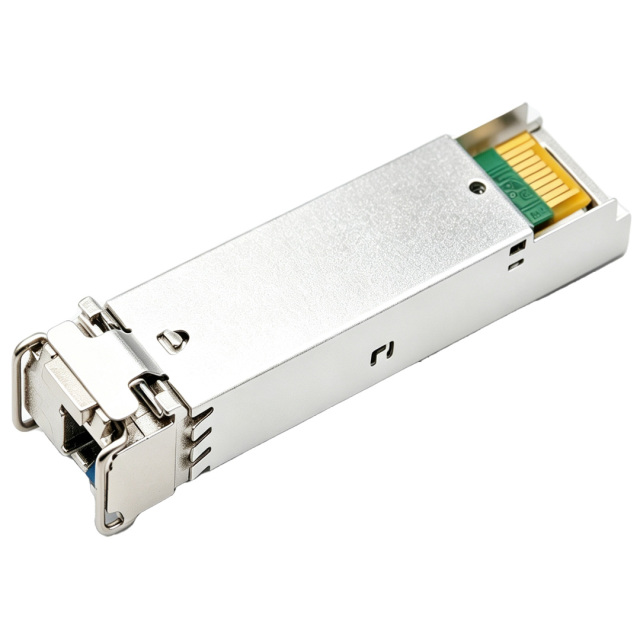
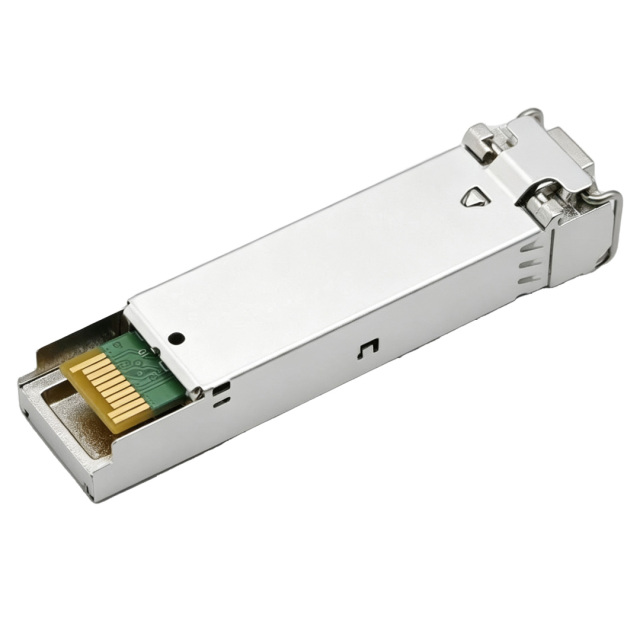
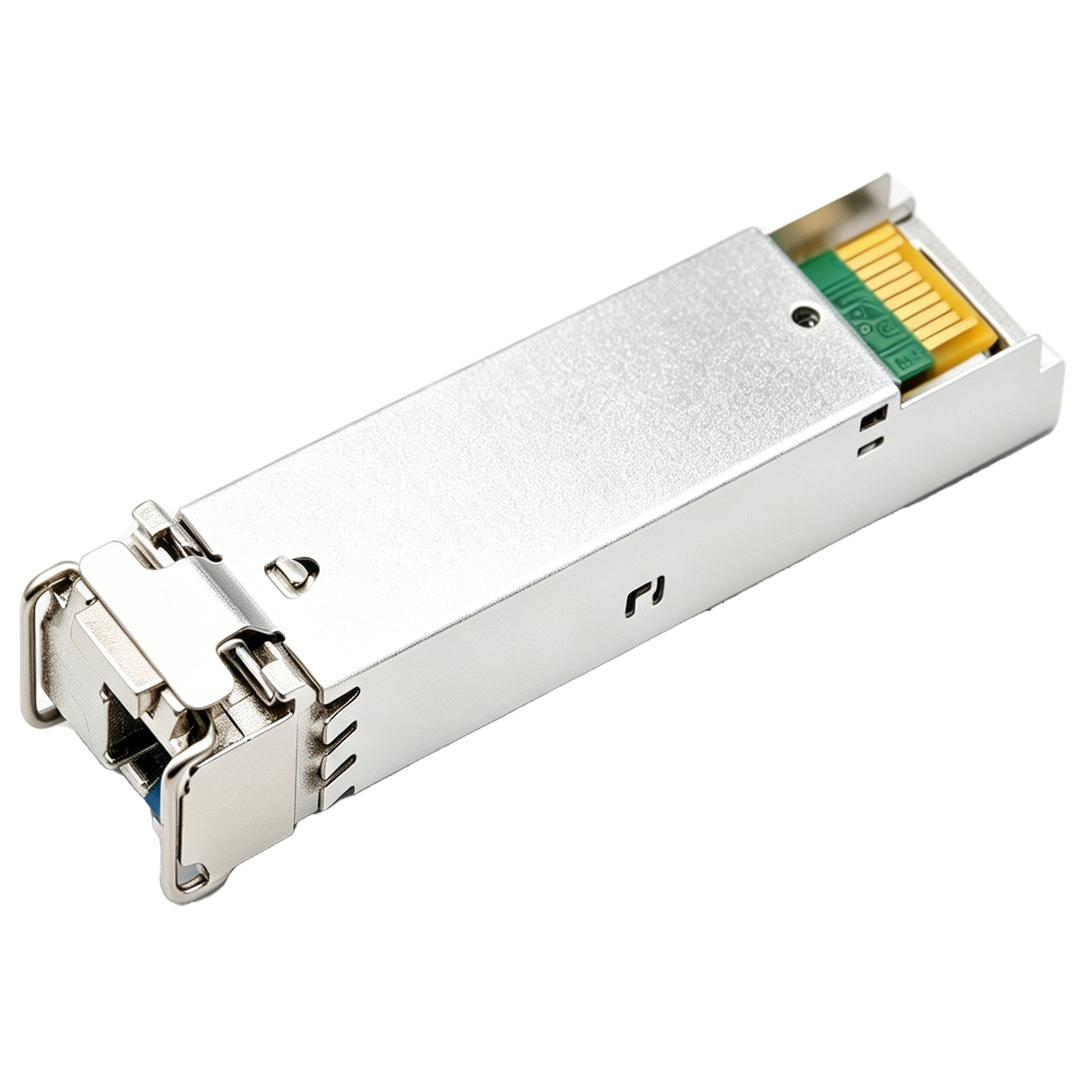
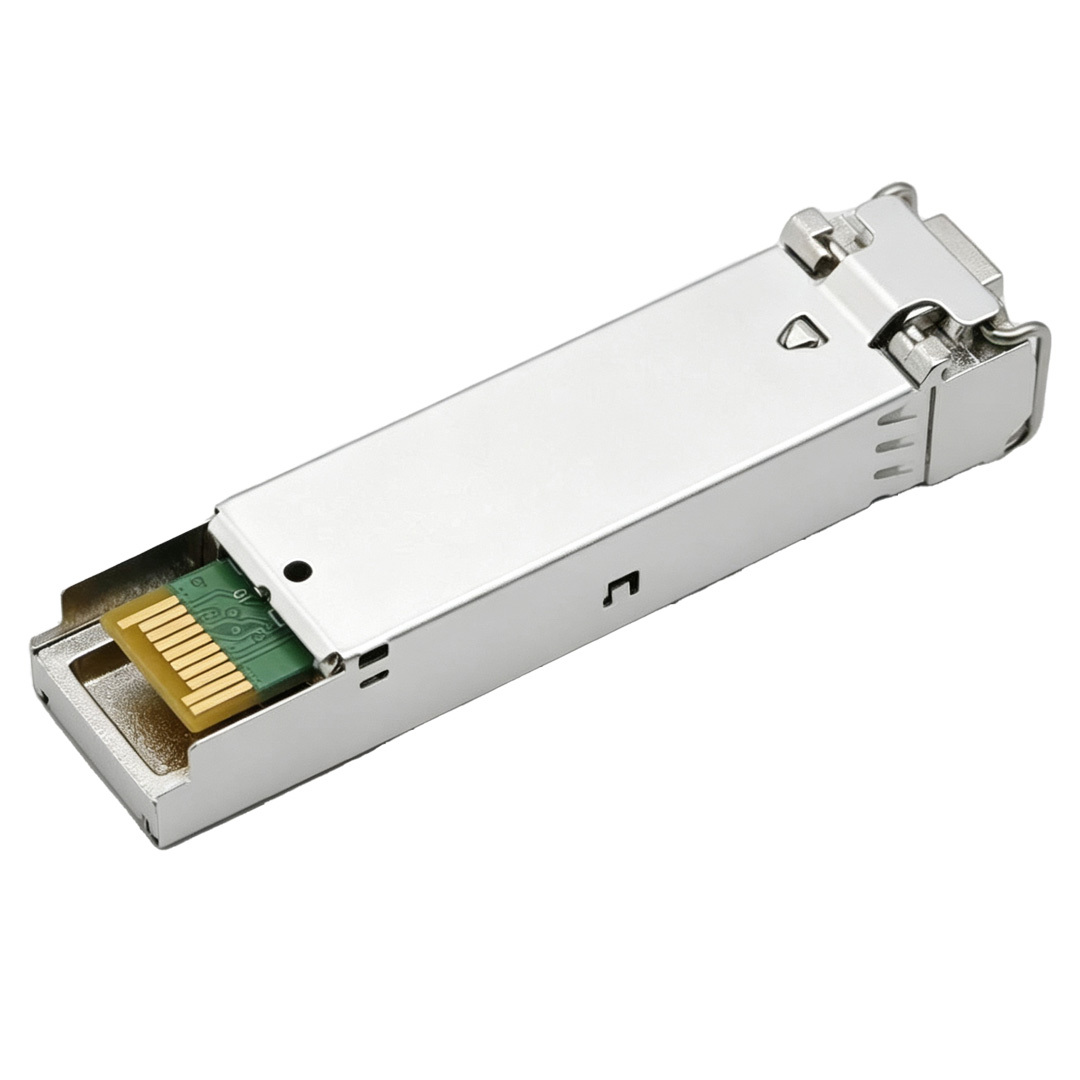
| Form Factor | SFP | Max Data Rate | 1.25Gbps |
| Wavelength | TX1490nm/RX1550nm | Max Distance | 80km |
| Connector | Simplex LC | Transmitter Type | 1490nm DFB |
| Cable Type | SMF | Receiver Type | PIN |
| TX Power | 0~5dBm | Receiver Sensitivity | < -26.0dBm |
| Protocols | SFF-8472 MSA Compliant, IEEE 802.3ah-2004 | Operation Temperature | 0 to 70°C (32 to 158°F) |
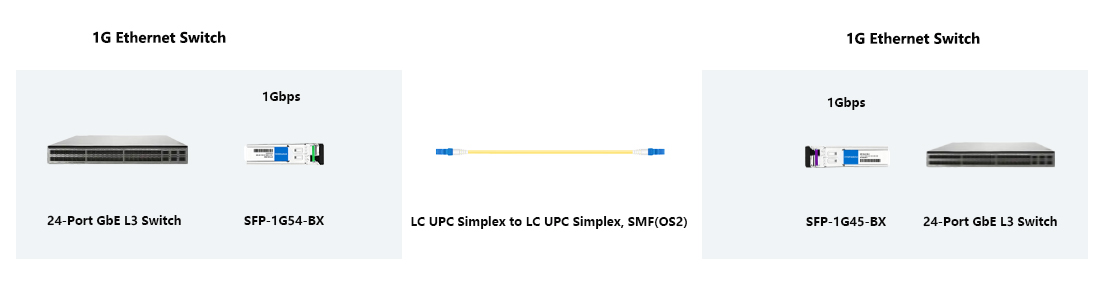
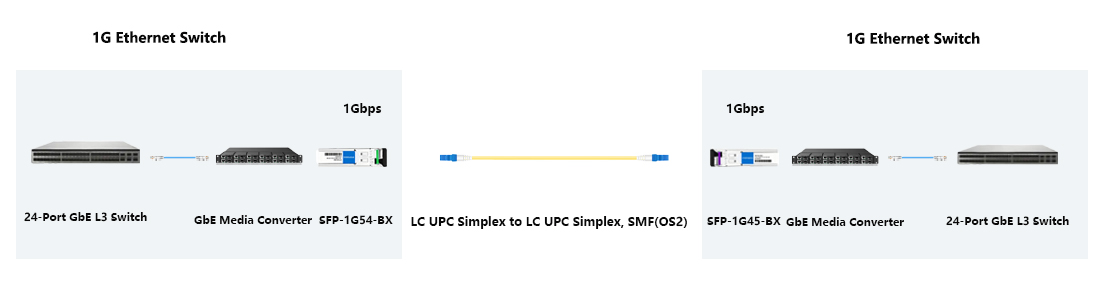
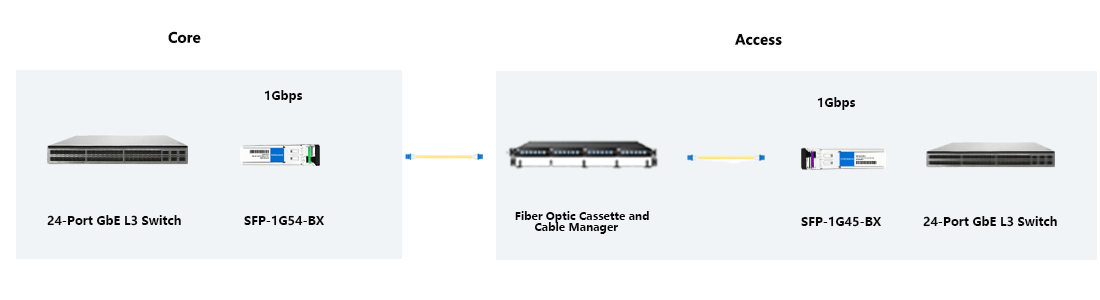
Complementary Pairing: BiDi transceivers must be deployed in matched pairs (e.g., TX1490/RX1550 with TX1550/RX1490). Mismatched wavelengths cannot establish a link.
Fiber Choice: Use Single-Mode Fiber (SMF) only. Do NOT use MMF.
Connector Match: Simplex LC (UPC/PC polish only). Do NOT use Duplex LC or APC.
Laser Safety: Class 1 Laser. Never look directly into optical ports or fiber end-faces.
ESD Safety: Wear an anti-static wrist strap before handling the transceiver.
Cleanliness & Dust: Keep dust caps installed on all unused ports. Clean fiber connectors with an optical cleaning pen before insertion; dust causes over 80% of link failures.
Optical Attenuator Required: For short-distance testing or links (<20 km), connect a 10dB–15dB attenuator to the RX port to prevent receiver damage.
Installation & Hot-Swap: MSA compliant. Insert and remove gently without powering down the device.
High Loss / Packet Drops: Ensure fiber bend radius exceeds 30 mm, inspect optical power levels, and clean connectors.
No Link: Verify complementary BIDI wavelength pairing requirement; clean Simplex LC end-faces; check port speed configuration.
1. Supported Hardware & Firmware




Q1: Apart from HPE FlexNetwork and H3C Comware‑based switches, can this HPE‑profile BiDi SFP module run normally under other vendors’ network infrastructure? A1: It can operate across multi‑brand platforms after dedicated firmware adjustment. Factory‑loaded Comware‑optimized EEPROM enables hassle‑free deployment for HPE H3C Comware gear; custom EEPROM rewriting is necessary for Cisco, Arista, Juniper or Dell switches. Conduct sample validation ahead of large‑volume wholesale procurement to prevent transceiver‑recognition faults.
Q2: Am I permitted to insert this 1.25G BiDi SFP module into a hardware port originally engineered for 10G SFP+ transceivers? A2: A number of 10G‑rate SFP+ ports deliver backward compatibility for gigabit SFP optics, yet manual port‑speed locking to 1G is required within your switch configuration. Physical insertion fit does not guarantee auto‑negotiation success; manual configuration adjustment is essential for steady gigabit link status.
Q3: Is it feasible to combine this Tx1490/Rx1550 BiDi SFP module with conventional dual‑fiber gigabit SFP hardware to build working network links? A3: Such mixing cannot yield usable network connectivity. This BiDi SFP module applies WDM multiplexing over one fiber strand, while ordinary dual‑fiber SFP sends signals across two separate physical fiber cores. Always match it with reverse‑wavelength complementary BiDi partner modules rather than mixing dual‑fiber optics.
Q4: What kind of network malfunction will occur if I fit BiDi SFP modules with identical wavelength setting on both sides of fiber span? A4: You will encounter total link outage alongside LOS alarms reported by connected network switches. Both sides transmit light at 1490 nm and receive at 1550 nm without wavelength cross‑matching. One side must deploy Tx1490/Rx1550 and the remote‑end must adopt Tx1550/Rx1490 to complete bidirectional WDM transmission path.
Q5: During field commissioning work, how do on‑site technicians rapidly tell apart Tx1490 and Tx1550 BiDi SFP module units? A5: Refer to printed marking content on SFP metal housing shell. Every BiDi SFP module carries explicit Tx‑Rx wavelength marking information. Never judge merely based on plastic latch color; double‑check printed label information before cabling work to avoid wavelength‑mismatch accidents.
Q6: Which fiber‑cable variant should field engineers prepare when deploying this HPE H3C‑compatible long‑reach BiDi SFP module? A6: Simplex‑LC terminated OS1 / OS2 single‑mode patch cords are mandatory. Duplex‑LC and multimode fiber cables prove incompatible for 80 km single‑strand BiDi transmission scenarios. Thoroughly clean simplex‑LC connector faces before connection to cut insertion‑loss values and reduce random LOS failure risks for long‑distance enterprise links.
Q7: What optical chip composition is integrated inside this 80‑km‑reach HPE H3C‑compatible BiDi SFP module? A7: This BiDi SFP module integrates DFB laser transmitter matched with PIN receiver hardware. PIN receiver delivers receiving sensitivity reaching down to ‑26 dBm. This mature chip combination delivers consistent optical signal performance across full‑spec 80km single‑mode fiber enterprise deployments.
Q8: What practical link‑budget performance can network planners expect with this 80 km BiDi SFP module within real‑world enterprise fiber environments? A8: Our module provides TX output power 0‑5 dBm alongside RX sensitivity better than ‑26 dBm, delivering minimum 26 dB overall link budget. Standard single‑mode fiber presents roughly 0.25 dB/km attenuation within the 1490‑1550 nm spectral band. Reserve extra loss allowance for field splices and connector joints; keep cumulative total loss under 26 dB for reliable full‑distance operation.
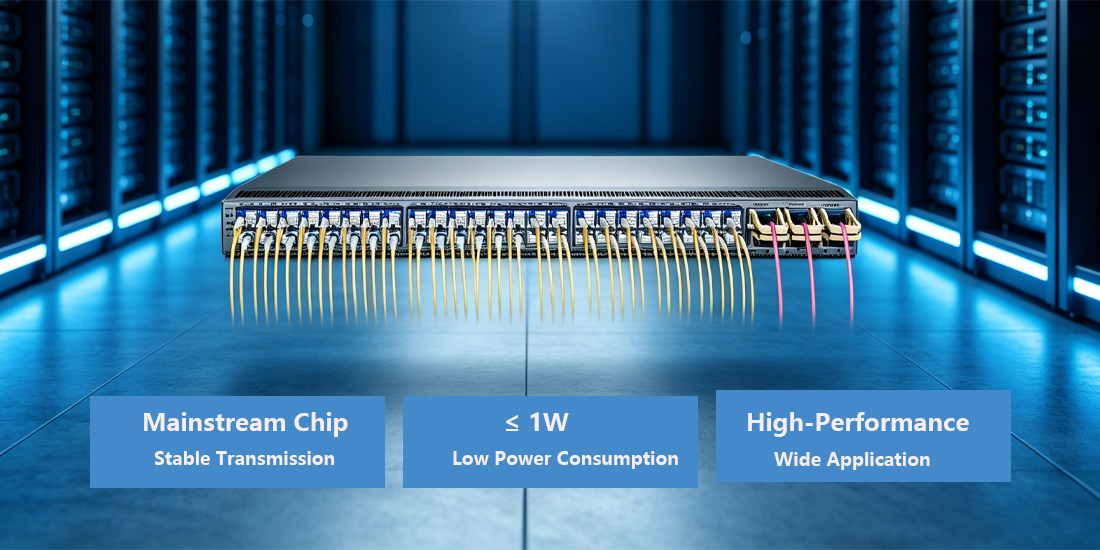
Q9: Will this long‑haul 80 km BiDi SFP module draw substantially more power compared to short‑range 10‑20 km BiDi SFP module alternatives? A9: No, power consumption remains tightly controlled below 1 W. This product uses proven DFB laser plus PIN‑receiver chip architecture. It fully satisfies SFP MSA power‑draw specifications and poses no overload risk for standard SFP host switch ports.
Q10: For enterprise network‑refresh initiatives, what practical value can single‑fiber BiDi SFP module deliver compared against traditional dual‑fiber gigabit SFP hardware? A10: BiDi SFP module halves consumed fiber‑core count for locations suffering fiber‑pair constraints. WDM technology enables bidirectional gigabit traffic over one fiber strand. It fits cross‑campus links, multi‑site backhaul and network‑renovation jobs where laying additional fiber pairs generates high capital outlay.
Q11: Can this BiDi SFP module hardware be deployed inside existing CWDM or DWDM wavelength‑multiplexing network setup? A11: Deployment inside standard CWDM / DWDM systems is strongly discouraged. Its fixed 1490 nm /1550 nm working wavelengths overlap commonly‑used CWDM channel spectrum ranges. Select purpose‑built CWDM‑rated optical transceivers if wavelength‑multiplexed networking forms part of your enterprise project scope.
Q12: What factory‑backed warranty coverage applies for bulk & wholesale orders of this HPE H3C‑compatible BiDi SFP module? A12: HYTOPTODEVICE supplies standard 5‑year factory warranty covering manufacturing‑originated hardware defects. Warranty validity applies for hardware failures occurring within rated 0‑70℃ commercial operating environment; damage induced by ESD surges, dirty fiber end‑faces, optical‑receiver overload or improper field‑handling procedures sits outside warranty coverage scope.
Q13: Why does 80km‑class BiDi SFP module carry higher unit pricing versus shorter‑distance 10km or 20km BiDi SFP module products? A13: High‑power DFB/EML lasers, high‑sensitivity PIN receivers, and tight wavelength‑isolation filters drive up manufacturing costs. Short‑reach BiDi transceivers can implement lower‑cost optical‑component selections. Additional precise optical calibration and burn‑in aging procedures targeted for long‑haul operation further push up total production expenses.
Q14: What troubleshooting workflow should network technicians follow when facing Rx Power Low or LOS alarms triggered by this BiDi SFP module on Comware‑based switches? A14: Start fault‑isolation work from physical‑layer field connections. Clean simplex‑LC patch‑cable connector surfaces, re‑seat BiDi SFP module firmly inside SFP slots, double‑check wavelength‑pairing correctness, and measure end‑to‑end total optical link loss. If measured loss exceeds module‑specified link budget, shorten transmission span or deploy appropriate fiber amplifier hardware for extra‑long single‑fiber links.
Q15: Which common root factors produce unstable intermittent link‑flapping on enterprise single‑fiber BiDi SFP module connections running Comware OS? A15: Link‑flapping is mostly triggered by physical‑layer faults related to the PIN receiver unit. Typical triggers include contaminated fiber‑connector faces, insufficient received optical margin, reversed wavelength pairing, ESD‑damaged PIN receiver hardware or excessive cabinet operating temperature. Fetch DDM real‑time optical‑power and temperature readings to accelerate fault‑source identification work.
Why Network Engineers Choose HYTOPTODEVICE
HYTOPTODEVICE has supplied over 5000,000 optical transceiver modules to data centers, ISPs, and enterprise networks across 100+ countries since 2011. Every module undergoes a 72-hour burn-in test and full DDM/DOM validation before shipment.
“Phenomenal performance. We deployed 200 HYTOPTODEVICE SFP modules to replace Cisco OEMs in our backbone network. Result? Zero compatibility issues and a 60% reduction in costs. Highly recommended for mission-critical networks."— Senior Network Engineer, Regional Telecom, Australia
Quality Certification & Compliance
At HYTOPTODEVICE, our quality commitment is backed by industry-standard validations. From fiber optical transceiver manufacturing to final visual inspection, from IQC、IPQC、FQC to OQC, our processes ensure global compliance and reliability.
We adhere to rigorous standards for our SFP modules and network solutions:
ISO 9001: Certified quality management and production consistency.
CE & FCC: Fully compliant for seamless Global Market Access.
RoHS: Committed to environmental responsibility and hazardous material control.
Proven Reliability: Rigorous testing to reduce compliance risk and ensure safety.
Certified Quality. Global Standards. Guaranteed Performance.