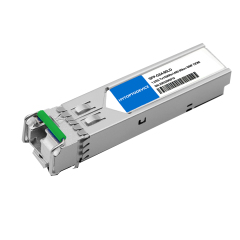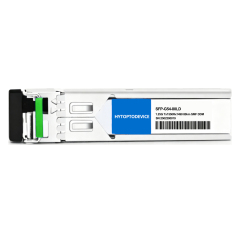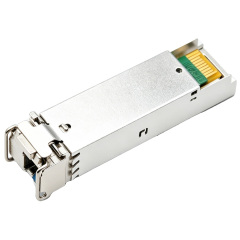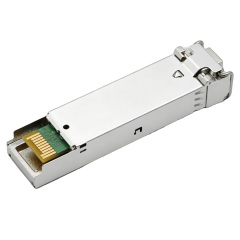
| NO. | Brand | Compatible P/N | Transceiver Type |
| 1 | Cisco | GLC-BX80-DA | |
| 2 | Cisco | Cisco GLC-BX80-DA-I | |
| 3 | Brocade | E1MG-1G-BXD-80 | |
| 4 | Dell | SFP-GE-BX80-1550 | |
| 5 | Extreme | MGBIC-BX80-U | |
| 6 | H3C | SFP-GE-LH70-SM1550-BIDI | |
| 7 | HPE H3C | SFP-1G-BXD-80 | |
| 8 | Huawei | SFP-GE-ZBXD1 | |
| 9 | Juniper | SFP-GE80KT15R14 | |
| 10 | MikroTik | S-4554LC80D-1550 | |
| 11 | Netgear | SFP-GE-BX80-D |
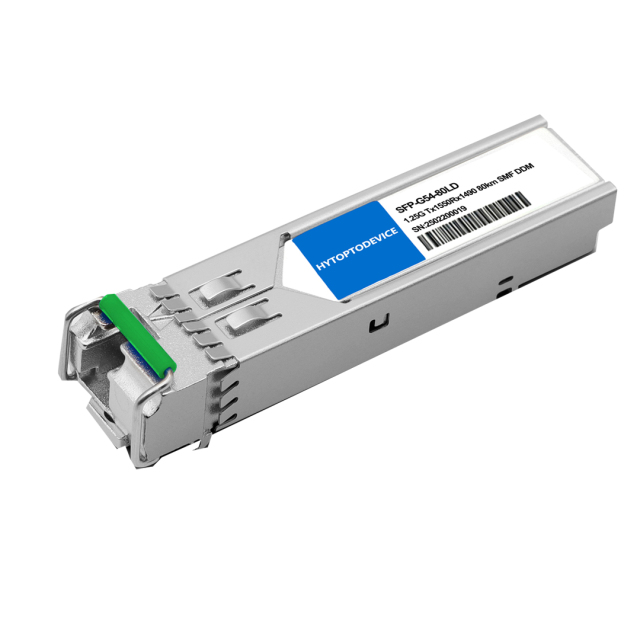
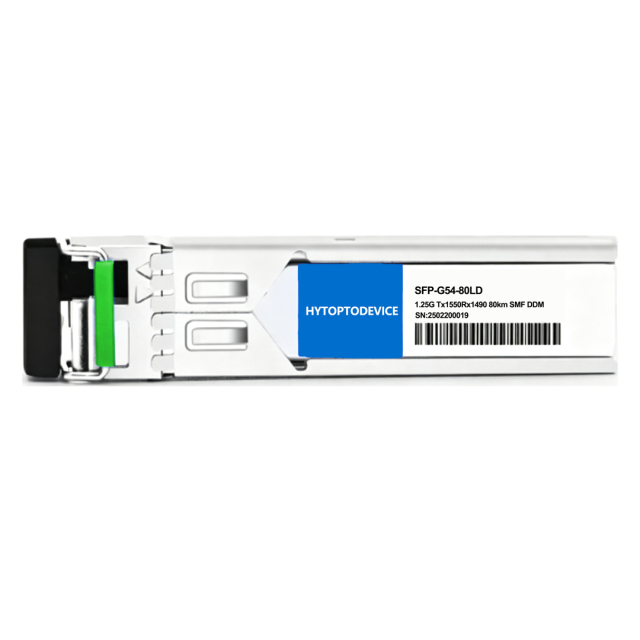
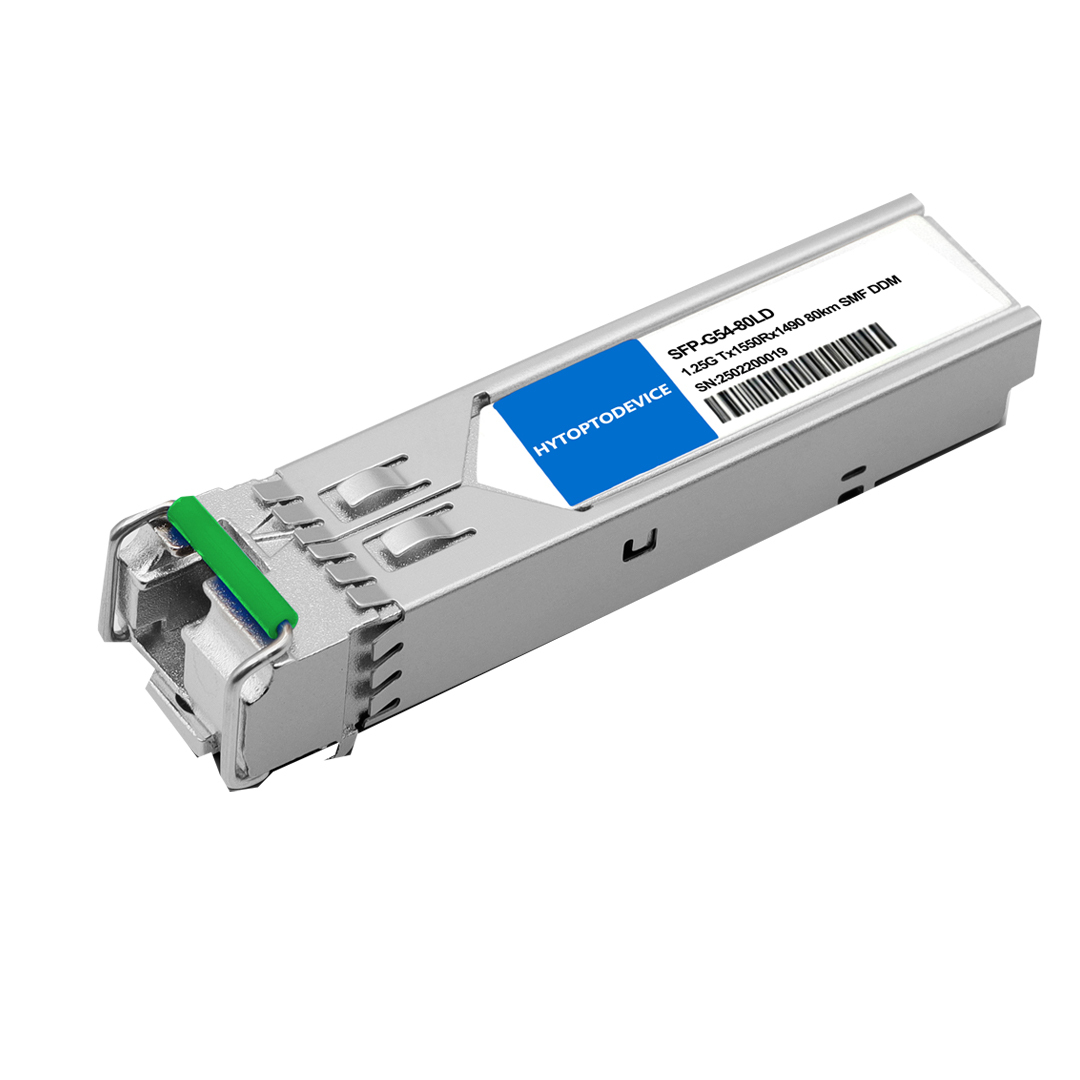
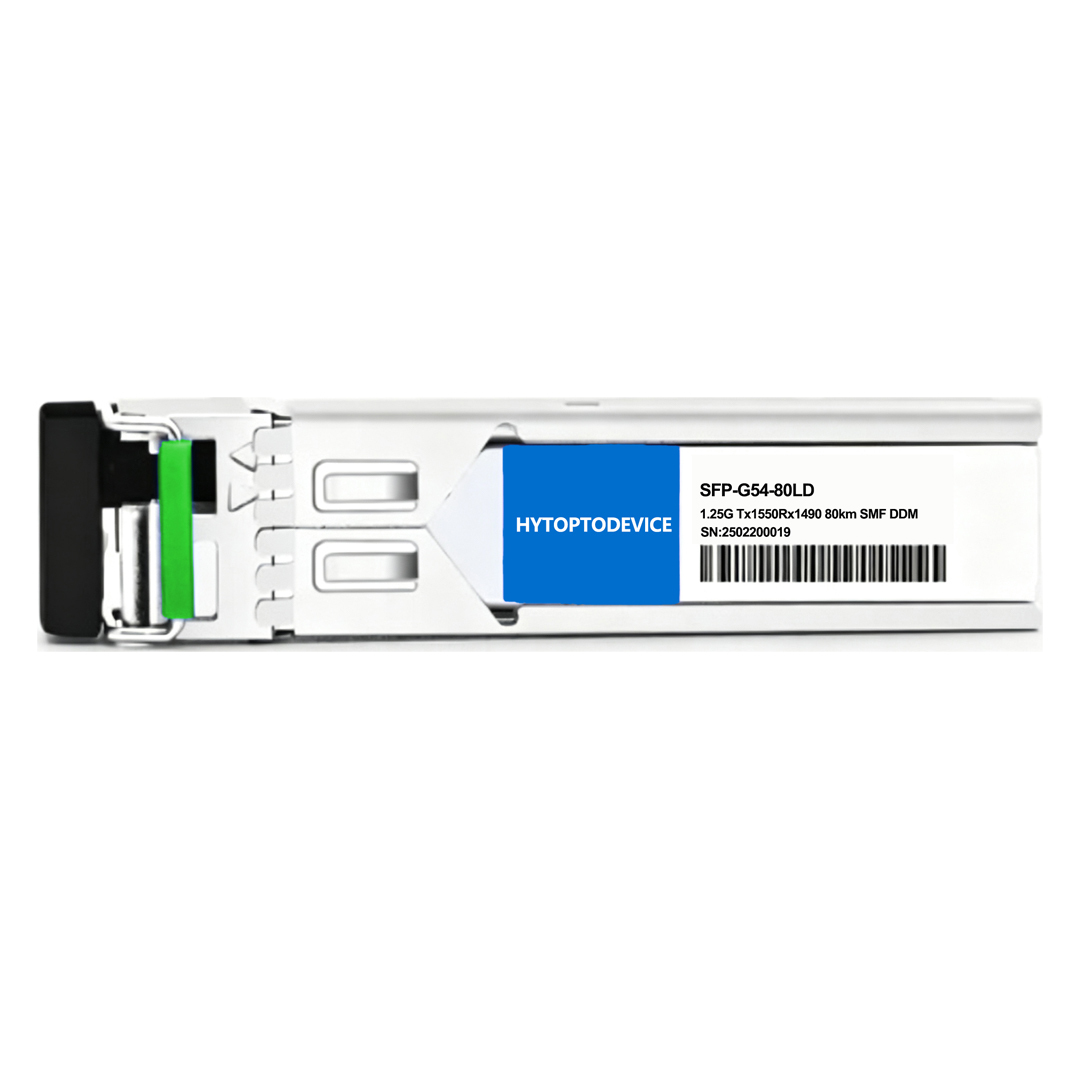
| Extreme Compatible | MGBIC-BX80-D | Vendor Name | HYTOPTODEVICE |
| Form Factor | SFP | Max Data Rate | 1.25Gbps |
| Wavelength | TX1550nm/RX1490nm | Max Distance | 80km |
| Connector | Simplex LC | Transmitter Type | 1550nm DFB |
| Cable Type | SMF | Receiver Type | PIN |
| TX Power | 0~5dBm | Receiver Sensitivity | < -26.0dBm |
| Protocols | SFF-8472 MSA Compliant, IEEE 802.3ah-2004 | Operation Temperature | 0 to 70°C (32 to 158°F) |
Complementary Pairing: BiDi transceivers must be deployed in matched pairs (e.g., TX1490/RX1550 with TX1550/RX1490). Mismatched wavelengths cannot establish a link.
Fiber Choice: Use Single-Mode Fiber (SMF) only. Do NOT use MMF.
Connector Match: Simplex LC (UPC/PC polish only). Do NOT use Duplex LC or APC.
Laser Safety: Class 1 Laser. Never look directly into optical ports or fiber end-faces.
ESD Safety: Wear an anti-static wrist strap before handling the transceiver.
Cleanliness & Dust: Keep dust caps installed on all unused ports. Clean fiber connectors with an optical cleaning pen before insertion; dust causes over 80% of link failures.
Optical Attenuator Required: For short-distance testing or links (<20 km), connect a 10dB–15dB attenuator to the RX port to prevent receiver damage.
Installation & Hot-Swap: MSA compliant. Insert and remove gently without powering down the device.
High Loss / Packet Drops: Ensure fiber bend radius exceeds 30 mm, inspect optical power levels, and clean connectors.
No Link: Verify complementary BIDI wavelength pairing requirement; clean Simplex LC end-faces; check port speed configuration.
1. Supported Hardware & Firmware
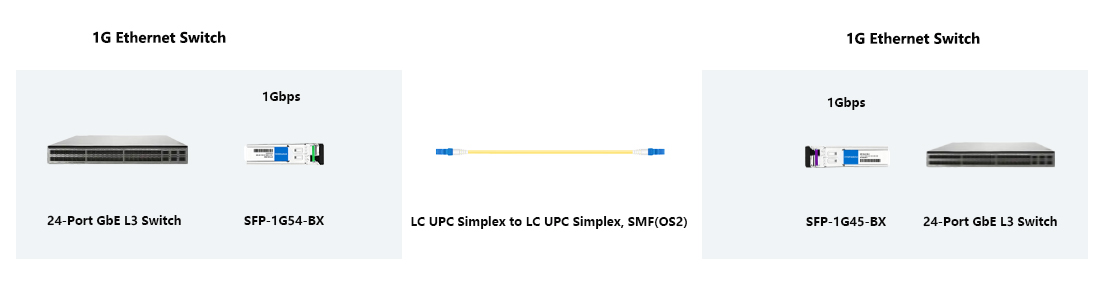
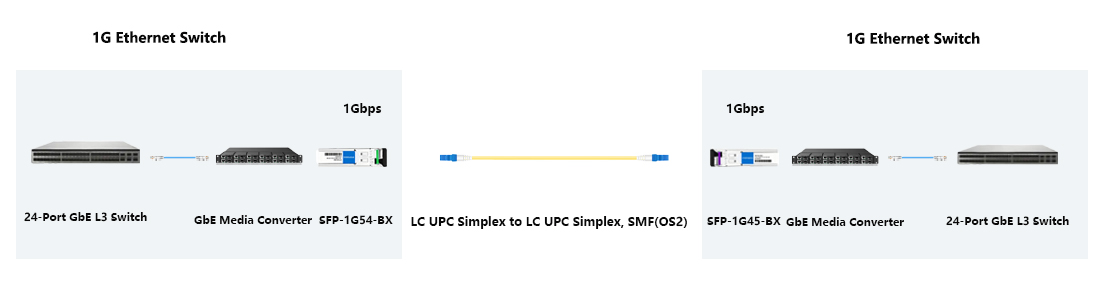
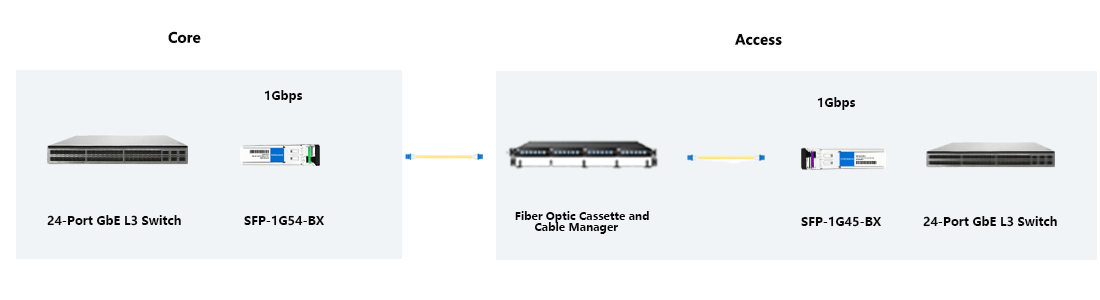


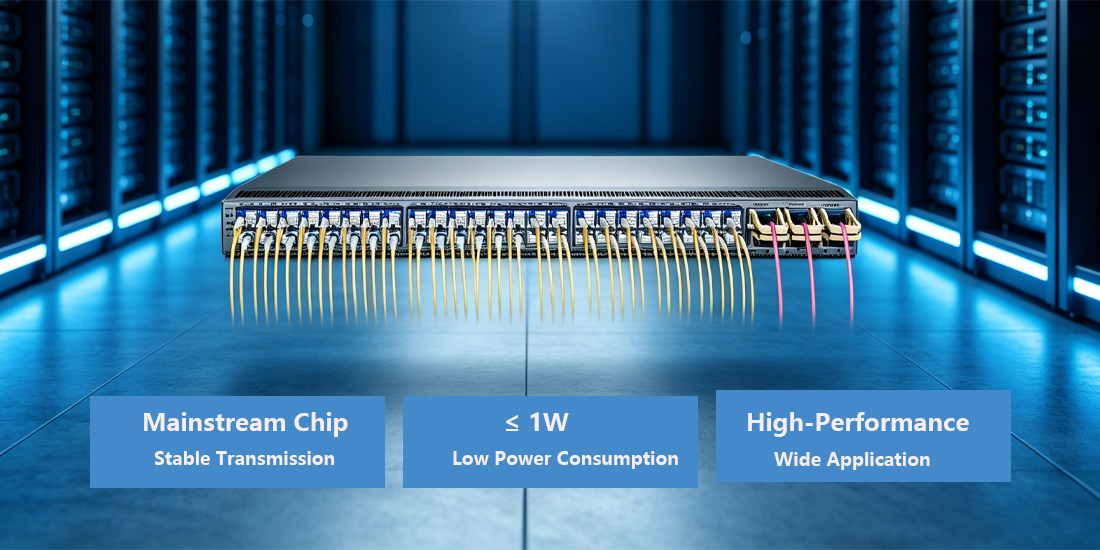


Q1: Can this optic module operate with different brands of gigabit media converters? A: Yes, this HYTOPTODEVICE SFP BiDi transceiver is compatible with most gigabit SFP media converters. It requires the media converter to support 1000BASE-BX-D single fiber BiDi, otherwise link handshake will fail.
Q2: Is it mandatory to purchase two matching transceivers to set up BiDi fiber links? A: Yes, purchasing matched pairs is mandatory for BiDi fiber links. This Tx1550/Rx1490 module must pair with a Tx1490/Rx1550 HYTOPTODEVICE BiDi transceiver; one single optic cannot achieve bidirectional communication on a single fiber strand.
Q3: Can I mix this transceiver with BiDi optics made by other manufacturers? A: Yes, cross-brand pairing is technically achievable if both modules follow MSA 1000BASE-BX-D specs. Verify complementary wavelengths and 1.25G speed before bulk deployment, as minor firmware differences may cause unstable links.
Q4: Can this 80km BiDi optic reach its rated maximum distance on real site fiber networks? A: Yes, this HYTOPTODEVICE BiDi SFP supports up to 80km maximum reach under ideal OS1/OS2 single mode fiber. Real world splices, patch panels and connectors add optical loss, so calculate total link budget before site installation.
Q5: Can I test this long-range 80km BiDi module over short fiber runs inside the lab? A: Yes, short-range lab testing is allowed for this BiDi transceiver. Install a 10~15dB inline optical attenuator to reduce excess transmit power, otherwise the PIN receiver will overload and suffer permanent damage.
Q6: What will happen when fiber length slightly exceeds the module’s rated 80km limit? A: Yes, link performance will degrade when fiber length goes over the rated 80km limit. Extra chromatic dispersion and optical loss trigger packet loss or LOS alarms; keep link length within 80km for stable operation.
Q7: What type of optical receiver is integrated inside this BiDi SFP transceiver? A: This HYTOPTODEVICE 80km BiDi SFP adopts PIN photodiode receiver. The PIN receiver delivers reliable detection for 1000BASE-BX-D signals, but it is sensitive to high incoming optical power on short fiber runs.
Q8: Will the built-in DDM feature trigger alerts once fiber signal attenuation becomes excessive? A: Yes, built-in DDM DOM monitoring will trigger alarms when signal attenuation exceeds threshold. HYTOPTODEVICE modules continuously track Rx optical power, helping field technicians quickly identify fiber and connection faults.
Q9: Is DDM optical monitoring functional when used on different vendors’ network switches? A: Yes, DDM follows SFF-8472 standard and works on most MSA-compliant network hardware. Some switch vendors restrict DDM readouts for third-party transceivers even though the HYTOPTODEVICE optic’s monitoring hardware works normally.
Q10: Do I need protective dust caps to cover the optical port after removing this transceiver? A: Yes, LC dust caps are required to protect the transceiver optical port after removal. Dust and oil contamination on the facet increases signal reflection and loss, shortening the service life of your HYTOPTODEVICE BiDi module.
Q11: What network projects are best suited for this 1.25G 80km single-strand BiDi SFP? A: This HYTOPTODEVICE BiDi transceiver is ideal for single strand long-distance fiber projects. Common use cases include inter-building enterprise links, remote branch backhaul, IP camera uplink and metro dark fiber service deployment.
Q12: Is this 1.25G transceiver suitable for deployment inside CPRI telecom cell tower sites? A: Yes, as long as line rates match 1.25Gbps protocols and ambient temperature requirements (industrial grade recommended) are met. This HYTOPTODEVICE BiDi SFP can work for applicable 1.25G CPRI links, but verify tower site temperature range and hardware compatibility before field rollout.
Q13: Does installing third-party compatible SFP optics invalidate the original switch hardware warranty? A: No, using HYTOPTODEVICE compatible SFP optics will not void your switch warranty in most scenarios. Always check the network vendor’s official warranty policy; a small number of proprietary platforms have special restrictions.
Q14: Can HYTOPTODEVICE customize EEPROM data for rare or legacy network hardware during bulk orders? A: Yes, HYTOPTODEVICE provides custom EEPROM programming service for bulk orders. Submit the exact network hardware model, firmware version and OEM part number for pre-sales verification before mass production.
Q15: Can buyers get reduced unit pricing for large-scale bulk network rollout projects? A: Yes, volume discounts are available for bulk & wholesale orders of HYTOPTODEVICE SFP BiDi transceivers. Send your project quantity, delivery schedule and requirements to our sales team for a formal quotation.

Why Network Engineers Choose HYTOPTODEVICE
HYTOPTODEVICE has supplied over 5000,000 optical transceiver modules to data centers, ISPs, and enterprise networks across 100+ countries since 2011. Every module undergoes a 72-hour burn-in test and full DDM/DOM validation before shipment.
“Phenomenal performance. We deployed 200 HYTOPTODEVICE SFP modules to replace Cisco OEMs in our backbone network. Result? Zero compatibility issues and a 60% reduction in costs. Highly recommended for mission-critical networks."— Senior Network Engineer, Regional Telecom, Australia
Quality Certification & Compliance
At HYTOPTODEVICE, our quality commitment is backed by industry-standard validations. From fiber optical transceiver manufacturing to final visual inspection, from IQC、IPQC、FQC to OQC, our processes ensure global compliance and reliability.
We adhere to rigorous standards for our SFP modules and network solutions:
ISO 9001: Certified quality management and production consistency.
CE & FCC: Fully compliant for seamless Global Market Access.
RoHS: Committed to environmental responsibility and hazardous material control.
Proven Reliability: Rigorous testing to reduce compliance risk and ensure safety.
Certified Quality. Global Standards. Guaranteed Performance.