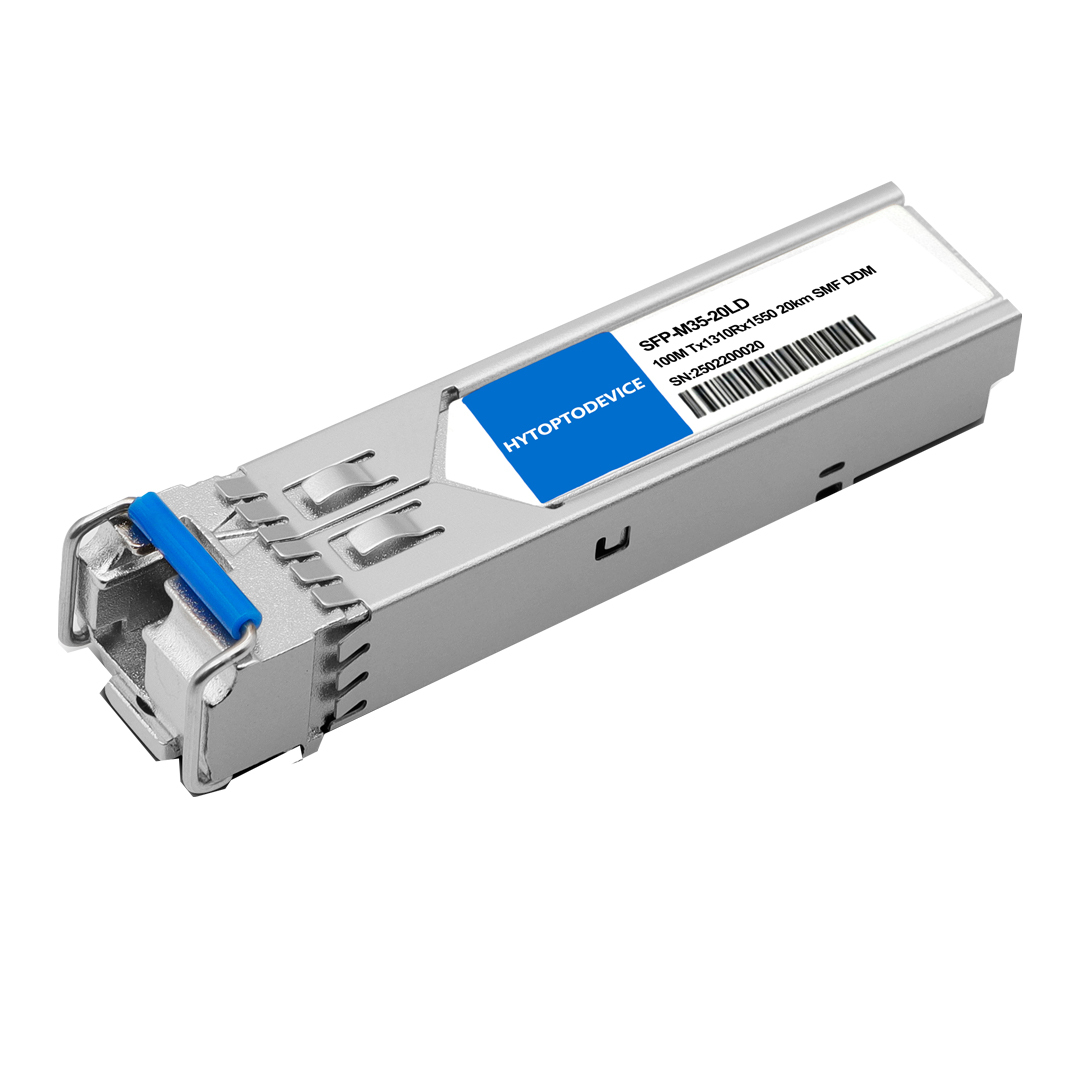
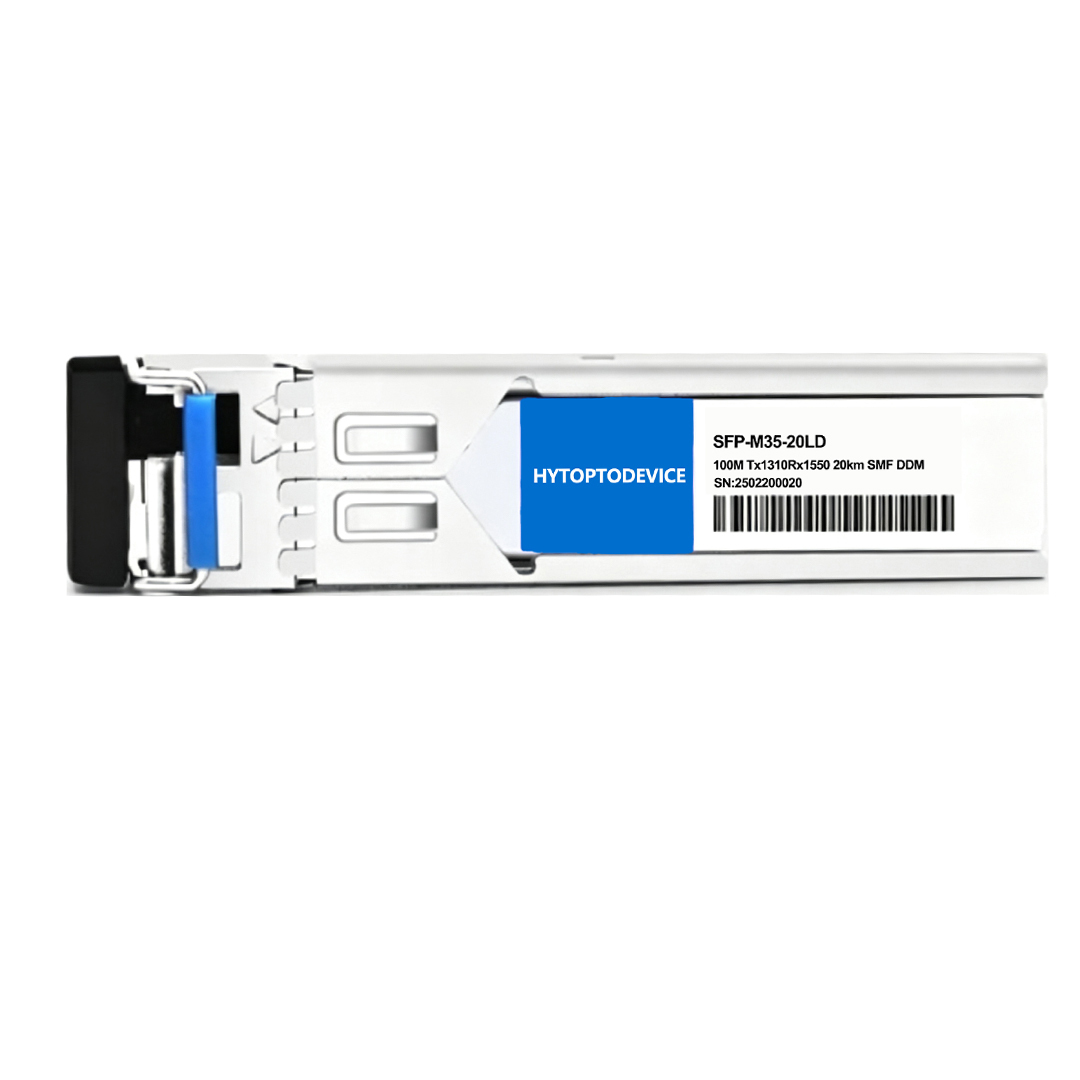
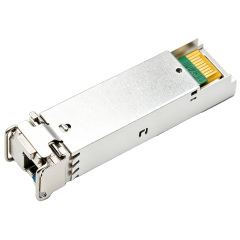
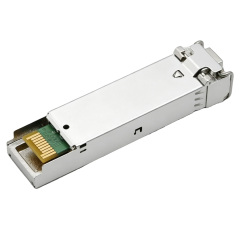
Q1: How can field technicians easily tell the TX1310nm and TX1550nm modules apart?
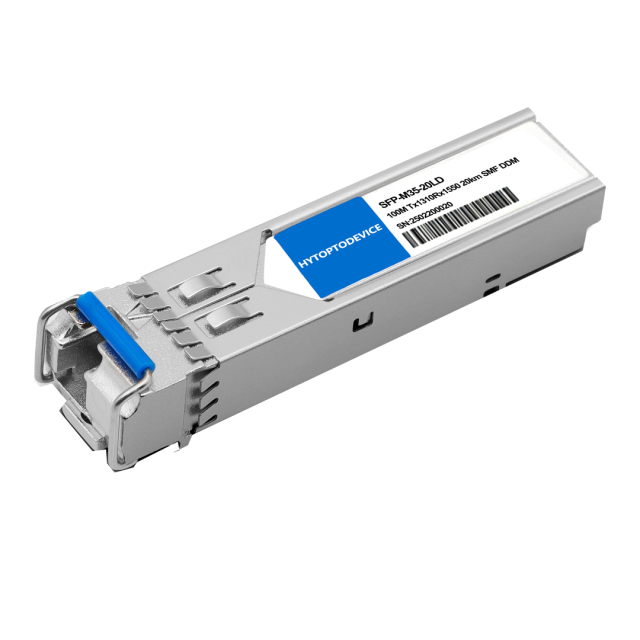
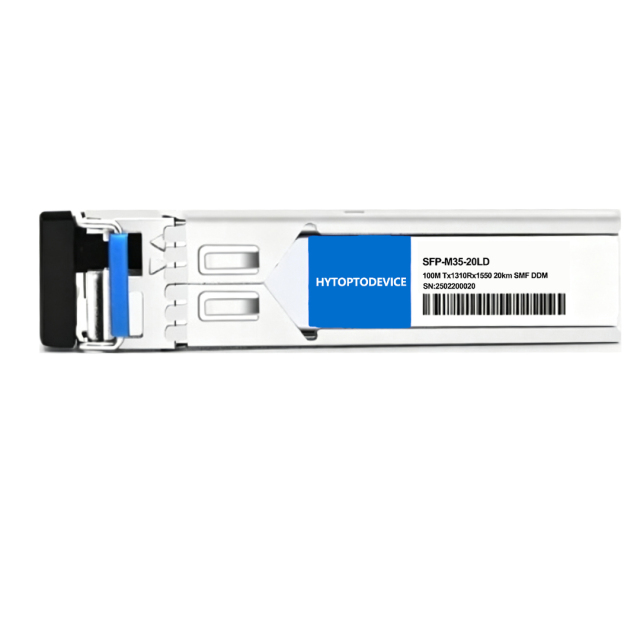
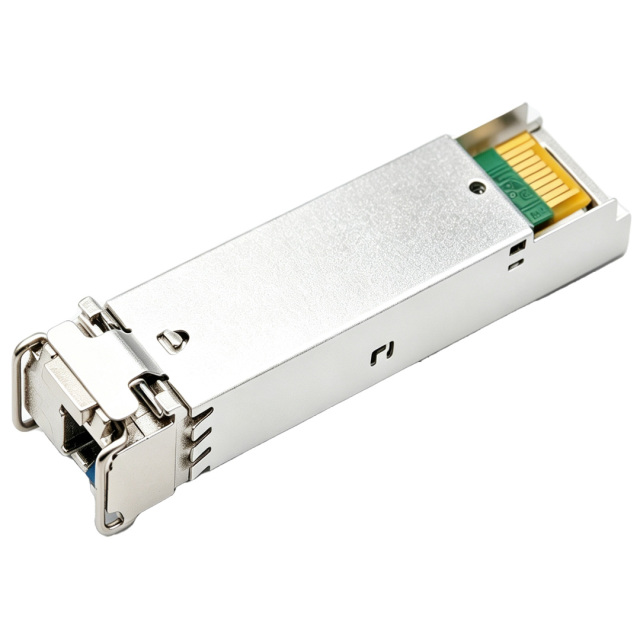
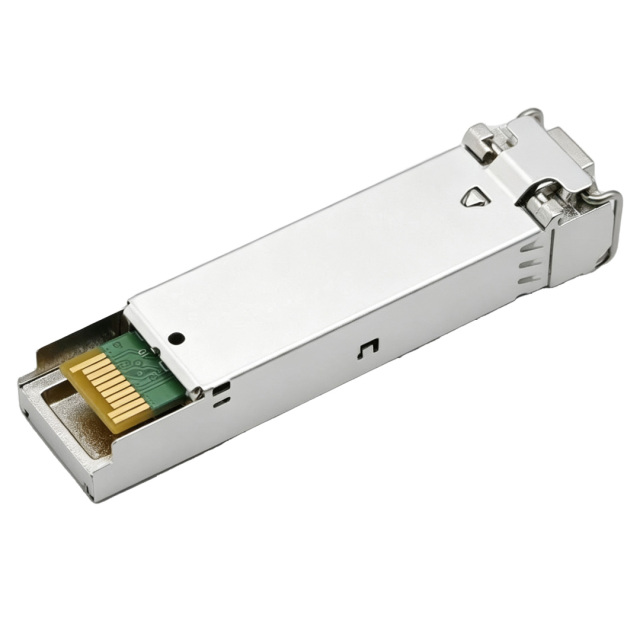
A: Manufacturers differentiate them using distinct bail latch colors (e.g., Blue for TX1310nm and Green for TX1550nm) alongside clear labeling on the transceiver label.
Q2: How does a Simplex (Single-Strand) BiDi transceiver transmit and receive on one fiber?
This simplex bidi sfp module uses built-in WDM filters to separate uplink and downlink wavelengths. It transmits and receives different wavelength signals on one single fiber strand to realize interference-free 100Mbps full-duplex transmission.
Q3: Why does my switch console throw an "Unsupported Transceiver" warning?
Unsupported transceiver warnings are caused by mismatched vendor EEPROM data. Our bidi sfp module is pre-flashed with Extreme-matched firmware to avoid alarms, with customizable firmware for multi-brand device adaptation.
Q4: Is this transceiver fully compliant with IEEE 802.3ah 100BASE-BX10 standards?
Yes. This 20km bidi sfp module fully complies with IEEE 802.3ah and MSA 100BASE-BX standards. The extended 20km transmission distance does not affect standard protocol compatibility with mainstream network devices.
Q5: Do I need an optical attenuator for short-distance deployment?
No attenuator is needed for deployment above 500m. This low-power calibrated bidi sfp module has overload protection, supporting safe and stable short-distance operation without signal saturation.
Q6: What is the typical optical power budget for a 100BASE-BX 20km link?
This bidi sfp module features a 18dB standard optical power budget, enough to offset fiber attenuation, splicing and connector loss, ensuring error-free stable transmission for full 20km single-mode fiber links.
Q7: Can near-end optical crosstalk (NEXT) occur inside the WDM filter of a BiDi optic?
No. High-isolation WDM filters inside the bidi sfp module effectively isolate transmit and receive optical paths, eliminating near-end crosstalk and avoiding BER fluctuations and signal interference.
Q8: Why am I getting high Bit Error Rate (BER) or packet loss on my 20km link?
20km link BER and packet loss are mainly caused by unbalanced 1310nm/1550nm wavelength attenuation. Dirty ports, poor jumpers and excessive link loss will also trigger instability, which can be fixed by port cleaning and link loss calibration.
Q9: Why does DDM show normal Tx power but zero Rx power on one end?
Normal Tx but zero Rx power means one-way link failure, usually caused by wrong wavelength pairing, damaged fiber, dirty receiver ports or dual BX-U identical module deployment.
Q10: Can I run a local physical loopback test on a BiDi SFP?
Traditional physical loopback tests do not work for simplex bidi sfp module, as its Tx/Rx adopts independent wavelength channels. Professional end-to-end testing tools are required for accurate module detection.
Q11: How does extreme heat affect 1310nm and 1550nm FP/DFB lasers?
High temperature causes slight laser wavelength drift and power drop, increasing link loss risk. Our industrial-grade bidi sfp module undergoes strict temperature aging calibration to stabilize laser performance in harsh environments.
Q12: Why choose Simplex BiDi over standard Duplex fiber optics?
Compared with duplex optics, simplex bidi sfp module only uses one fiber strand for bidirectional transmission. It greatly saves fiber resources and cabling costs, making it the optimal choice for fiber-scarce network upgrades and long-distance access projects.