| NO. | Brand | Compatible P/N | Transceiver Type |
| 1 | Cisco | QSFP-40G-SR4-S | |
| 2 | APRESIA | H-SR4-QSFP+ | |
| 3 | Alcatel-Lucent | QSFP-40G-SR | |
| 4 | Arista Networks | QSFP-40G-SR4 | |
| 5 | Brocade | 40G-QSFP-SR4-INT | |
| 6 | Check Point | CPAC-TR-40SR-SSM160-QSFP | |
| 7 | Cisco Meraki | MA-QSFP-40G-SR4 | |
| 8 | D-Link | DEM-QX01Q-SR4 |
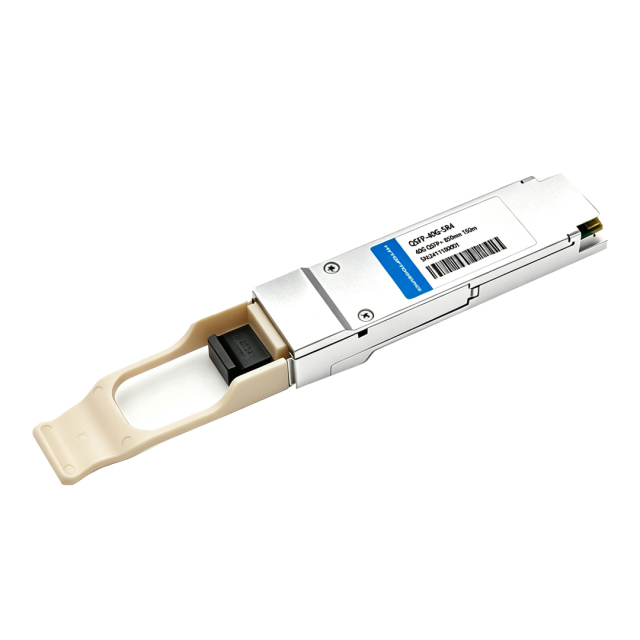
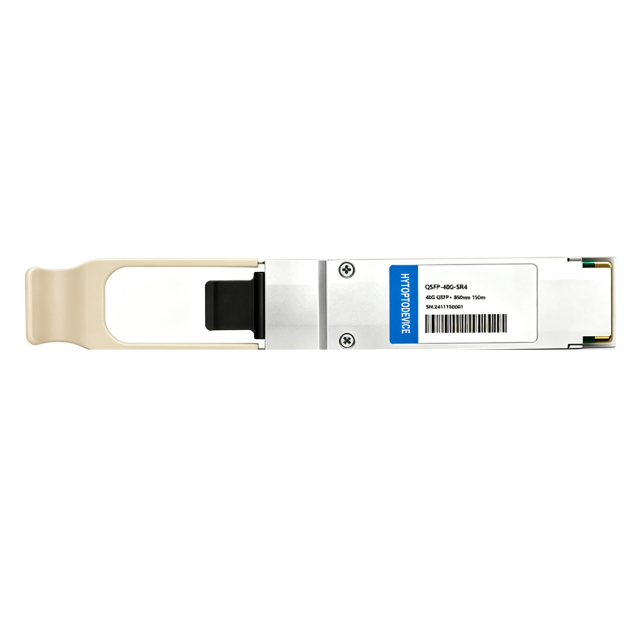
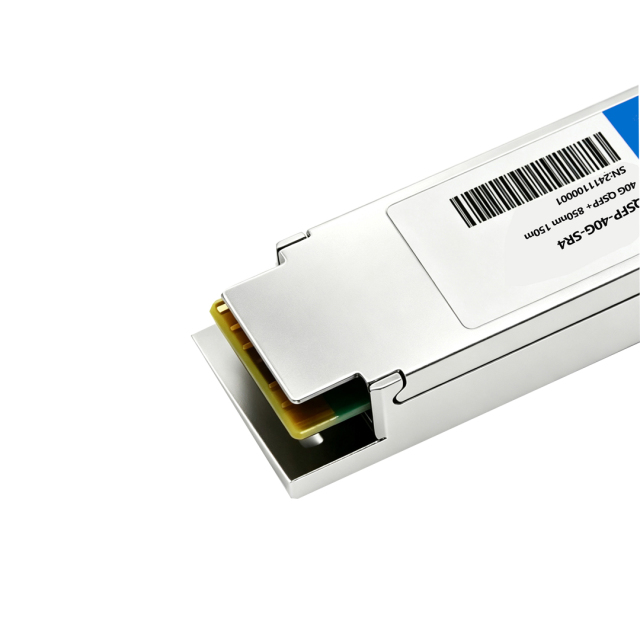
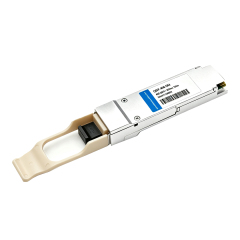
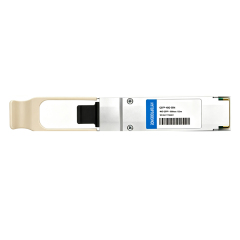
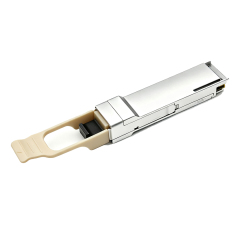
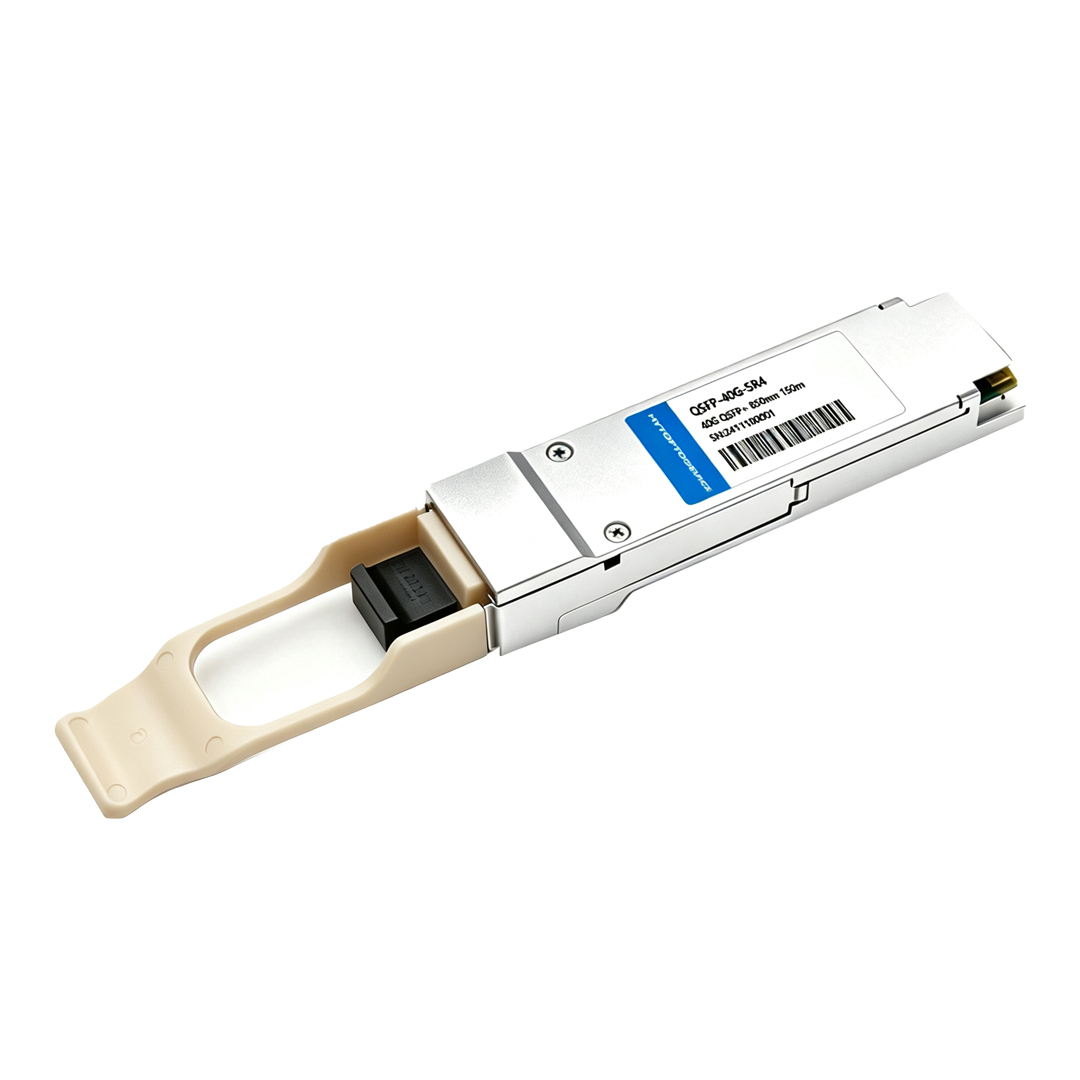
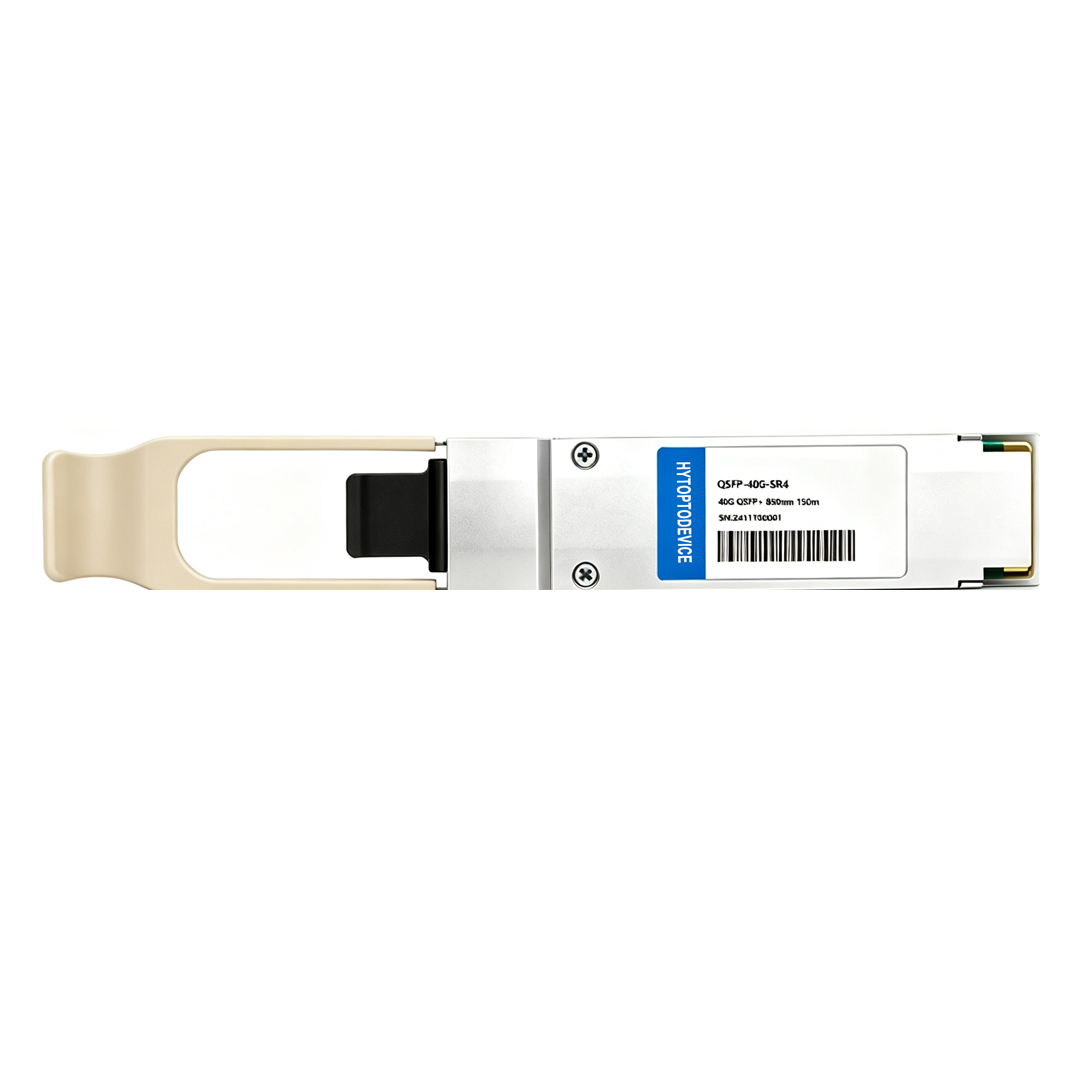
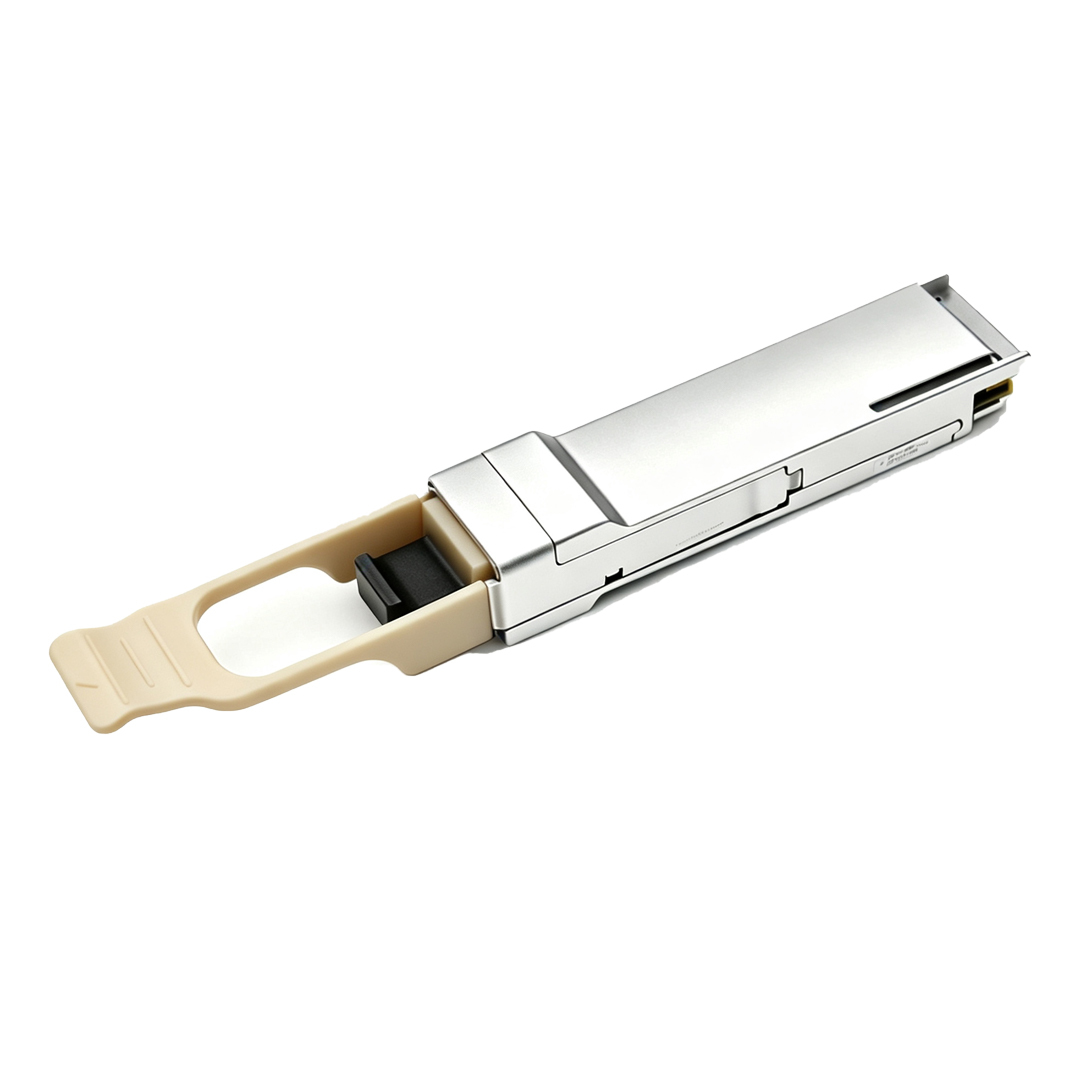
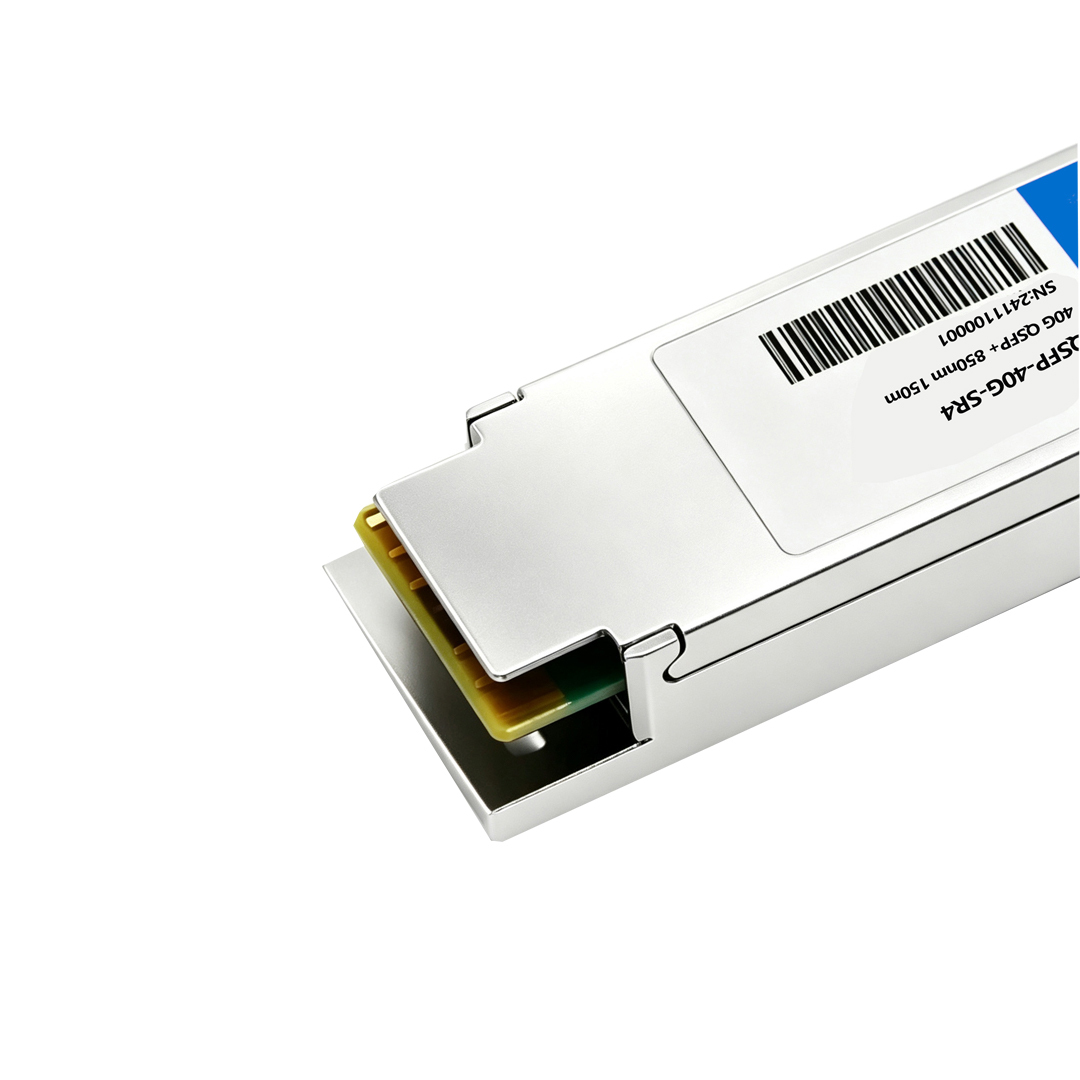
| Brocade Compatible | 40G-QSFP-SR4-INT | Vendor Name | HYTOPTODEVICE |
| Form Factor | QSFP+ | Max Data Rate | 41.25Gbps |
| Wavelength | 850nm | Max Distance | 150m@OM4/100m@OM3 |
| Connector | MTP/MPO | Transmitter Type | VCSEL 850nm |
| Cable Type | MMF | Receiver Type | PIN |
| TX Power | -8.0~1.0dBm | Receiver Sensitivity | < -13dBm |
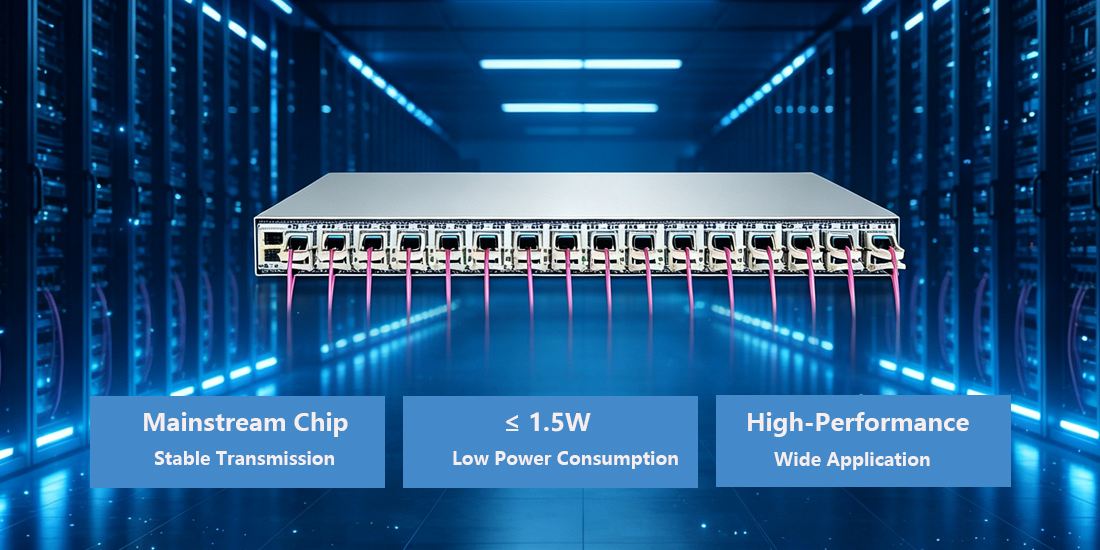
| Power Consumption | ≤1.5W | Modulation | NRZ |
| Protocols | IEEE 802.3 40GBASE-SR4, SFF-8436 | Operation Temperature | 0 to 70°C (32 to 158°F) |
Usage Guidelines & Best Practices
Fiber Choice: Only works with OM3 / OM4 multi‑mode MPO‑12 trunk cable; single‑mode fiber cannot support 850nm SR4 transmission and will lead to link failure.
Distance Limit: Max 100m on OM3 MMF, max 150m on OM4 MMF; excessive splices, dirty end‑faces or sharp bends reduce actual working distance.
Cleanliness & Dust: Keep dust caps on whenever unattached. Clean fiber end-faces with a optical cleaning pen before insertion; dust causes over 80% of optical link failures.
Installation Specification: Hot‑plug supported; keep MPO connector end‑faces clean, observe minimum fiber‑bend radius requirements.
Operating Environment: Commercial temperature range 0°C‑70°C; maintain cabinet airflow to avoid module overheating.
Full Compatibility List and Supported Devices
1. Supported Hardware & Firmware
Primary Application Scenarios
• Intra‑data‑center short‑haul leaf‑spine fabric links built on Brocade switching hardware
• 40G aggregation‑layer trunk expansion for large enterprise campus networks
• Top‑of‑Rack switch 40G uplinks towards compute and virtualisation server farms
• Rack‑to‑rack short‑range multi‑mode fiber connections within server halls
• Enterprise and service‑provider infrastructure refresh and network modernisation initiatives
• Multi‑vendor hybrid‑fabric deployments for cloud and virtualised workload environments
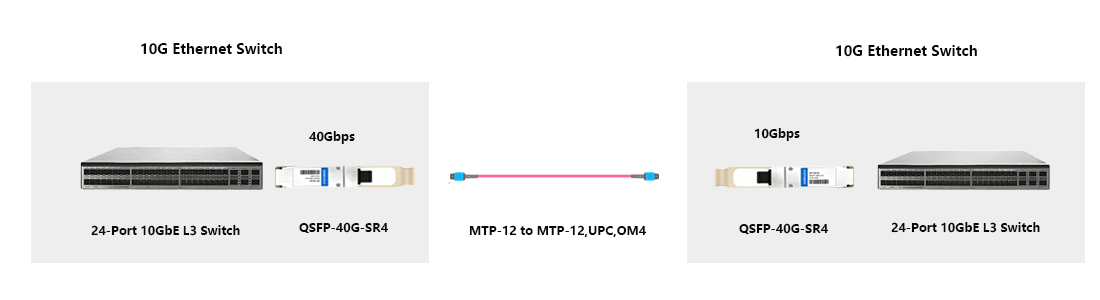
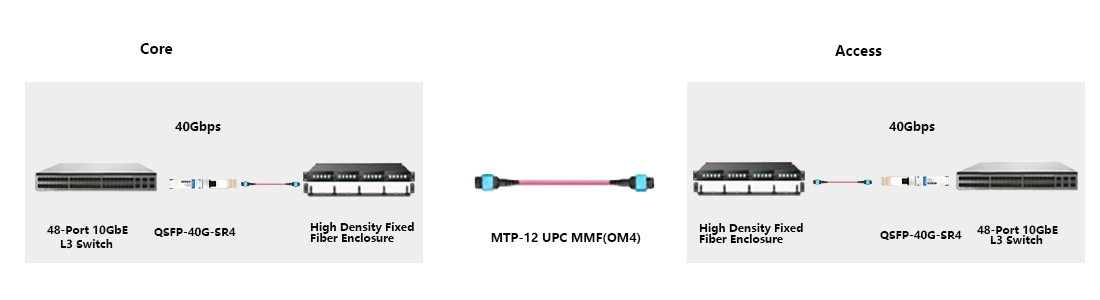
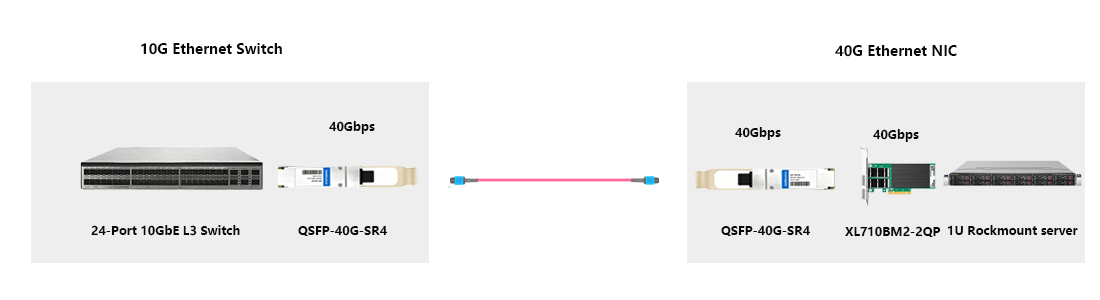
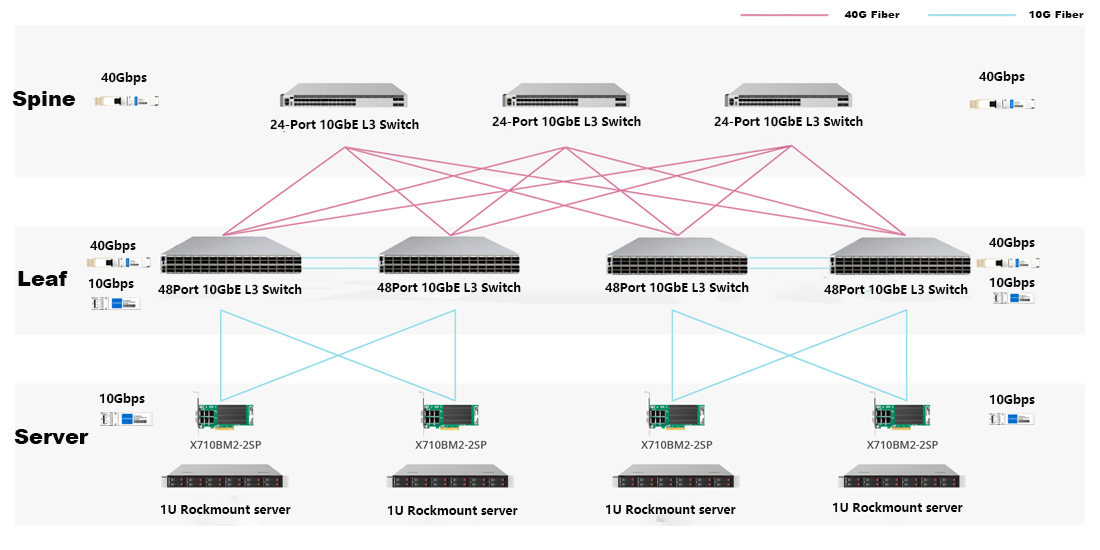


FAQ
Q1: Can HYTOPTODEVICE QSFP+ 40G SR4 run in mixed‑vendor hardware during multi‑brand data‑center project purchase? A: HYTOPTODEVICE QSFP+ 40G SR4 supports multi‑vendor switch environments, as our modules are pre‑programmed with brand‑specific EEPROM profiles; provide your exact switch model and firmware version before you place purchase order so we can confirm full interoperability for your mixed‑vendor fabric deployment.
Q2: Is it practical to deploy QSFP+ 40G SR4 inside QSFP28 100G‑capable ports for speed‑down application on Brocade switches? A: You can install HYTOPTODEVICE QSFP+ 40G SR4 inside QSFP28 ports only if host hardware supports speed re‑configuration down to 40G, as this feature differs per platform; verify port specification with your hardware vendor before completing your wholesale procurement.
Q3: Do buyers need mandatory firmware updates for Brocade switches to recognise third‑party QSFP+ 40G SR4 optic? A: Mandatory firmware upgrade is not always required for HYTOPTODEVICE QSFP+ 40G SR4, standards‑compliant modules can be natively identified by most Brocade firmware builds; certain hardware revisions may need minor firmware update or feature license, please review official release notes before field deployment.
Q4: Can I directly interconnect HYTOPTODEVICE QSFP+ 40G SR4 optical transceiver with DAC or AOC assemblies on opposite link side? A: Direct interconnection between QSFP+ 40G SR4 optics and DAC/AOC assemblies is not feasible, as SR4 relies on multi‑lane parallel optical signalling while DAC/AOC adopt totally different physical interfaces; pair this optic only with matching SR4 transceiver or qualified media converter to establish valid data links.
Q5: What real‑world transmission distances should integrators expect when buying Brocade‑compatible QSFP+ 40G SR4 for data‑center build? A: This HYTOPTODEVICE QSFP+ 40G SR4 delivers 100‑meter working reach over OM3 multimode fiber and 150‑meter over OM4 multimode fiber following IEEE 802.3ba specification; select LR4 or ER4 single‑mode transceivers for any link that exceeds these distance limits.
Q6: Which optical wavelength specification does wholesale‑order QSFP+ 40G SR4 from HYTOPTODEVICE adopt for parallel lane data transmission? A: Our HYTOPTODEVICE QSFP+ 40G SR4 utilises industry‑standard 850nm VCSEL array, running four independent 10G NRZ lanes to achieve aggregate 40Gbps throughput; this wavelength design is optimised for short‑haul multimode fiber intra‑data‑center connections.
Q7: What operating temperature range applies to commercial‑grade QSFP+ 40G SR4 when purchased for enterprise rack deployment? A: Standard HYTOPTODEVICE commercial QSFP+ 40G SR4 modules operate reliably from 0°C‑70°C ambient temperature range, industrial‑grade variants support ‑40°C to +85°C for harsh non‑data‑center locations; notify our sales team during your purchase inquiry if you need industrial temperature hardware.
Q8: Does HYTOPTODEVICE QSFP+ 40G SR4 support breakout function to reuse existing 10G SFP+ ports for Brocade network upgrade projects? A: Breakout into four separate 10G links is achievable with HYTOPTODEVICE QSFP+ 40G SR4 when paired with compliant MPO‑to‑4×LC fan‑out cable; this solution helps buyers maximise return on existing 10G hardware investment during infrastructure renovation.
Q9: Can network operators read lane‑by‑lane real‑time optical metrics after purchasing HYTOPTODEVICE Brocade‑compatible QSFP+ 40G SR4? A: Per‑lane real‑time optical monitoring is available on HYTOPTODEVICE QSFP+ 40G SR4 thanks to built‑in DDM/DOM functionality, allowing operators to retrieve transmit power, receive power and module temperature directly from switch CLI for routine link health diagnostics.
Q10: What physical fiber connector interface comes fitted on the replacement QSFP+ 40G SR4 module for Brocade hardware procurement? A: HYTOPTODEVICE 40G‑QSFP‑SR4‑INT substitute QSFP+ 40G SR4 uses 12‑pin MPO/MTP connector with 8 functional optical fibres for four transmit plus four receive lanes; patch cords, trunk cables and panel adapters within your cabling infrastructure must match this connector type.
Q11: How will MPO cable polarity Type A/B/C impact link bring‑up after bulk purchase of HYTOPTODEVICE QSFP+ 40G SR4 transceivers? A: MPO polarity mismatch ranks among common root causes of link‑down events for HYTOPTODEVICE QSFP+ 40G SR4 deployments, as Type A, B and C polarity follow different fiber mapping rules; work together with your cabling engineer to confirm correct polarity before ordering supporting fiber assemblies.
Q12: Why should project buyers select QSFP+ 40G SR4 optical transceivers instead of low‑cost DAC cables for rack‑to‑rack data‑center connections? A: HYTOPTODEVICE QSFP+ 40G SR4 optics bring practical advantages over DAC for many rack‑to‑rack links, DAC cables are limited to only 3‑7‑meter reach and lack field‑serviceability; SR4 supports maximum 150‑meter transmission, flexible cable routing and convenient individual module swap during hardware maintenance.
Q13: What procurement differences exist between genuine OEM Brocade optics versus HYTOPTODEVICE MSA‑compliant QSFP+ 40G SR4? A: HYTOPTODEVICE compatible QSFP+ 40G SR4 delivers equivalent hardware performance built to global MSA standards, OEM branded modules carry original vendor branding with higher pricing; our compatible hardware delivers significant project cost reduction and comes with HYTOPTODEVICE‑backed warranty plus technical support resources for your purchase.
Q14: What quality‑control testing procedures are performed on each QSFP+ 40G SR4 unit prior to bulk & wholesale order shipment? A: Every HYTOPTODEVICE QSFP+ 40G SR4 undergoes full 100‑percent optical performance checks including transmit power, receive sensitivity and BER measurement plus multi‑switch interoperability validation; complete test documentation can be provided on request for large‑volume tender purchase projects.
Q15: Are small‑quantity sample orders supported before committing to large‑volume QSFP+ 40G SR4 wholesale purchase for Brocade networks? A: Sample testing is fully supported for HYTOPTODEVICE QSFP+ 40G SR4, small‑quantity sample shipments allow real‑machine compatibility validation on your Brocade hardware; reach our sales department to get sample pricing and production lead‑time ahead of your formal project purchase.
Packaging & Custom OEM Solutions
Each QSFP+ SR4 module is individually sealed in ESD-safe anti-static packaging and stocked for same-day dispatch. Bulk orders can also be customized with OEM packaging—logo printing and private labeling included—built for network distributors, system integrators, and enterprise deployments.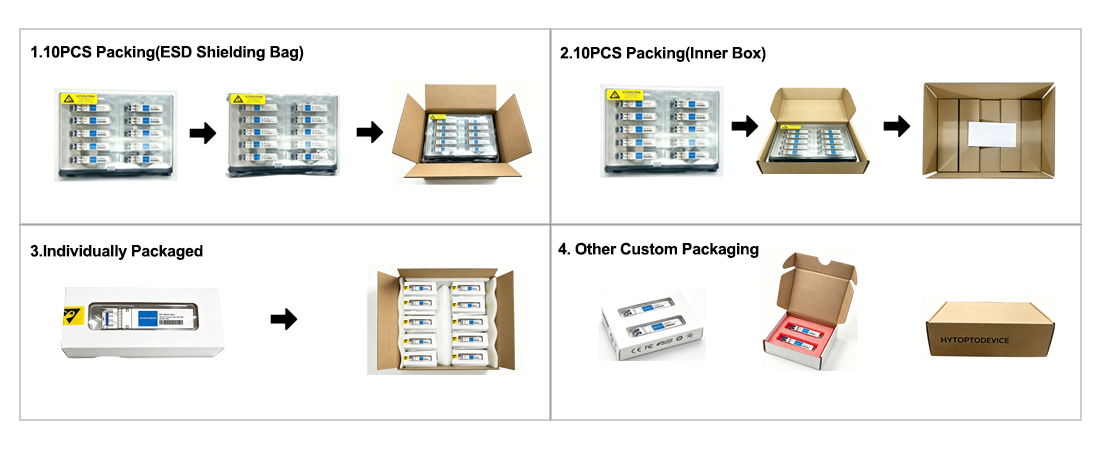
Why Network Engineers Choose HYTOPTODEVICE
HYTOPTODEVICE has supplied over 5000,000 optical transceiver modules to data centers, ISPs, and enterprise networks across 100+ countries since 2011. Every module undergoes a 72-hour burn-in test and full DDM/DOM validation before shipment.
“Phenomenal performance. We deployed 200 HYTOPTODEVICE SFP+ modules to replace Cisco OEMs in our backbone network. Result? Zero compatibility issues and a 60% reduction in costs. Highly recommended for mission-critical networks."— Senior Network Engineer, Regional Telecom, Australia
Quality Certification & Compliance
At HYTOPTODEVICE, our quality commitment is backed by industry-standard validations. From fiber optical transceiver manufacturing to final visual inspection, from IQC、IPQC、FQC to OQC, our processes ensure global compliance and reliability.
We adhere to rigorous standards for our SFP modules and network solutions:
ISO 9001: Certified quality management and production consistency.
CE & FCC: Fully compliant for seamless Global Market Access.
RoHS: Committed to environmental responsibility and hazardous material control.
Proven Reliability: Rigorous testing to reduce compliance risk and ensure safety.
Certified Quality. Global Standards. Guaranteed Performance.