Brocade 10G‑SFPP‑BXU‑100K Compatible SFP+ 10G BiDi Transceiver | 10GBASE‑BX100‑U 100km Tx1490Rx1550nm Bulk & Wholesale | HYTOPTODEVICE
Product Overview
HYTOPTODEVICE SFP+ 10G BiDi Transceiver serves as field‑proven drop‑in replacement for Brocade 10G‑SFPP‑BXU‑100K. Built to 10GBASE‑BX100‑U and SFF‑8472 MSA specifications, this optical transceiver delivers stable 10.3125Gbps Ethernet performance up to 100‑kilometer over OS2 single‑mode fiber, transmitting at 1490 nm and receiving at 1550 nm via simplex LC UPC interface.
Pre‑loaded with purpose‑built Brocade‑oriented EEPROM profile, this optic mitigates common Fabric OS pain‑points such as unknown‑transceiver syslog warnings and unexpected port err‑disable events. As a single‑strand BiDi solution, it strictly requires mating with complementary BX100‑D opposite‑wavelength transceiver on the remote end to establish valid link connectivity. HYTOPTODEVICE supports flexible sample procurement and volume‑based bulk ordering, with in‑house stock and configurable OEM services for channel partners, system integrators and enterprise operators building Brocade‑based 100 km metro uplink infrastructures.
Key Technical Specifications
| Brocade Compatible |
10G-SFPP-BXU-100K |
Vendor Name |
HYTOPTODEVICE |
| Form Factor |
SFP+ |
Max Data Rate |
10.315Gbps |
| Wavelength |
TX1490nm/RX1550nm |
Max Distance |
100km |
| Connector |
Simplex LC |
Transmitter Type |
1490nm EML |
| Cable Type |
SMF |
Receiver Type |
APD |
| TX Power |
1.0~5.0dBm |
Receiver Sensitivity |
< -24dBm |
| Max. Power Consumption |
≤1.8W |
Receiver Overload |
-7dBm |
| Protocols |
IEEE 802.3ae, SFF-8472, SFF-8431, SFF-8432, SFP+ MSA Compliant, CPRI, eCPRI |
Operation Temperature |
0 to 70°C (32 to 158°F) |
For detailed technical specifications, please refer to the Datasheet
Usage Guidelines & Operational Best Practices
• BiDi Pairing Rule: SFP‑10G‑BXU (Tx1490/Rx1550) must pair with
SFP‑10G‑BXD (Tx1550/Rx1490) at remote end. Two BXD modules will NOT form a valid link.
• Cabling Requirement: Use OS2 single‑mode simplex‑LC UPC cables only. Multimode fiber / APC connectors reduce reach and cause link issues; keep connectors clean.
• Optical Attenuator Required for Short Links: For testing or short-distance connections (<10km), connect a 12dB–15dB optical attenuator to the RX port to prevent damaging the receiver.(10KM
• Environment: Run within 0‑70 °C. Avoid high‑heat, dusty, poorly ventilated rack positions.
• Hot‑swap: Supports hot‑swap; disconnect fiber before plugging / unplugging to protect optical ports.
• DDM Monitoring: Enable DDM/DOM; monitor optical power and temperature for early fault warning.
• Pre‑test Recommendation: Test sample units with real hardware before large‑scale bulk deployment.
• Laser Safety: Avoid direct eye exposure to powered optical ports; infrared laser can harm eyes.
For detailed operation instructions, please refer to the User Guide.
Full Compatibility List & Supported Network Hardware
1. Validated Cisco Hardware & Firmware
This SFP+ 10G BiDi transceiver is flashed with dedicated Brocade EEPROM profile to resolve third‑party optic detection errors within Fabric‑OS environments. Every unit undergoes real‑hardware validation plus multi‑hour burn‑in screening to secure consistent batch performance for these Brocade platforms:
- Brocade ICX Enterprise Stackable Switches: ICX 6650, ICX 7450, ICX 7750 uplink‑capable enterprise switches
- Brocade VDX Data Center Switches: VDX 6740, VDX 6940 high‑density 10G SFP+ datacenter switching hardware
- Brocade NetIron Metro‑Core Routers: NetIron XMR / MLX series aggregation routers with native SFP+ interfaces
- Universal Compatibility: Any Brocade network hardware equipped with standard 10G SFP+ ports supporting 10GBASE‑BX100‑U protocol
2. Cross‑Brand Interoperability
Following universal MSA open‑specification, this SFP+ 10G BiDi transceiver works with Cisco, Arista, Huawei, H3C, Juniper, Dell, Palo Alto, Brocade hardware. Well‑suited for mixed‑vendor long‑haul metro and wide‑area network expansion projects for enterprise, carrier clients, wholesalers, distributors and system integrators.
3. Free Value-Added Services
- Custom EEPROM programming for multi-platform compatibility
- Sample testing available before bulk orders for project validation
- Private label customization and professional deployment guides
- Rigorous batch quality consistency control
- Custom EEPROM configuration for special and legacy network setups
- Free EEPROM recoding with 24/7 technical support
Primary Application Scenarios
- Brocade Enterprise 100km Remote Branch Uplink: Deploy for 100km point‑to‑point single‑fiber uplinks interconnecting geographically separated enterprise campuses and remote branch sites built upon Brocade ICX / VDX / NetIron hardware.
- Carrier‑Grade Metro Aggregation Transmission: Utilized within operator metro‑access long‑haul links to ease physical‑fiber scarcity and lower overall capital expenditure for metropolitan network build‑outs.
- Long‑Distance Disaster‑Recovery Data‑Center Interconnection: Establish robust 10G high‑bandwidth connectivity for 100‑km‑scale inter‑site links between primary data centers and geographically remote backup facilities.
- Cost‑Optimized Brocade Network Hardware Refresh: Economical qualified alternative against expensive original Brocade 10G‑SFPP‑BXU‑100K transceivers, reducing enterprise bulk optic procurement expenses.
- Global Wholesale and Channel Resale Business: Reliable serialized batch supply for worldwide optical component distributors and network engineering integrators, supporting private‑label resale and flexible order‑volume requirements.
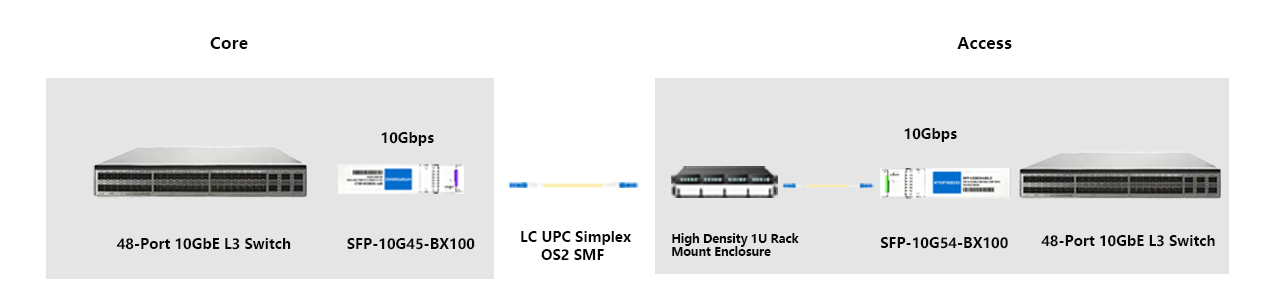
Connectivity Solutions(Applications)
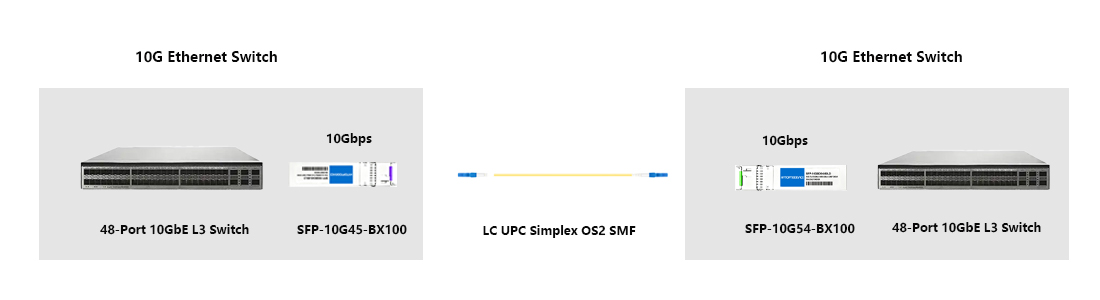
1.Switch-to-Switch Connectivity
 2.Core to Access Connectivity(With Structured Cabling)
The Core Features
1.Single‑Fiber Transmission, Maximize Fiber Utilization
Unlike conventional dual‑fiber SFP+ transceivers, HYTOPTODEVICE Brocade‑compatible SFP+ 10G BiDi transceivers adopt WDM wavelength‑division multiplexing to realize bidirectional 10G transmission over only one OS2 single‑mode fiber core.

2.2x Capacity, Half the Cabling
A single fiber strand carries two wavelengths, enabling full-duplex 10G over one link. Double capacity per port, cut fiber cabling costs in half — no extra cables, no extra ports.

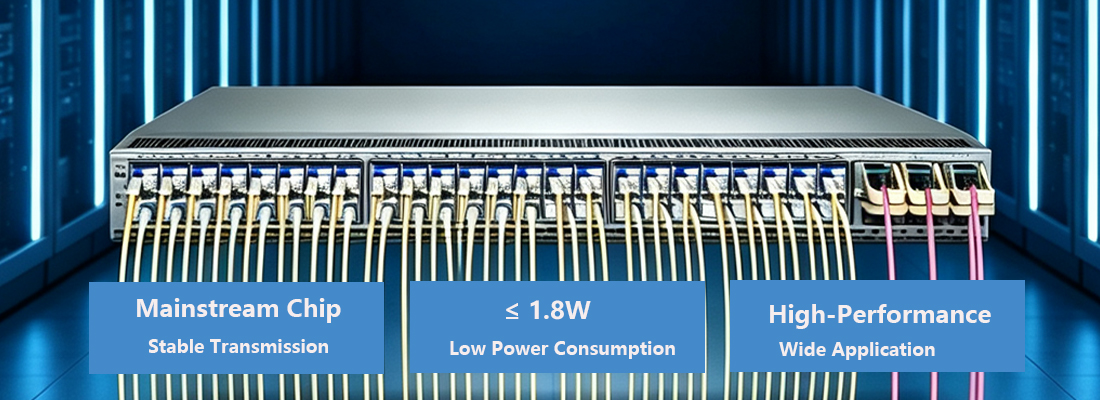
3.10G at 1.8W — Lower Energy, Lower Heat
Delivering stable 10G links at a low 1.8W power draw, this SFP+ 10G bidi transceiver minimizes heat dissipation per port, easing cooling load in dense deployments and cutting total cost of ownership.
4. Verified, Not Just Claimed
Compatibility isn't a promise — it's proven. Every unit passes rigorous testing on original-brand switches, guaranteeing drop-in interoperability across Cisco, Juniper, Huawei and other major platforms without reconfiguration headaches. Real products, real switches, real results—Specific Compatibility Video available upon request.

5.100% Tested for Rock-Solid Reliability
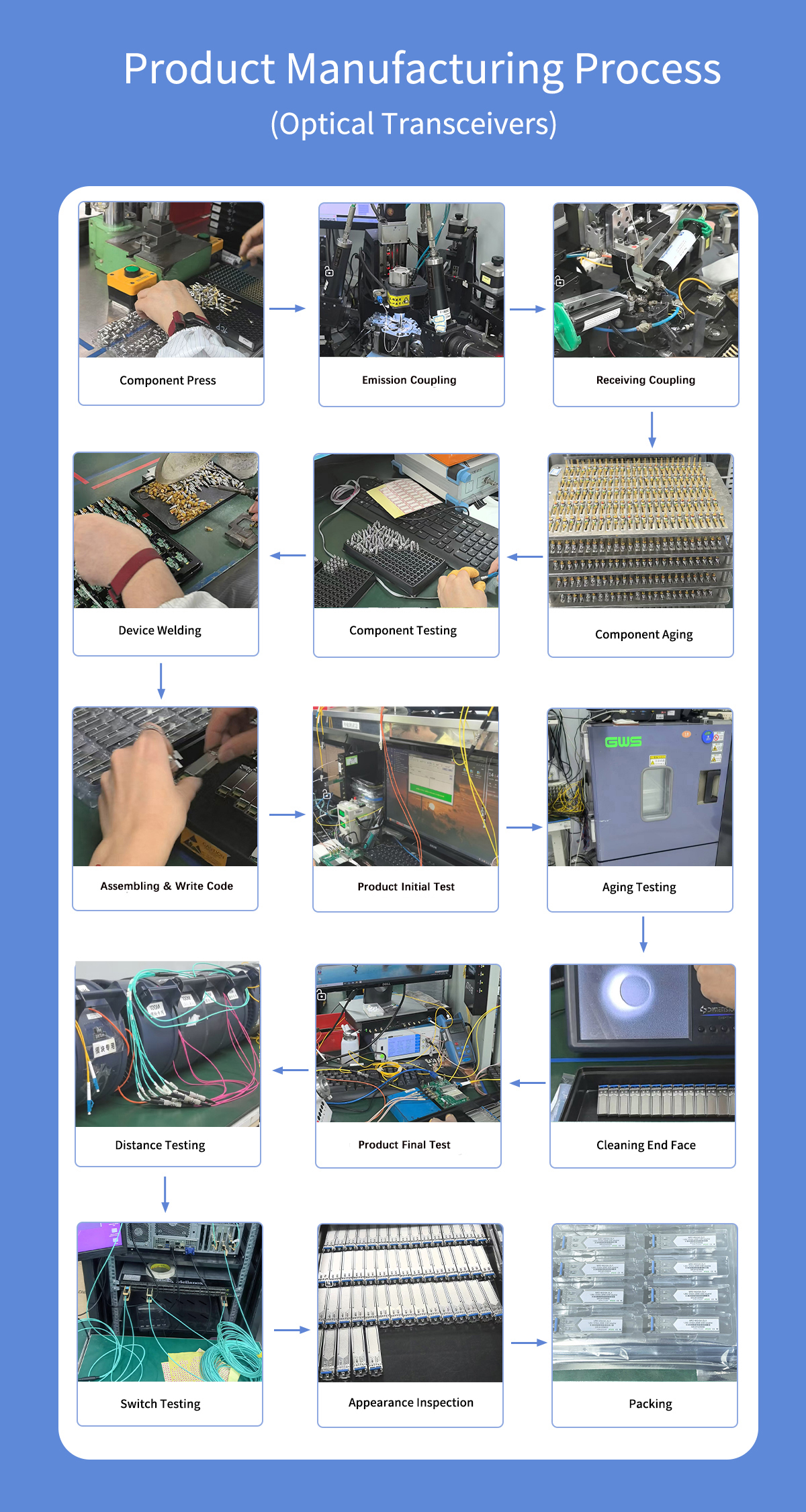
Signal integrity, distance runs, temperature cycling — every 10G BiDi 100km SFP+ transceiver is fully validated in our Test Center before shipping, ensuring stable, packet-loss-free links under any load.

FAQ
Q1: Will this HYTOPTODEVICE 10G BiDi optic work with multi‑brand network hardware from different vendors?
A: YES, HYTOPTODEVICE 10GBASE‑BX100‑U SFP+ 10G BiDi transceiver delivers broad cross‑vendor compatibility for multi‑brand switch deployments. Pre‑flashed vendor‑specific EEPROM ensures zero‑alarm plug‑and‑play operation on most Cisco, Juniper, MikroTik and Ubiquiti hardware with native 10G SFP+ ports; minor old‑firmware whitelist restrictions may require updating switch firmware for full recognition.
Q2: Is inter‑mixing this 1490/1550nm BiDi unit with conventional single‑fiber transceivers feasible?
A: NO, HYTOPTODEVICE 10GBASE‑BX100‑U 100km BiDi optic cannot establish valid links with ordinary 1310/1550nm transceivers. Reliable BiDi single‑fiber operation strictly demands matching complementary‑wavelength BX100‑D partner unit; mismatched wavelength sets lead to complete link failure even with good physical fiber connections.
Q3: Can I swap this optical module without shutting down my running production network?
A: YES, the HYTOPTODEVICE 10GBASE‑BX100‑U long‑reach BiDi SFP+ supports standard SFP+ hot‑swap functionality for non‑stop production‑network maintenance. You can insert or remove the transceiver without powering‑down network devices; for safety best‑practice, disconnect fiber jumpers before handling active ports to avoid infrared laser eye risk.
Q4: Am I able to run this long‑reach BiDi transceiver over multimode fiber infrastructure?
A: NO, HYTOPTODEVICE 10GBASE‑BX100‑U 100km BiDi SFP+ transceiver only operates on OS2 single‑mode fiber. Multimode fiber suffers excessive dispersion and signal attenuation; it cannot satisfy the strict optical budget requirement for 100‑kilometer long‑haul BiDi transmission and will trigger frequent packet loss or no‑link status.
Q5: Is integration of this BiDi optic into existing passive CWDM or DWDM multiplexer setups supported?
A: NO, HYTOPTODEVICE 10GBASE‑BX100‑U BiDi optic cannot work with passive CWDM / DWDM multiplexer systems. It uses proprietary fixed‑pair 1490/1550nm BiDi wavelengths outside standard CWDM/DWDM ITU‑T grid; it is purpose‑built
for direct point‑to‑point single‑fiber links instead of wavelength‑multiplexed aggregation topologies.
Q6: Can I deploy this 100km‑rated BiDi optic over short fiber spans under 10 kilometers?
A: NO, deploying long‑reach 100km‑class transceivers on 5‑10km short fiber runs risks permanent hardware damage. Our HYTOPTODEVICE high‑power long‑haul BiDi units feature‑7 dBm overload threshold; short links produce over‑strength incoming optical power that overwhelms the built‑in APD receiver, you must deploy appropriate simplex LC optical attenuator for short‑distance application scenarios.
Q7: What optical performance threshold is necessary to achieve the full‑rated 100‑kilometer transmission reach?
A: YES, our HYTOPTODEVICE EML+APD‑equipped 10G BiDi transceiver provides 25‑29 dB total optical link budget, which fully supports stable 100‑kilometer transmission. Real‑world field deployment should reserve 3‑5 dB extra safety margin to absorb loss caused by connectors, splices and gradual fiber aging to avoid intermittent link instability.
Q8: Can I still hit 100km reach when my fiber path contains many splices and dirty connector end‑faces?
A: YES, HYTOPTODEVICE 10GBASE‑BX100‑U BiDi module with 25‑29 dB link budget can hit 100km only when cumulative end‑to‑end loss stays within budget limits. Multiple splices and contaminated LC connectors stack extra insertion loss; over‑budget total loss will reduce achievable transmission distance, please clean connectors and minimize splice points for long‑haul projects.
Q9: What reliability lifespan rating can I expect for HYTOPTODEVICE’s 100km BiDi SFP+ hardware?
A: YES, HYTOPTODEVICE 100km 10G BiDi SFP+ transceivers feature industry‑grade high MTBF derived from EML laser and high‑sensitivity APD receiver component qualification. Lab‑calculated MTBF value exceeds 1,000,000 hours under 0‑70℃ commercial operating conditions, paired with our 5‑year factory warranty to support large‑scale metro‑network bulk deployment.
Q10: Will unstable link behaviour show up once received optical power approaches the hardware sensitivity floor?
A: YES, users will face intermittent packet loss and link flapping when received optical power approaches‑24 dBm receiver sensitivity of HYTOPTODEVICE APD‑based 10G BiDi transceiver. When input power gets close to sensitivity threshold, bit‑error rate rises sharply; always keep adequate optical power margin above‑24 dBm for reliable 100km BiDi link performance.
Q11: Can this single‑fiber BiDi optic satisfy OTN or SONET/SDH transmission workload requirements?
A: NO, HYTOPTODEVICE 10GBASE‑BX100‑U BiDi SFP+ transceiver is designed for 10G Ethernet 10.3125Gbps rate only. It does not support OTN OTU2/OTU2e or SONET/SDH OC‑192 framing; attempting these protocols will result in link down even with good optical power readings.
Q12: Do these Brocade‑compatible BiDi optical modules carry global regulatory compliance approvals?
A: YES, all HYTOPTODEVICE 10GBASE‑BX100‑U 100km BiDi SFP+ transceivers fully pass RoHS, CE and FCC compliance certification. Complete certification documents and inspection reports can be supplied for global buyer customs clearance, tender project audit and bulk wholesale procurement verification requirements.
Q13: How do I differentiate between faulty transceiver hardware versus physical fiber‑cable‑related performance degradation?
A: YES, multi‑step troubleshooting workflow can differentiate faulty HYTOPTODEVICE BiDi transceiver versus degraded single‑mode fiber links. Swap in known‑good spare HYTOPTODEVICE optic, read real‑time DDM optical power data, clean LC interfaces, run OTDR fiber test; compare measured power against spec (Tx 1~5 dBm, Rx sensitivity‑24dBm, overload‑7dBm) to locate whether fault comes from hardware or fiber infrastructure.
Q14: In what ways can BiDi 1490/1550nm deployment bring down overall fiber‑related capital outlay?
A: YES, HYTOPTODEVICE 1490/1550nm BiDi SFP+ transceiver cuts physical fiber‑pair consumption in half for point‑to‑point connections. It uses only one OS2 single‑mode fiber strand for bidirectional 10G traffic; this greatly lowers fiber‑leasing expense and civil‑works investment for metro long‑haul and cross‑site data‑center interconnection projects.
Q15: Is built‑in hardware loopback diagnostic capability available on this 100km BiDi SFP+ unit?
A: NO, HYTOPTODEVICE 10GBASE‑BX100‑U 100km BiDi SFP+ does not support hardware‑level internal loopback function for remote diagnostics. For link validation, you need external physical loopback plug or end‑to‑end real‑fiber testing; you may leverage built‑in DDM real‑time monitoring data for partial remote link health assessment.
Packaging & Custom OEM Solutions
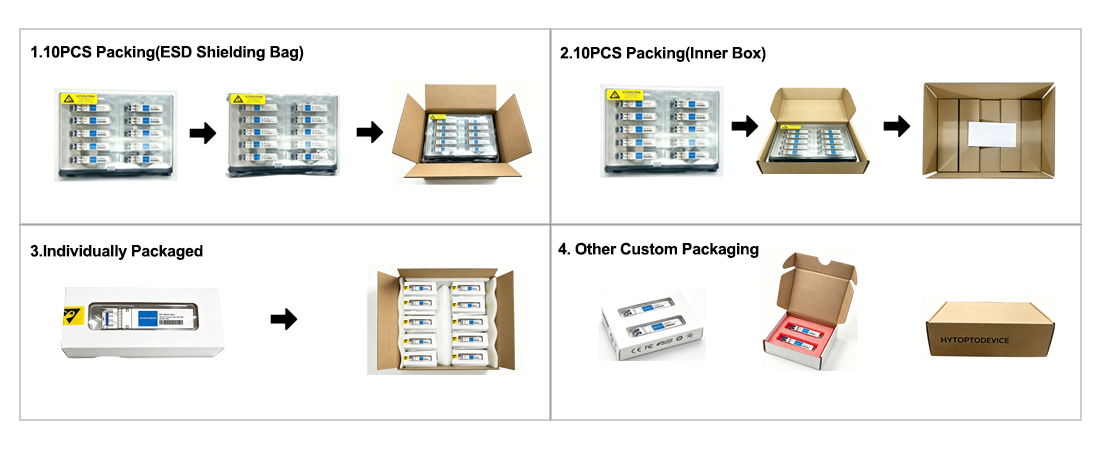
Each module ships individually sealed in ESD-safe packaging, protected from static from our warehouse to your shelf—and ready to ship on receipt of order. Volume buyers and system integrators also unlock our full OEM program: custom logos, private labeling, and branded packaging, all designed to help you build and protect your own brand.
Why Network Engineers Choose HYTOPTODEVICE
HYTOPTODEVICE has supplied over 5000,000 optical transceiver modules to data centers, ISPs, and enterprise networks across 100+ countries since 2011. Every module undergoes a 72-hour burn-in test and full DDM/DOM validation before shipment.
- Up to 70% cost savings vs OEM, transparent pricing & flexible bulk rates, supported quality returns
- 100% real-device compatible with Cisco, Huawei,Dell,Juniper, and Arista
- ISO 9001:2015 Shenzhen factory, full lineup: 1.25G/10G/25G/40G/100G/200G/400G/800G/1.6T transceivers
- Ample stock, fast global DHL/FedEx shipping in 3–5 working days
- Free pre-sales engineering support for custom EEPROM & private label firmware
- Real switch test videos available for pre-purchase review; inspection & shipping videos provided per order
“Phenomenal performance. We deployed 200 HYTOPTODEVICE SFP modules to replace Cisco OEMs in our backbone network. Result? Zero compatibility issues and a 60% reduction in costs. Highly recommended for mission-critical networks."— Senior Network Engineer, Regional Telecom, Australia
Quality Certification & Compliance
At HYTOPTODEVICE, our quality commitment is backed by industry-standard validations. From fiber optical transceiver manufacturing to final visual inspection, from IQC、IPQC、FQC to OQC, our processes ensure global compliance and reliability.
We adhere to rigorous standards for our SFP modules and network solutions:
-
ISO 9001: Certified quality management and production consistency.
-
CE & FCC: Fully compliant for seamless Global Market Access.
-
RoHS: Committed to environmental responsibility and hazardous material control.
-
Proven Reliability: Rigorous testing to reduce compliance risk and ensure safety.
Certified Quality. Global Standards. Guaranteed Performance.

Rigorous Industrial Product Testing

100% 3rd Party Compatible

Partial Test Demonstration

Others