Optical transceivers, the core components of data centers and networking equipment, have a seemingly complex model naming system that actually follows discernible patterns. HYTOPTODEVICE TECHNOLOGY is a professional manufacturer of optical transceivers with many years of overseas sales experience, believe that the article will decode the logic behind optical module nomenclature and provide a cross-brand compatibility reference to help you accurately match requirements in procurement and sale.
Table of Contents
一、Universal Naming Convention: The Four-Segment Structure 二、How to "Read" a Model Name at a Glance: Practical Examples 三、Key Brand Compatibility Reference Table 四、Critical Considerations for Sourcing & Compatibility 五、 Actionable Advice for Buyers 六、Conclusion:一、Universal Naming Convention: The Four-Segment Structure Most major manufacturers follow a "Form Factor - Data Rate & Protocol - Feature/Reach-Wavelength" naming logic:
1. Form Factor
Defines the physical dimensions and electrical interface:
· SFP / SFP+: Small Form-factor Pluggable, for 1G/10G/25G
· QSFP / QSFP28: Quad Small Form-factor Pluggable, for 40G/100G
· QSFP-DD / OSFP: Next-gen high-speed form factors, for 200G/400G/800G
· XFP: Older 10G form factor (being phased out)
· CFP/CFP2/CFP4: Larger form factors for 100G/400G
2. Data Rate Identifier & Protocol
Defines the transmission speed and networking standard.
· GE / 1G: Gigabit Ethernet
· 10G: 10 Gigabit
· 25G: 25 Gigabit
· 40G: 40 Gigabit
· 100G: 100 Gigabit
· 400G / 800G: Ultra-high-speed rates
· Protocol Keywords: BASE (Ethernet), FC (Fibre Channel), CPRI (Wireless Fronthaul)
3. Feature / Reach Code
This is the core functional code, defining the basic transmission capability and technology path.
· Short Reach: SX / SR (Multimode, ≤550m)
· Long Reach: LX / LR (Singlemode, 10-20km)
· Extended Reach: EX / ER (Singlemode, 40km)
· Long Haul: ZX / ZR (Singlemode, 80-120km)
· Bi-Directional: BX (Single Fiber Bidirectional)
· Wavelength Division Multiplexing: CWDM / DWDM
· Parallel Optics: PSM4 / SR4 / DR4 (Multi-fiber parallel)
4: Wavelength / Other Details
This section provides more specific physical layer parameters or special attributes.
· Wavelength Identification:
· Direct Labeling: SM1310, SM1550, CWDM1470, DWDM45 (Channel 45)
· Implied in Code: LR typically implies 1310nm, ER/ZR typically imply 1550nm.
· Other Details:
· Temperature Range: -C (Commercial 0~70°C), -I (Industrial -40~85°C)
· Transmission Distance: -10 (10km), -40 (40km)
· Vendor-Specific Codes or Version Numbers.
二、How to "Read" a Model Name at a Glance: Practical Examples
1. Generally speaking, it's like this:
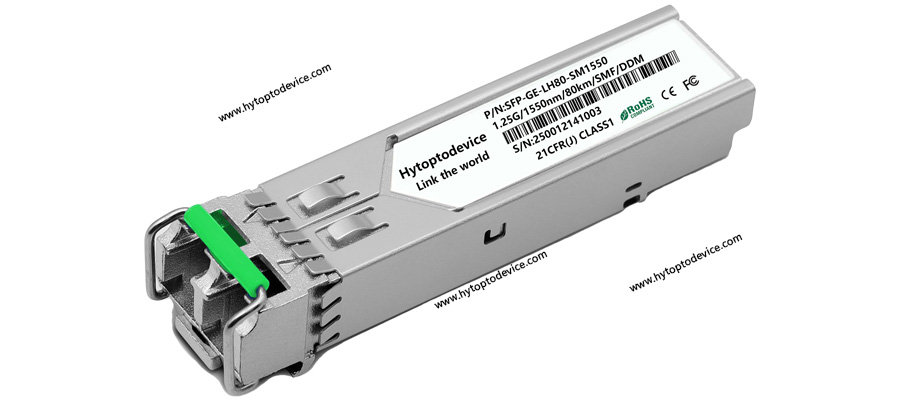
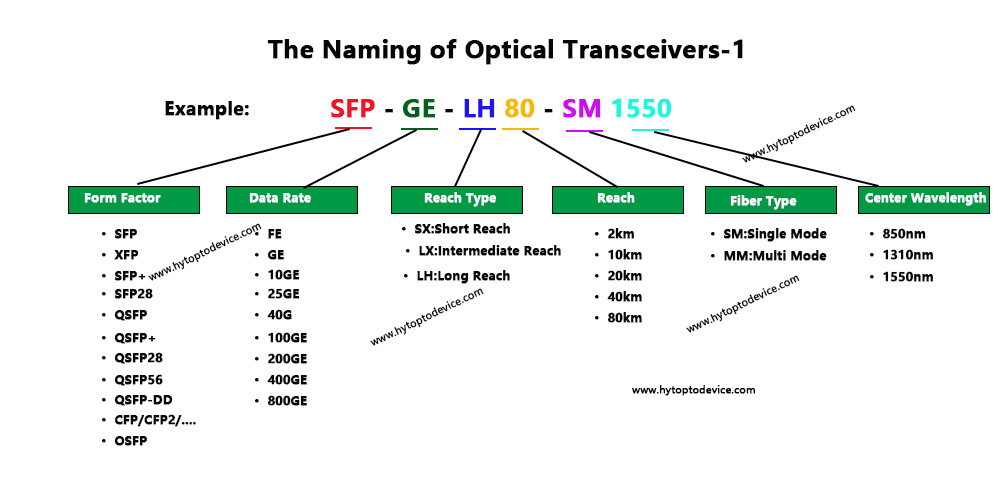
Example 1: SFP-GE-LX-SM1310
· SFP: Form factor.
· 1G: Data Rate.
· LX/SM1310: using 1310nm on Singlemode Fiber for ~10km
· Quick Take: A standard 10km, 1G module for singlemode fiber.
Example 2: SFP-1G-BX10-U
· SFP: Form factor.
· 1G: Data Rate.
· BX10: Bi-Directional, 10km reach. -U indicates the upstream wavelength (e.g., Tx1310/Rx1490nm).
· Quick Take: A single-fiber, bidirectional module that saves fiber infrastructure.
Example 3: SFP-10G-LR· SFP: Form factor (SFP+).
· 10G: Data Rate (10 Gigabit).
· LR: Long Reach (using 1310nm on Singlemode Fiber for ~10km).
· Quick Take: A standard 10km, 10G module for singlemode fiber.
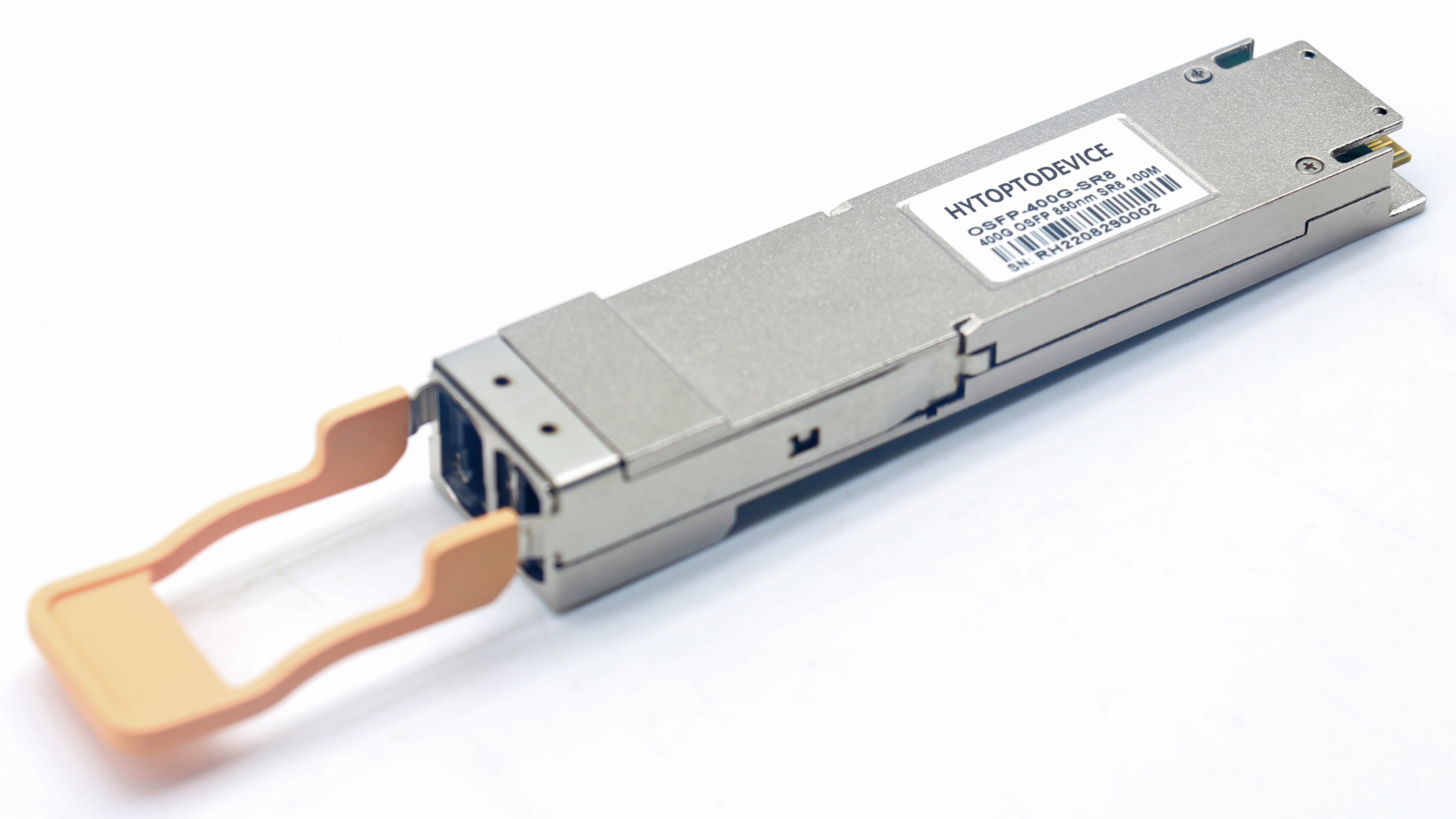
Example 4: OSFP-400G-SR8· OSFP: Form factor for 400G.
· 400G: Data Rate.
· SR8: Short Reach, 8parallel lanes (using 850nm on Multimode Fiber, typically 100m on OM3).
· Quick Take: A 400G module for short, high-bandwidth connections inside a data center (requires an MTP/MPO-16 connector).
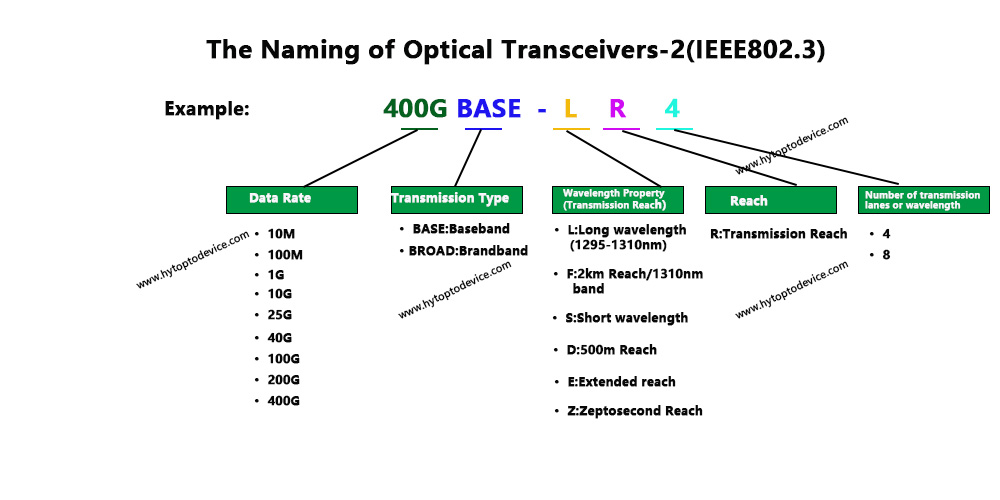
2.The naming convention for optical modules starting with XXGBASE is defined by the IEEE 802.3 working group. The following example uses a 400G Ethernet optical module:
 三、Key Brand Compatibility Reference Table
1. Cisco Series
| Cisco Original Model |
Compatible Generic Model |
Key Specs |
| GLC-SX-MMD |
SFP-1G-SX |
1G, 850nm, Multimode, 550m |
| GLC-LH-SMD |
SFP-1G-LX |
1G, 1310nm, Singlemode, 10km |
| SFP-10G-SR |
SFP-10G-SR |
10G, 850nm, Multimode, 300m |
| QSFP-100G-SR4-S |
QSFP28-100G-SR4 |
100G, 850nm, Multimode (OM4), 100m |
2. H3C Series
| H3C Original Model |
Compatible Generic Model |
Key Specs |
| SFP-GE-LX-SM1310 |
SFP-1G-LX |
1G, 1310nm, Singlemode, 10km |
| SFP-XG-LX-SM1310 |
SFP-10G-LR |
10G, 1310nm, Singlemode, 10km |
| SFP-FE-LX-SM1310-BIDI |
SFP-1G-BX |
1G, BiDi, Tx1310/Rx1490nm, 10k |
| JUNIPER Original Model |
Compatible Generic Model |
Key Specs |
| EX-SFP-1GE-LH |
SFP-1G-EX |
1G, 1550nm, Singlemode, 40km |
| EX-SFP-10GE-ER40 |
SFP-10G-ER |
10G, 1550nm, Singlemode, 40km |
| QSFP-100G-LR4-D |
QSFP28-100G-LR4 |
100G, 4xCWDM lanes (~1310nm), 10km |
1. The Datasheet is King: Model names give a strong indication, but the official manufacturer's datasheet is the final authority for detailed specs (exact wavelength, power consumption, temperature range).
2. Coding & Interoperability: Many OEMs (like Cisco) use firmware coding to lock devices to their branded modules. Third-party "compatible" modules require correct coding to ensure plug-and-play functionality. Partner with suppliers who guarantee this.
3. Look Beyond the Name: Two modules with similar names (e.g., both LR) from different brands might have minor but critical differences in receiver sensitivity or transmit power. Verify performance thresholds match your network design.
五、 Actionable Advice for Buyers· Identify Your Need: Start with your switch brand/model, required speed, and fiber type/distance.
· Find the OEM Part Number: Locate the original manufacturer's recommended model from their official documentation.
· Use Compatibility Tables: Use the reference above or your supplier's compatibility list to find the equivalent generic model number.
· Ask the Right Questions: Confirm coding compatibility, warranty, and request test reports if needed.
六、Conclusion: Understanding optical transceiver naming conventions empowers you to navigate the market efficiently. While differences exist between MSA, IEEE, and vendor-specific names, the core three-segment logic remains constant. Using this guide and the compatibility reference, you can bridge the gap between different vendor ecosystems, make informed sourcing decisions, and ensure you get the right module for your specific application at a competitive price.
HYTOPTODEVICE TECHNOLOGY has extensive experience working with major brands of optical modules, encountering various appearances, models, and requirements (module compatibility confirmed with corresponding switches). We provide professional services (including OEM) regarding specifications, appearance, and packaging. Please feel free to contact us if you have any questions or needs.



